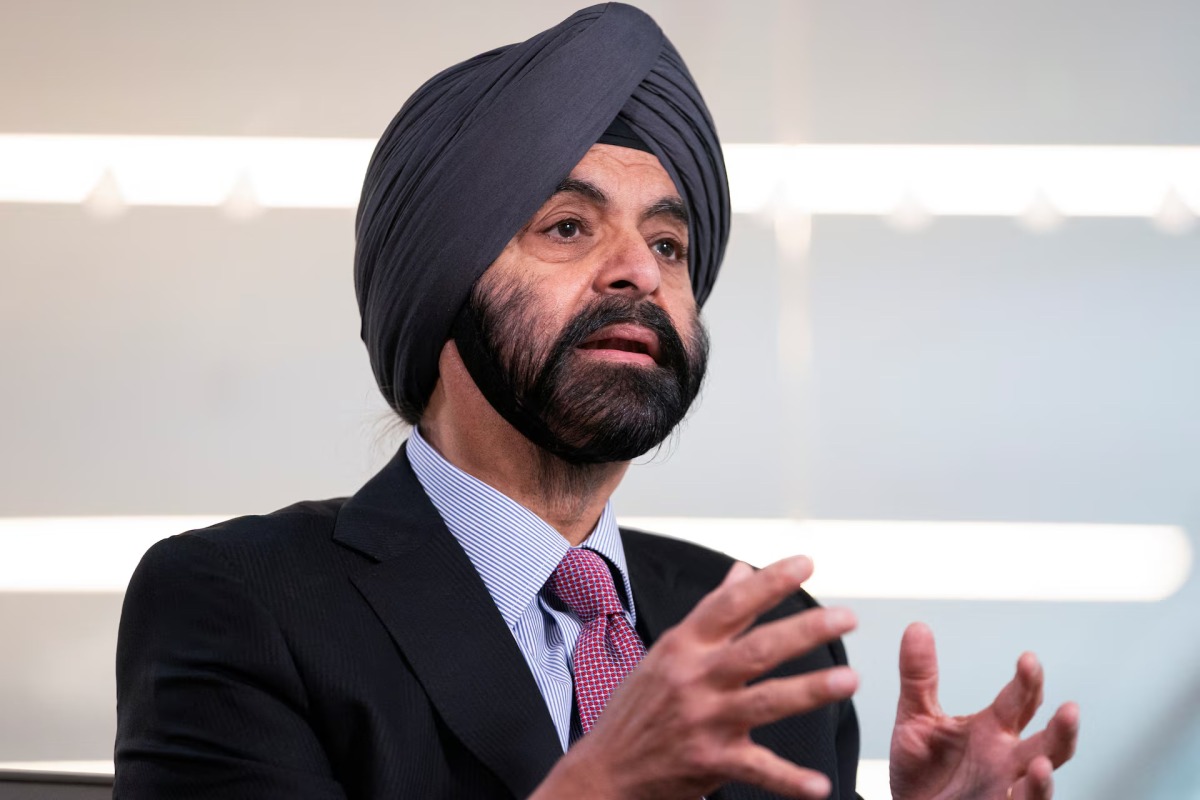
World Bank Group President Ajay Banga
Doha, Qatar: World Bank Group President Ajay Banga yesterday said the opening of the institution’s new office in Doha marks a significant step in deepening cooperation between the World Bank and the State of Qatar, with a focus on mobilising investment, supporting youth and accelerating development across the Middle East and North Africa.
Speaking to The Peninsula on the sidelines of the inauguration ceremony, Banga said his visit to Doha over the past two days had provided an opportunity to engage closely with Qatar’s leadership and explore ways to build a stronger and more strategic partnership.
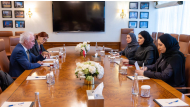
Banga noted that meetings were held with Amir H H Sheikh Tamim bin Hamad Al-Thani, H H Sheikha Moza bint Nasser, Prime Minister and Minister of Foreign Affairs H E Sheikh Mohammed bin Abdulrahman bin Jassim Al-Thani, and other senior officials, as well as representatives of the Qatar Fund for Development (QFFD), which is hosting the World Bank’s office in their headquarters.
He acknowledged the role of Minister of Finance H E Ali bin Ahmed Al-Kuwari in facilitating the discussions.
He described Al-Kuwari as a long-standing partner who has encouraged closer collaboration between Qatar and the World Bank Group.
He said the signing of the agreement to establish the Doha office reflects the solid foundation of relations and the shared ambition to expand cooperation in development financing and private sector mobilisation.
“The office is a way to show that foundation with people on the ground,” he said, explaining that it will not only house World Bank staff but also serve as a platform for developing young Qatari professionals. Promising talents from government institutions and the private sector will be seconded to the World Bank, gain international exposure and return with global best practices to contribute to national and regional development efforts.
The World Bank Group President stressed that a central objective of the partnership is to support the region’s youthful population. He said that over the next 12 to 15 years, millions of young people across the Middle East and North Africa will enter the labour market, either seeking employment or starting their own businesses. Creating opportunities for this demographic, he added, is essential to fostering hope, optimism and sustainable economic growth.
Banga outlined five priority sectors where cooperation is expected to intensify, noting that they align closely with Qatar’s development vision and private sector interests. Infrastructure tops the list, encompassing roads, bridges, ports, airports, power generation and digital connectivity. Primary healthcare is another focus, particularly improving service delivery to dispersed populations to achieve better health outcomes.
Agriculture, especially support for small farmers and livestock owners, was highlighted as a third key area. Banga said connecting small producers to larger markets and higher standards could replicate successful models seen in the region and be extended to countries such as Syria and Iraq.
Tourism, with its capacity to generate employment and diversify economies, represents a fourth pillar, while manufacturing, particularly in minerals and metals, is seen as a sector with significant long-term growth potential.
“All these areas overlap strongly with Qatar’s interests and capabilities,” he said, expressing optimism about the scope for joint initiatives that blend public funding, grants and private capital to drive development and job creation.
On the question of Gaza’s future, Banga clarified that the World Bank’s role is confined to development and reconstruction rather than political mediation. He explained that he serves on the Executive Board for Peace, which focuses on preparing projects, identifying opportunities and mobilising financial resources for the eventual reconstruction and development of Gaza and the West Bank.
The political leaders represented on the Board of Peace, he said, are responsible for fundraising and determining how resources are allocated, while the executive board acts as the technical arm. Despite the challenges, Banga said he remains hopeful that conditions will soon allow the international community to refocus on rebuilding and long-term development.
“There has to be a chance, and you have to have hope,” he said, adding that the establishment of the World Bank Group’s Doha office underscores Qatar’s growing role as a regional hub for development cooperation and a key partner in supporting stability and prosperity across the wider region.