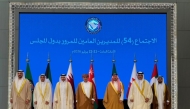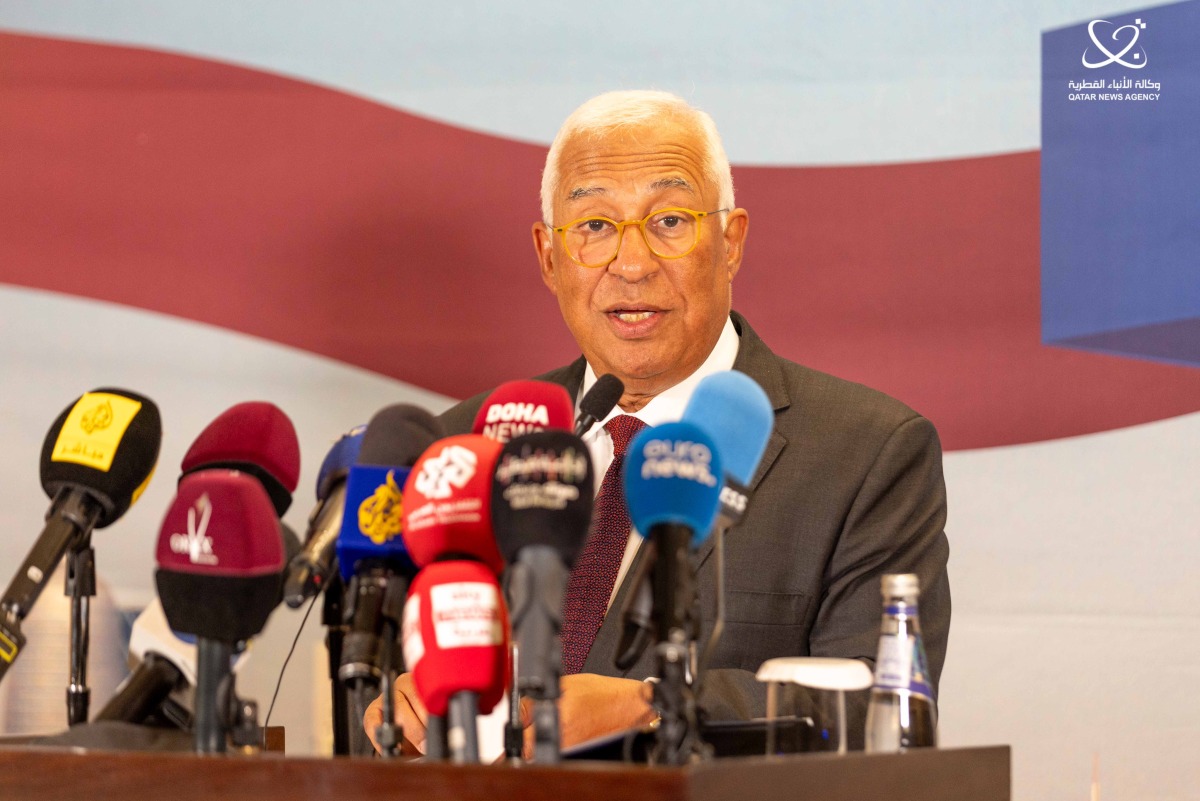
Doha, Qatar: European Council President António Costa (pictured) yesterday underscored the European Union’s unwavering support for Qatar and other Gulf nations amid regional tensions, stressing the need for a stable ceasefire and the restoration of freedom of navigation in the Strait of Hormuz.
Speaking at a press conferenceduring his visit to Doha, Costa described the trip as a timely opportunity to listen to Gulf leaders and extend the EU’s partnership during a fragile period following recent escalations.
The visit, part of a broader Gulf tour that included the United Arab Emirates and Saudi Arabia, comes shortly after a US-Iran ceasefire brokered by Pakistan. Despite the truce, concerns persist over reported attacks on several Gulf countries, including strikes that tested regional air defences.
Costa expressed full solidarity with the Gulf states and their people, condemning Iran’s actions that violated sovereignty and territorial integrity.
“Iran’s attacks have violated their sovereignty and territorial integrity, and this is unacceptable,” he said. He also thanked Gulf partners for ensuring the safety of European citizens residing in the region.
Outlining the EU’s immediate priorities, Costa pointed to the urgent need for a stable and lasting ceasefire in the region, which he said is essential to pave the way for sustainable peace. He also stressed the importance of restoring freedom of navigation in key maritime corridors, particularly the Strait of Hormuz. “Since the beginning of this conflict, the European Union has consistently called for de-escalation and negotiations in full respect of international law,” he noted.
Costa warned that ongoing disruptions to maritime routes, including the Strait of Hormuz and the Red Sea, pose serious risks to global supply chains and the international economy. He described these waterways as “vital arteries” for world trade, stressing that ensuring their security is both “crucial and urgent.”
In this regard, he highlighted ongoing efforts by European partners, including France and United Kingdom, to assemble an international coalition aimed at guaranteeing safe and unimpeded passage for commercial shipping.
Turning to broader geopolitical concerns, Costa urged all parties to capitalise on the momentum generated by the recent United States-Iran ceasefire, brokered by Pakistan, to address longstanding issues related to Iran’s policies.
“These discussions must tackle not only the nuclear programme but also ballistic missile activities, support to destabilising proxies, and the blockade of international sea lanes,” he said.
Costa warned that the conflict has already had “disastrous consequences” globally, adding that the situation would deteriorate further without a comprehensive resolution. The European Council President also addressed developments in Lebanon, describing the activities of Hezbollah as a significant threat to the country’s stability and to broader international security.
He commended President Joseph Aoun for what he termed a “historic decision” to ban the group’s military activities, noting that such steps are essential for restoring Lebanon’s sovereignty and stability.
“Empowering the authorities to disarm Hezbollah is the only sustainable solution for restoring Lebanon’s international stability,” Costa said. He welcomed recent negotiations between Israel and Lebanon held in Washington, describing them as a positive step toward de-escalation, and called for continued dialogue to achieve tangible outcomes for peace.
Throughout his remarks, Costa reiterated the European Union’s commitment to multilateralism and diplomacy as the primary tools for resolving conflicts and ensuring long-term stability.
“We are here to support the region’s stability and security,” he said, adding that the EU seeks to deepen and strengthen its partnerships with Gulf countries in response to shared challenges.
The visit reflects growing engagement between the European Union and Gulf states, particularly in areas such as security cooperation, energy, and trade. Analysts note that the current geopolitical climate has further underscored the importance of coordinated international efforts to safeguard critical infrastructure and maintain economic stability.
Costa concluded by emphasising that the message he received from regional leaders during his visit was one of shared interest in expanding cooperation and reinforcing strategic ties. “We want to make our cooperation deeper and stronger,” he said, reiterating that the EU remains committed to supporting peace, stability, and prosperity in the region.
His visit to Qatar forms part of a broader diplomatic effort by the European Union to engage with key partners in the Gulf.