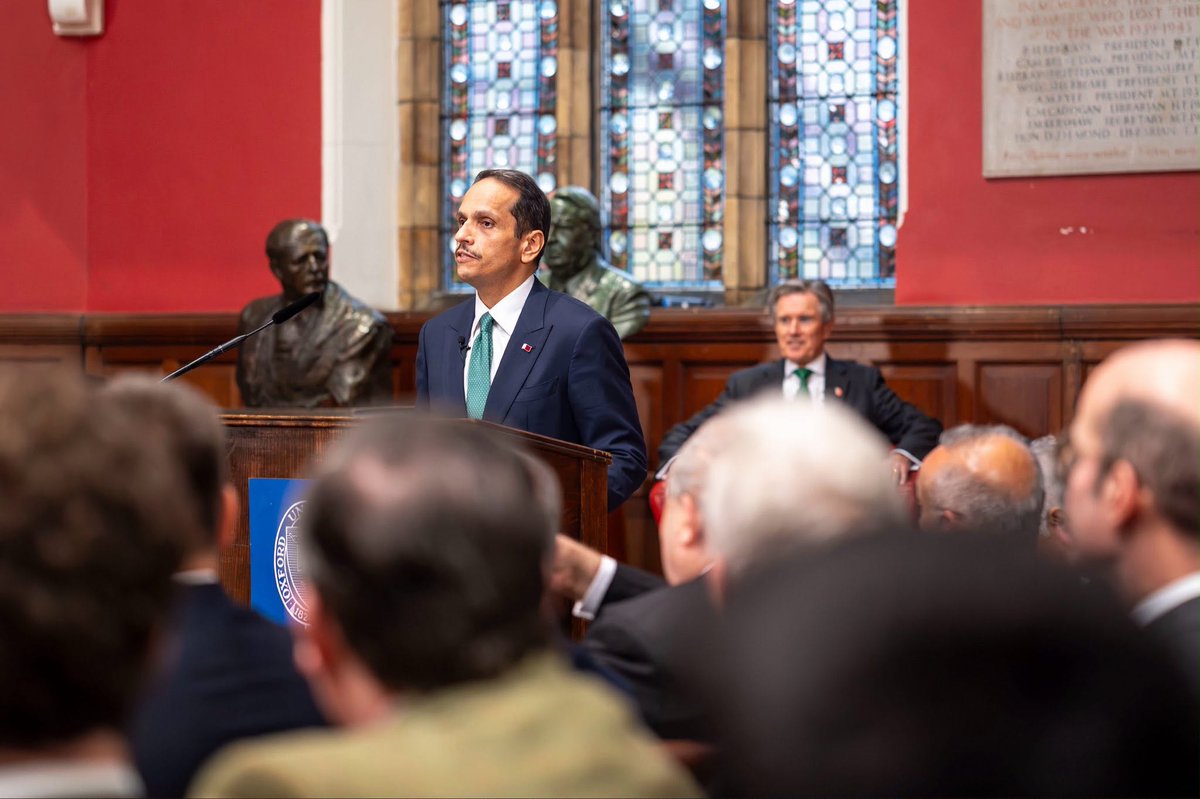
Oxford: Prime Minister and Minister of Foreign Affairs HE Sheikh Mohammed bin Abdulrahman bin Jassim Al-Thani has called for a greater role for economically prosperous small states in shaping international peace and security, arguing that their collective influence, diplomatic experience and economic strength can make a significant contribution to global stability.
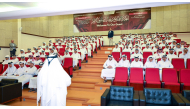
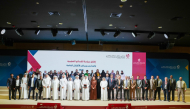
Addressing the Oxford Union in the British city of Oxford on Friday, HE Sheikh Mohammed delivered a speech titled "Prosperity in a Divided World: Small States and the Redrawing the Map of Global Influence", in which he highlighted the growing importance of smaller but prosperous nations in an increasingly divided international landscape.
His Excellency said countries that had achieved prosperity and become essential contributors to global economic development were now uniquely positioned to play a similar role in promoting international peace, not through individual initiatives but through a collective, organized and sustained approach.
HE Sheikh Mohammed recalled that the international order established after World War II was founded on the principle that peace could not be maintained through military strength alone. Instead, it sought to establish a system of international rules, institutions and open markets designed to promote cooperation and stability.
Since 1945, more than 120 countries have joined the international community, giving previously underrepresented peoples a voice on the global stage. This development also created opportunities for smaller countries, including Qatar, to achieve prosperity while benefiting from protections against annexation, regional domination and competition between major powers.
He noted that many of these countries were neither regional powers nor global superpowers, yet had achieved considerable progress by investing in their people, infrastructure and economic models. Their development had enabled them to become increasingly important participants in the global economy.
Beyond their economic achievements, HE Sheikh Mohammed said, a number of these nations were also using their collective influence to advance peace and stability around the world.
He argued that traditional classifications of countries as either developed or developing did not always reflect the achievements of nations that had followed different paths towards prosperity, nor did they adequately recognize their contributions to the international community.
In this context, he proposed a new designation for a group of countries that are resilient, stable, prosperous and trusted, and have transformed their relatively small size into an advantage while becoming significant contributors to global peace and prosperity.
He described them as "prosperous states".
His Excellency said the world was now at a crossroads shaped by overlapping conflicts, technological breakthroughs and shifting geopolitical alliances, describing the current period as a historic moment that comes only once in a generation.
He stressed that the international community must rise to the challenges of the present era rather than remain passive in the face of profound global changes.
While acknowledging the shortcomings of the post-World War II international order, HE Sheikh Mohammed said it had not always been fair and that its rules had not been applied consistently. He cautioned against idealizing a system in which power had always played an influential role.
Nevertheless, he argued that the existing international system remained preferable to the alternatives, drawing a comparison with the widely quoted observation about democracy that it is the worst form of government except for all the others.
He said the United Nations Charter had established fundamental principles, including the sovereign equality of states and the peaceful settlement of disputes.
International institutions and rules had enabled smaller nations to make their voices heard, defend their rights and make international relations more predictable. Although these institutions had not eliminated inequalities in global power, they had expanded the space available for smaller countries to make independent decisions, rather than operate under the historical principle that might makes right.
However, HE Sheikh Mohammed warned that while economic opportunities had become increasingly globalized, decisions concerning international peace and security remained concentrated in the hands of a relatively small number of countries.
As a result, nations that were essential to global prosperity were often excluded from decisions that directly affected international peace and stability.
He said the ongoing war in the region had exposed the dangers of this imbalance, with decades of military adventurism, unresolved conflicts, violations of international law and ambitions for regional domination disrupting energy supplies, threatening vital maritime routes and creating uncertainty in international markets.
Even countries not directly involved in these conflicts were bearing their economic and security consequences, he added.
HE Sheikh Mohammed said these developments highlighted a fundamental contradiction in the international system: the world had become increasingly interconnected in terms of prosperity, while decisions about war and peace remained far less collective than the consequences they produced.
Smaller states, he warned, were increasingly becoming the first victims of conflicts they had played no part in creating.
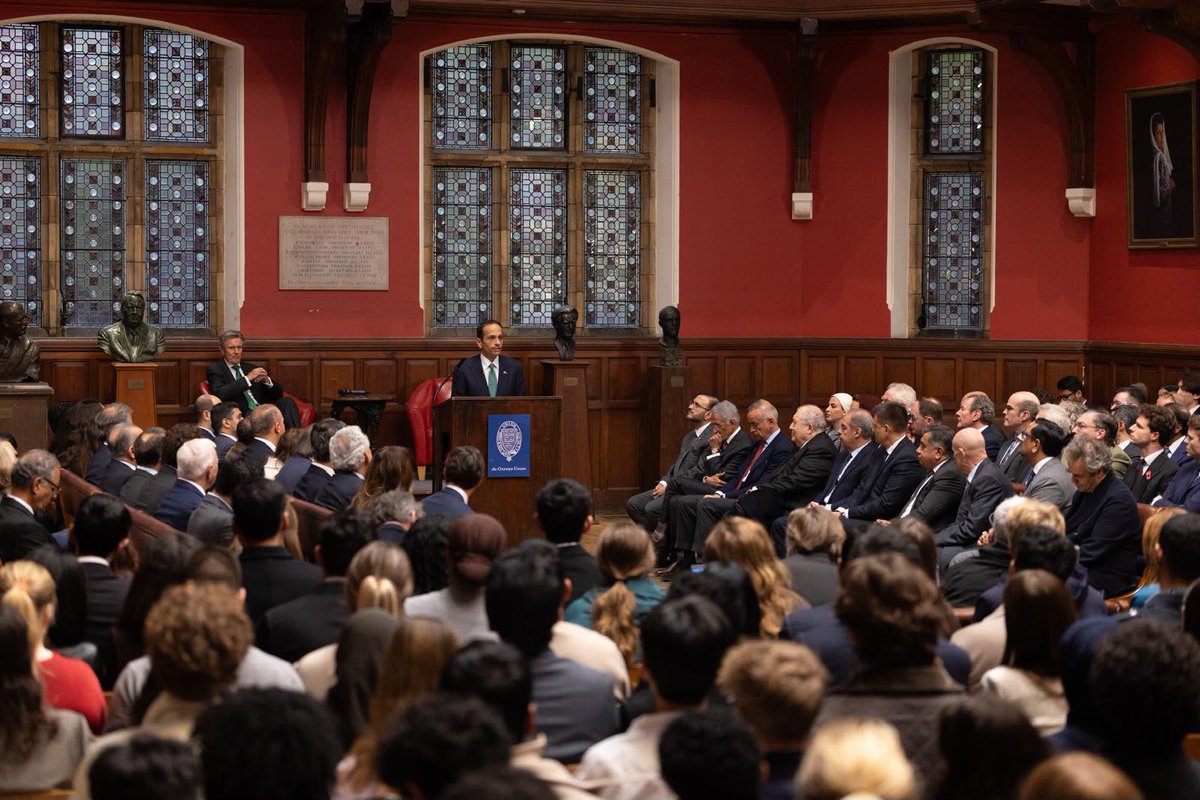
He raised the question of how countries with limited strategic depth and little coercive power could contribute to preserving the international order and maintaining global peace without compromising their sovereignty and national interests.
Turning to Qatar's experience, HE Sheikh Mohammed said the country had recognized that its future depended not only on the resources it possessed but also on the capabilities it could develop and the relationships it could establish.
Qatar had therefore chosen to invest in its people, develop its economy and establish itself as a reliable and trusted partner within the international community.
He explained that Qatar's geographical position and the realities of the global economy had made it clear that the country's prosperity could not be separated from regional and international conflicts.
This understanding had encouraged Qatar to invest in peace facilitation and mediation, while maintaining communication channels with parties that others were not always able to reach.
The lessons learned from Qatar's numerous mediation efforts had given the country unique and extensive experience in conflict resolution, he said.
HE Sheikh Mohammed described Qatar's journey as that of a nation whose people had achieved prosperity and extended a hand to the world to share its benefits.
However, he said Qatar was now facing campaigns promoting misleading narratives, as well as military attacks by parties that did not believe peace should be the natural condition of humanity.
He said such actors subscribed to a Hobbesian view of international relations, in which conflict was considered the natural state of the international system and power alone determined outcomes.
They do not merely theorize about this; they actively work to make it a reality, he said, warning that those who considered the rules-based international order established after World War II unnatural were seeking to undermine it.
He stressed that this system must be protected precisely against those seeking to dismantle it.
HE The Prime Minister and Minister of Foreign Affairs said the challenges facing Gulf countries extended far beyond their own regional experience, exposing deeper threats to the international system itself, its ability to preserve peace, uphold its principles and protect the opportunities that had enabled countries such as Qatar to prosper.
He pointed out that Qatar was not alone in facing these challenges, as other prosperous countries had similarly benefited from an open international environment to build strong institutions, develop globally connected economies and establish capabilities that allowed them to contribute beyond their national borders.
However, he emphasized that prosperous states could not overcome these challenges independently, nor could they replace the role of major powers.
Instead, by combining their experience, economic capabilities and diplomatic networks, they could help establish an integrated framework for international peace and stability and ensure its sustainability.
HE Sheikh Mohammed further stressed that maintaining stability in a conflict-prone world required a comprehensive understanding of peace, encompassing preventive measures, effective responses to crises, efforts to end conflicts and the preservation of the conditions necessary for lasting stability.
Ignoring any of these elements, he warned, would gradually undermine peace and allow conflict to become the prevailing condition.
He also highlighted growing questions about the role and relevance of international institutions in a rapidly changing global order, noting that regional and non-regional groupings were increasingly stepping in to fill gaps where existing institutions had failed to respond effectively to international crises.
His Excellency reiterated that international peace and stability were not luxuries for prosperous states but fundamental conditions for their national development and continued prosperity.
He revealed that Qatari mediators were currently working to prevent a new wave of escalation in the region.
Concluding his address, HE Sheikh Mohammed said responsibility for maintaining international stability could not simply be delegated to others, while the international community should not surrender to inaction.
He stressed that history remembers those who take the initiative and help shape events, rather than those who remain passive observers.