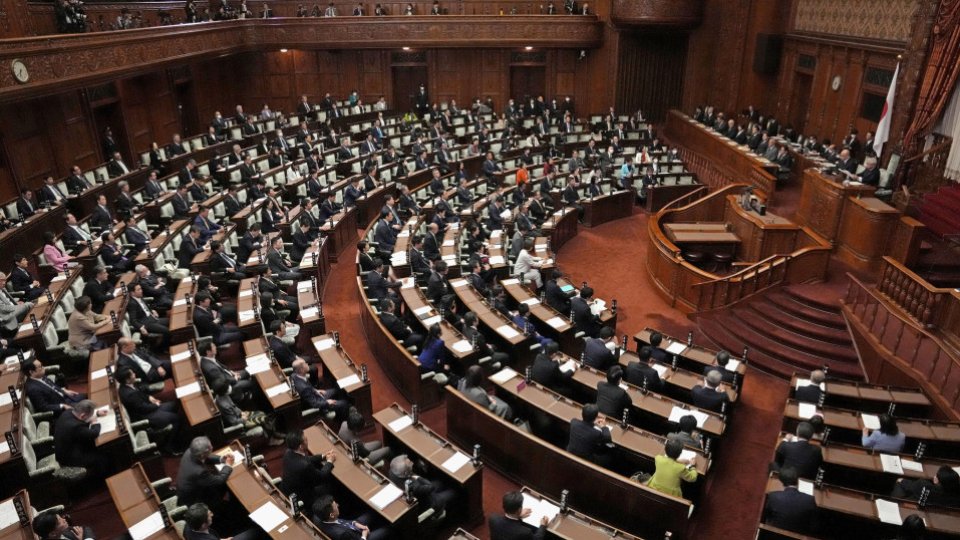
Tokyo: The Japanese Parliament approved today a budget of $744 billion for the fiscal year 2024, starting in April, making it the second largest budget. This aims to better respond to security threats, demographic challenges, alleviate inflation pains, and rebuild earthquake-affected areas.
The budget includes a record defense spending of 7.95 trillion yen, as the country seeks to enhance its defense capabilities against threats from China and North Korea.
The Kyodo news agency mentioned that the Japanese government revised its initial plan and doubled the emergency funds to 1 trillion yen following the recent deadly earthquake in central Japan.
Despite the government's efforts to reduce spending to pre-pandemic levels after inflating in recent years to address the COVID-19 pandemic and the cost of living crisis, it faces significant hurdles as it has already decided on a sharp increase in spending.
The rapid aging of society is also driving up the costs of social security, which reached a record high of 37.72 trillion yen, or about one-third of the general account budget for the next fiscal year.
The state budget approval became confirmed after it was approved by the lower house, the strongest chamber, in a rare session on Saturday, March 2nd. The Japanese constitution requires the budget to be issued 30 days after the lower house approves it in case there are no disputes between the two houses.
Approximately one-third of total spending, or 35.45 trillion yen, will be financed through the issuance of Japanese government bonds. The government assumes that the benchmark yield on 10-year Japanese government bonds will be 1.9 percent for fiscal year 2024, up from 1.0 percent in the previous year.
The budget was completed before the Bank of Japan raised interest rates on March 19 for the first time in 17 years.