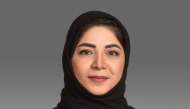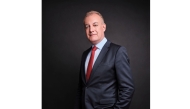
Doha, Qatar: Dukhan Bank has gone live on Kinexys by J.P. Morgan's Blockchain Deposit Account network, making it the first Islamic bank in Qatar to adopt this next-generation payments infrastructure. The implementation marks a significant step in Dukhan Bank's digital transformation journey, enabling faster, more efficient, and always-on payment services for corporate and institutional clients with increasingly global and time-sensitive treasury requirements, according to a press release from the Bank posted on Qatar Stock Exchange. Kinexys' Blockchain Deposit Account network, offered through J.P. Morgan's industry-leading blockchain business unit, enables real-time cross-border payments 24 hours a day, seven days a week, including weekends and public holidays. The network supports major global currencies and enables near instant settlement, programmable payments, and improved liquidity management. Commenting on the launch, Acting Group Chief Executive Officer of Dukhan Bank Ahmed I. Hashem said: "Going live on Kinexys' Blockchain Deposit Account network reflects Dukhan Bank's commitment to delivering innovative, Sharia-compliant solutions that respond to the evolving needs of our clients. By leveraging blockchain technology, we are enhancing the speed, transparency, and efficiency of cross-border payments, while supporting modern treasury requirements and strengthening our digital capabilities." Global Head of Product Sales and Solutions, Kinexys by J.P. Morgan, Akshika Gupta said: "Kinexys' Blockchain Deposit Account network enables banks to offer clients real-time, 24/7 cross-border payments and efficient, always-on settlement. With an established presence in the Middle East - eight of the region's largest banks leverage our Blockchain Deposit Account network - we're pleased to support Dukhan Bank as it expands its payment capabilities. We remain focused on helping financial institutions across the region leverage the next phase of digital payments." This development also reflects the growing role of advanced payment infrastructure in Islamic finance. The transparency, security, and real-time settlement capabilities of distributed ledger technology can support principles such as clarity, certainty, and efficiency in financial transactions, and this implementation reinforces Dukhan Bank's commitment to innovation within a Sharia-compliant framework. With this launch, Dukhan Bank joins a growing network of leading global financial institutions leveraging blockchain-powered infrastructure to modernize cross-border payments, optimize liquidity management, and support the future of digital finance.
Frankfurt, Germany: Profit at German aviation group Lufthansa plunged in the second quarter, the firm said Tuesday, as higher jet fuel costs hit earnings. Excluding one-off effects, core profit fell almost 56 percent to 383 million euros ($440 million), Lufthansa said, even as sales rose 10 percent to 11.1 billion euros in the three months to the end of June. Higher fuel prices increased costs by about 750 million euros, the operator of the Swiss, Brussels, Eurowings and Lufthansa airlines said. "The second quarter was characterized by exceptionally high fuel costs and heightened geopolitical uncertainty," Lufthansa chief financial officer Till Streichert said. "We are confident that the consistent execution of our strategy, cost discipline, network optimisations and persistently high demand will offset a significant portion of the cost increases," he added. The news makes Lufthansa the latest airline to have been hit by soaring jet fuels costs as the conflict in the Middle East rumbles on, disrupting supplies of petrochemical products down the Strait of Hormuz. British Airways parent IAG on Friday said net profit fell more than a third and Air France-KLM, Easyjet, American Airlines and Ryanair last month all reported nosediivng profits on the conflict. Lufthansa adjusted its outlook for the year, saying it sees core profit in 2026 of between 1.7 and 2.2 billion euros. It had previously expected core profit to be "significantly" above last year's figure of 1.96 billion euros.
Frankfurt, Germany: German agrichemical giant Bayer on Tuesday returned to profit in the second quarter, helped by a strong performance at its agricultural business as well as a smaller legal bill. Net income for the three months to the end of June was 219 million euros ($252 million), Bayer said, compared to a loss of 199 million euros this time last year. Core earnings rose about 30 percent at the company's Crop Science division, which makes seeds, soybeans, weedkillers and insecticides, but were down slightly at its Pharmaceutical and Consumer Health divisions, both of which make medications. Special charges "primarily attributable" to litigation costs also declined in the quarter to 172 million euros, down from 981 million euros, Bayer said. The aspirin maker has spent more than $10 billion settling thousands of cases linked to glyphosate-based herbicides since it acquired the US agrichemical group Monsanto in 2018, developer of the popular Roundup weedkiller. The International Agency for Research on Cancer considers glyphosate a probable human carcinogen. Bayer has pointed to scientific studies as well as regulatory approvals in the US and the European Union as evidence the weedkiller is safe. The company in June successfully argued before the US Supreme Court that it should be shielded from so-called failure-to-warn legal claims in US states since the US Environmental Protection Agency ruled that Roundup could be sold without any warning label. Bayer is hoping to bring the saga to a close with a $7.25-billion class action settlement and has said that a favourable US Supreme Court ruling would disincentivise potential opt-outs. "Our containment strategy is in a strong place, with some important milestones ahead," Bayer CEO Bill Anderson said Tuesday. Sales of glyphosate-based herbicides meanwhile rose 12.6 percent in the quarter, Bayer said, driven by particularly strong growth in Europe, the Middle East and Africa.
 Dukhan Bank becomes Qatar’s first Islamic bank to go live on Kinexys
Doha, Qatar: Dukhan Bank has gone live on Kinexys by J.P. Morgan's Blockchain Deposit Account network, making it the first Islamic bank in Qatar to adopt this next-generation payments infrastructure. The implementation marks a significant step in Dukhan Bank's digital...
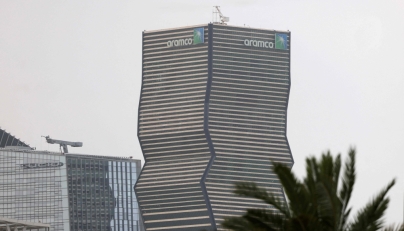 Oil giant Aramco's profits soar 44 pct as war boosts prices
Riyadh, Saudi Arabia: Oil giant Saudi Aramco reported a 44 percent surge in net profits on Tuesday after the Middle East war sent energy prices soaring. Aramco, the world's biggest oil exporter and engine of the Saudi economy, is the...
Higher jet fuel costs hit Lufthansa profit
Frankfurt, Germany: Profit at German aviation group Lufthansa plunged in the second quarter, the firm said Tuesday, as higher jet fuel costs hit earnings. Excluding one-off effects, core profit fell almost 56 percent to 383 million euros ($440 million), Lufthansa...
 QSE index opens lower
Doha, Qatar: Qatar Stock Exchange (QSE) general index fell 7.03 points, or 0.07%, at the start of Tuesday's trading, down to 10,126 points, under pressure from two sectors. The market data showed declines in the sectors of Banks and Financial...