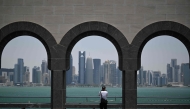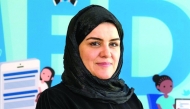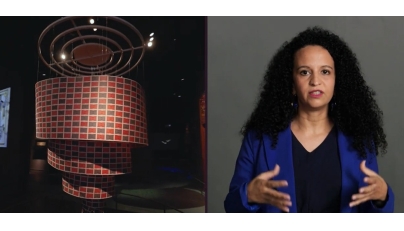
Doha, Qatar: At a time when the Middle East and Islam are often viewed through narratives shaped outside the region, Dr Mounia Abudaya, Deputy Director of Curatorial Affairs at the Museum of Islamic Art (MIA), believes art and culture can help reclaim the narrative and tell the story from the perspective of the region itself. “Right now, I think in the midst of being part of a region that's been misinterpreted in the past decades, and Islam in particular, the role of art and culture are really even more crucial and more essential to tell the narrative from this part of the world and to really reclaim that story from the perspective of this region. And that's, I believe, what Qatar is trying to do as well in developing arts and culture.” For Dr Abudaya, museums can offer a space to look beyond the divisions and borders that shape contemporary perceptions of the Islamic world. Through objects that trace centuries of movement, exchange and shared traditions, collections can reveal connections between societies that are often viewed as separate today. “In the medieval period, you don't have that many boundaries and that many differences between certain people of the Islamic world. And I think in the world we live in right now, it's very important to have that kind of narrative as well and to be able to tell that story in a museum,” she said at the latest Evolution Nation video series posted by Qatar Creates. Her perspective is closely connected to her 13 years at the Museum of Islamic Art, where she has worked with a collection spanning more than 1,400 years of Islamic history and encompassing objects from across three continents. Among the works that have stayed with her is a rare 15th-century pilgrimage certificate. “I've been at the Museum of Islamic Art now for 13 years and there's one object in particular that holds a special place for me. It's a pilgrimage scroll being produced in the 15th century. It's quite a unique object because there's not so many pilgrimage scrolls that were produced during that time period especially in the 15th century. And that particular object for me has really set up the tone of my journey in Qatar Museums.” Made for a pilgrim named Sayyid Yusuf bin Sayyid Shihab al-Din Mawara al-Nahri for his ‘umra', the certificate depicts significant locations in Mecca, Medina and other religious sites, accompanied by Quranic inscriptions and texts in Arabic and Persian relating to pilgrimage. The names of the pilgrim and his six witnesses appear at the end. Pilgrimage certificates were legal documents acquired by pilgrims at the end of their journey, recording the completion of their pilgrimage. Today, the object gives a glimpse into the experiences of an individual who travelled across the Islamic world centuries ago, while also illustrating the movement of ideas, beliefs and artistic traditions across regions. It is this ability of objects to tell stories from within the region that Dr Abudaya sees as central to the work of museums. Rather than presenting Islamic art as a single, fixed tradition, collections such as that of MIA reveal a complex history shaped by travel, exchange and encounters between different communities. The museum, in this sense, becomes more than a place to view historic objects. It provides an opportunity to reconsider familiar narratives and to encounter the Islamic world through the voices, histories and objects that emerged from it. Read Also QCB highlights financial sector resilience in 2025 review QCDC expands flagship career programme for high school students Qatar advances driverless robotaxi trials after achieving 94% success rate Dr Abudaya shared her reflections as part of Evolution Nation, a Qatar Museums campaign that profiles the people whose work and ideas have contributed to the country's cultural development over the past 50 years. Her story is one of many featured in the campaign, highlighting individuals working across Qatar's artistic, historic, creative and sporting landscape. The Evolution Nation campaign forms part of Qatar Creates, the year-round cultural movement by Qatar Museums that brings together art, design, food, fashion, film and sport. Launched to mark 50 years since the establishment of the original National Museum of Qatar in 1975, Evolution Nation celebrates the individuals, institutions and ideas that have contributed to Qatar's cultural development. Episodes of Evolution Nation are available on the Qatar Creates YouTube channel and across Qatar Creates’ social media platforms, sharing the stories of the people behind Qatar's continuing evolution as a cultural, creative and sporting nation. *This article forms part of Evolution Nation, an ongoing series celebrating the people helping shape Qatar’s cultural, creative and sporting future. Episodes are available through the Qatar Creates YouTube channel and across Qatar Museums’ digital platforms, sharing the stories behind Qatar’s continuing evolution and the individuals driving it forward.
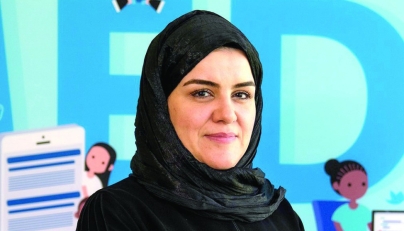
Doha, Qatar: Primary Health Care Corporation (PHCC) has launched a comprehensive awareness campaign to mark this year’s World Breastfeeding Week, observed at the beginning of August under the theme, “Breastfeeding for a Sustainable Start in Life: Strengthen What Works.” The campaign aims to raise community awareness of the importance of breastfeeding for the health of both mothers and children and to promote healthy practices from the earliest stages of a child’s life. As part of its commitment to supporting maternal and child health and reinforcing global initiatives that encourage breastfeeding—most notably the Baby-Friendly Hospital and Health Center Initiative—the campaign includes a range of educational activities and community outreach programs both within PHCC health centers and across the wider community. Assistant Director of Medicine for Child and Adolescent Health Services at PHCC, Dr. Sadriya Al Kohji (pictured) said that the campaign includes publishing awareness messages through social media platforms highlighting the importance of breastfeeding and continuing it beyond birth. It also features a live Instagram session to discuss the benefits of breastfeeding and provide guidance on maintaining breastfeeding after delivery. In addition, PHCC is organizing awareness booths at all health centers, where educational brochures in both Arabic and English will be distributed. These materials explain the benefits of breastfeeding, outline the essential nutrients found in breast milk, and highlight its role in strengthening children’s immunity and protecting them against a range of common childhood illnesses and infections. Breastfeeding supports children’s health in both the short and long term. Breast milk contains natural antibodies that help protect infants from common childhood illnesses such as diarrhea and various infections. Through its services, PHCC recommends exclusive breastfeeding during the first six months of life without introducing any additional food or liquids, including water. After six months, breastfeeding should continue alongside the gradual introduction of appropriate complementary foods until the child reaches two years of age. Studies indicate that children who are breastfed are less likely to develop obesity, overweight, or type 2 diabetes later in life. Breastfeeding has also been associated with better cognitive development outcomes. Dr. Al Kohji added that the benefits of breastfeeding extend to mothers as well. It helps reduce certain complications during the first weeks after childbirth and lowers the risk of breast cancer, ovarian cancer, and type 2 diabetes. It may also help reduce stress and anxiety associated with the postpartum period and contribute to preventing chronic conditions such as obesity, cardiovascular disease, and high blood lipid levels. Beyond its health benefits, breastfeeding provides infants with safe, clean, and naturally temperature-appropriate nutrition while also saving families both time and money.
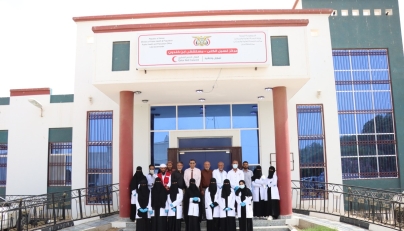
Doha, Qatar:The representation office of Qatar Red Crescent Society (QRCS) has completed all the furnishing and equipment arrangements for a new dialysis center at Ibn Khaldoun Hospital in Lahij Governorate, Yemen, at a total cost of $711,150, funded by a benevolent Qatari donor. The project involved supplying and installing 12 dialysis machines and chairs, an integrated water treatment unit, dialysis suits, supporting laboratory equipment, and medical/office furniture as required for clinical work. The operational infrastructure was also bolstered with two power generators and a complete A/C system. Moreover, medications, solutions, fuel, personal protective equipment (PPE), and hygiene/sterilisation supplies were provided. Health care staff received training in how to operate the dialysis machines and take care of patients with kidney failure. Following the completion of technical and medical equipment installation and testing, the center soft-launched its operations. Director of the dialysis center, Dr. Othman Abdul-Basit said the center had begun gradually receiving patients as part of its initial operational phase. He revealed expansion plans to serve patients from various districts across the governorate. “All the needed equipment and resources are now available, so patients can receive dialysis sessions more easily,” added Dr. Abdul-Basit. “The service is free of charge, which saves the patients and their families a lot of money and travel effort. This center is like a jewel, given its immense importance to the health sector and to patients with kidney failure”. Head of QRCS’s office in Yemen, explained, “The project involved two phases, at a total cost of more than $1.5 million. In phase 1, a 20-room building was constructed up to the highest medical standards, while phase 2 focused on a series of logistical procedures to secure the latest medical dialysis equipment, ensuring highly specialised and efficient performance”. According to him, there are plans to cover the center’s operational costs for one year, at a cost of $236,412. “We will provide medications, medical supplies, dialysis solutions, operational requirements, and staff remunerations, to ensure sustainable and uninterrupted medical services for patients,” Eng. Al-Sharaji stated. Director-General of Health and Population Office in Lahij, Dr. Khaled Gaber expressed his happiness: “This is a significant, long-awaited achievement. Today, the center has turned from a dream to a reality. I am proud to see such an outstanding medical facility, which represents a major asset for the health sector in Yemen in general, and Lahij in particular”. QRCS is calling on charity payers to support a project to provide medications, consumables, and dialysis machines for 350 patients with kidney failure, at a total cost of QR 1,424,500.
 Ministry warns against a slimming product containing undeclared pharmaceutical ingredients
DOHA, Qatar: The Ministry of Public Health warnedthe public against buying, trading or consuming the Eatless – Natural Slimming Formula, after the laboratory results confirmed that it contains two undeclared pharmaceutical substances, Sibutramine and Phenolphthalein, making it a counterfeit product...
 Qatar University builds integrated AI ecosystem to drive digital transformation
Doha: Qatar University (QU) is accelerating the integration of artificial intelligence (AI) across its academic and administrative operations as part of a broader digital transformation strategy aimed at enhancing efficiency, advancing research and innovation, and improving the quality of services...
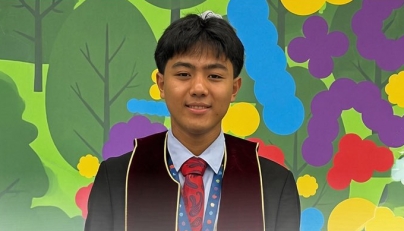 Qatar student wins bronze medal at International Biology Olympiad 2026
Doha, Qatar: Qatar has achieved a new international scientific milestone, with student Ethan Joel P Nepomuceno from the Philippine School, representing the Qatari team, winning the bronze medal at the 37th edition of the International Biology Olympiad (IBO 2026), held...
 Prime Minister holds phone conversation with Egypt's Foreign Minister
Doha: Prime Minister and Minister of Foreign Affairs HE Sheikh Mohammed bin Abdulrahman bin Jassim Al-Thani and Minister of Foreign Affairs, International Cooperation, and Egyptians Abroad of the Arab Republic of Egypt HE Dr. Badr Abdelatty held a phone Conversation,...
 Relatively humid, slightly cloudy weather expected tonight
Doha: Weather inshore until 6:00 am on Sunday will be relatively humid with some clouds, hazy at places later, the Department of Meteorology said in its daily weather report. Offshore, it will be with some clouds, hazy later, the report...