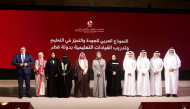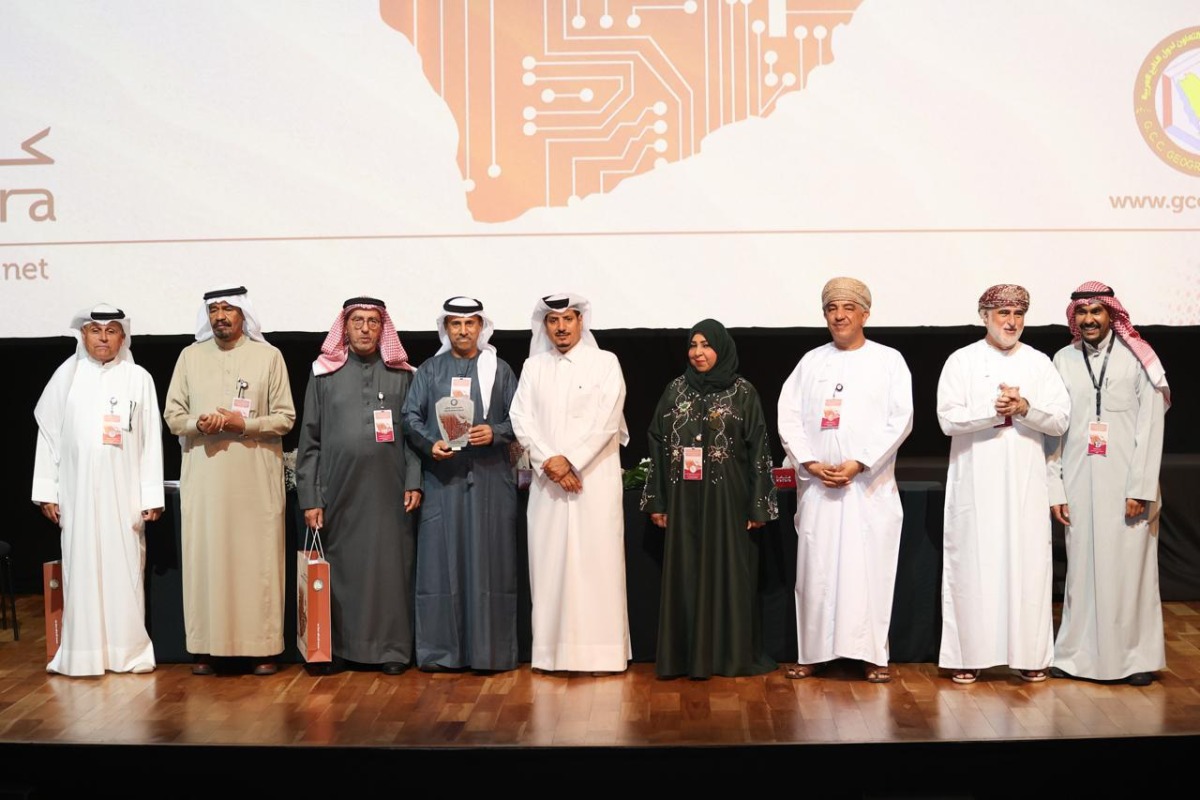
Participants during the conference held at Katara.
Doha, Qatar: The Gulf Geographical Society concluded its seventh scientific conference yesterday, which was hosted by the Drama Theatre at the Katara Cultural Village Foundation. Katara, with the participation of a select group of academics and researchers specialising in geography, artificial intelligence, and modern technologies, culminated in the issuance and adoption of several important scientific recommendations.
Participants emphasised the importance of considering sub-disciplines within geography when employing artificial intelligence technologies, stressing that these technologies should remain a supportive tool for the geographical method, not a replacement for it. This serves to study natural and human distributions, analyse the interrelationships between them, diagnose regional differences, and support comparative spatial studies.
The recommendations emphasised the necessity of not neglecting the role of fieldwork and on-site verification in enhancing the accuracy of geographical studies, regardless of the level of development of the digital technologies used, due to its direct impact on increasing the reliability of scientific research. The conference also recommended the inclusion of artificial intelligence specialists within the association’s structures and the development of a modern electronic project for digital atlases and geographic studies. This would contribute to the application of artificial intelligence and modern technologies in various branches of geography, particularly urban geography, climate change studies, and the promotion of environmental awareness, supporting population policies, and achieving the fair and organized distribution of services.
The recommendations called upon the board of directors of the Gulf Geographical Society to implement the conference’s outcomes and to focus on developing geographic studies in the Arab world. They also emphasised the importance of activating field trips and scientific activities, given their role in strengthening relationships among geographers, exchanging expertise, and establishing a culture of applied research. For his part, Dr. Khaled Hamad Abul-Azamat, President of the Geographical Society of the Gulf Cooperation Council (GCC) countries, affirmed that the Society’s Seventh Scientific Conference represents a significant scientific milestone in the development of geographical research in the region.
He stated that its outcomes emphasised the importance of employing artificial intelligence and modern technologies as tools to support, not replace, the geographical methodology, while preserving the essence of fieldwork and rigorous spatial analysis.
He pointed out that the recommendations adopted by the conference reflect an advanced scientific awareness of the necessity of integrating geography and technological innovation, particularly in the areas of climate change, environmental awareness, population policies, and urban planning, in order to serve the issues of sustainable development in the Gulf countries and the Arab world. He emphasized the Society’s commitment to this integration. The association will implement these recommendations, strengthen scientific partnerships, and support researchers and geographers, thereby contributing to elevating the status of geography and its role in serving society and decision-makers.