Representational image from 365score website
Doha, Qatar: The FIFA World Cup has built its reputation on iconic goals, dramatic finals and legendary performances that define football history. But beyond the headlines and trophy celebrations, the tournament has also produced a collection of unusual and often surprising moments.
Here are some of the World Cup's most memorable oddities:
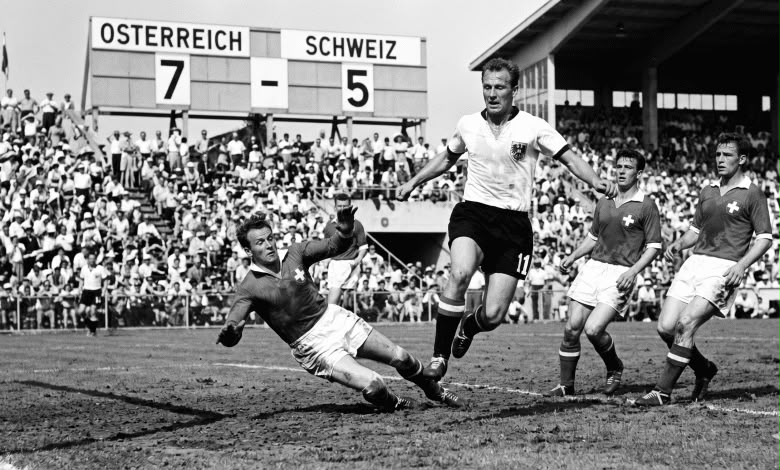
The “Heat Battle of Lausanne” and a 7-5 victory
The 1954 World Cup quarter-final between Austria and Switzerland remains the highest-scoring match in tournament history, ending 7–5 to Austria.
Played in Lausanne in temperatures reaching around 40°C, the match produced 12 goals and a record nine in the first half alone.
Switzerland raced into a 3–0 lead before Austria responded with a rapid scoring surge to turn the game around. Austrian goalkeeper Kurt Schmied was severely affected by heatstroke during the match and required treatment on the field, continuing despite his condition due to the rules of the time, which did not allow substitutions.
The game became known as the “Heat Battle of Lausanne” for its extreme conditions and extraordinary scoreline.
The spectator who became a player
In one of football’s most unusual selection stories, Slobodan “Barney” Djordjevic went from spectator to player during a 1972 World Cup qualifying match between the United States and Mexico.
Originally in the stands, Djordjevic was called up after a series of administrative issues left the US short of available players. He was quickly registered, pulled into the squad, and went on to play one half in a 2–1 defeat — earning his only international appearance in extraordinary circumstances.
India’s automatic qualification in 1950
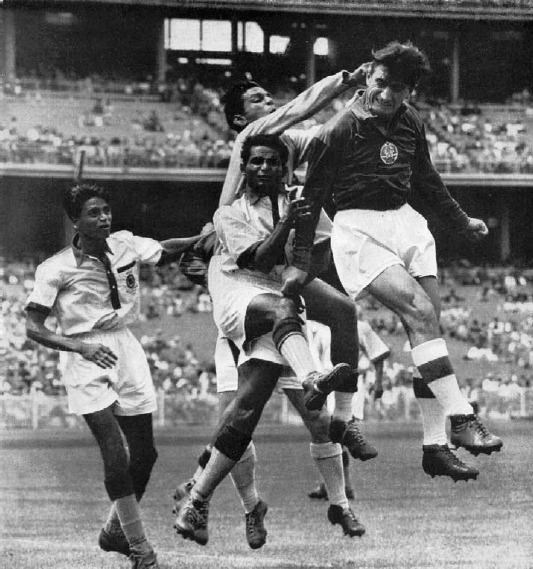
Image from All India Football Federation official website
India qualified for the 1950 World Cup after several Asian teams withdrew from the qualification process in the aftermath of World War II, when financial and logistical difficulties made participation impossible for many nations.
As a result, India were placed into the tournament without playing a single qualifying match. However, the Indian team later withdrew before the finals in Brazil, meaning they never actually competed in the tournament despite qualifying.
A four-way battle in 1994
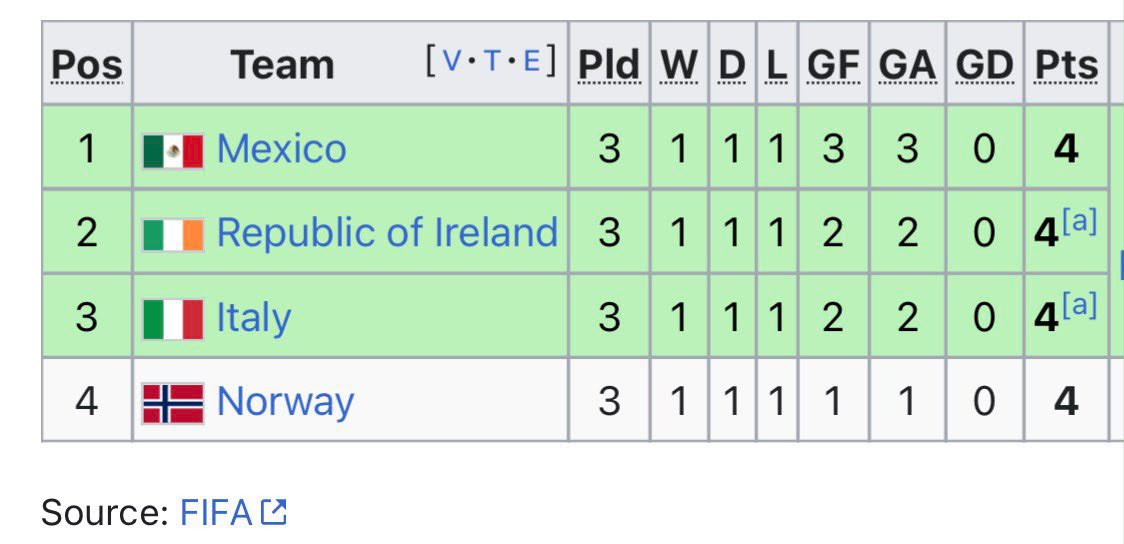
The 1994 World Cup produced one of the most tightly contested group stages in tournament history, with Mexico, Italy, the Republic of Ireland, and Norway all finishing Group E level on points.
Each team ended with four points after a win and two defeats across their matches, creating an unusually balanced table. With teams so closely matched, qualification was ultimately decided by fine margins such as goal difference and goals scored, it was the only time in history where a group ended in a four way tie.
The referee who lost count

Representational image from freepik
During the 2006 World Cup match between Croatia and Australia, Croatian defender Josip Šimunić became part of one of the tournament’s most bizarre moments.
He was booked in the 61st minute, then again in the 90th, but referee Graham Poll failed to send him off, mistakenly recording the earlier caution under the wrong name.
The game continued with Šimunić still on the pitch, before the error was realised after the final whistle. Poll then showed him a third yellow card, followed by a red, completing one of the most unusual refereeing decisions in World Cup history.