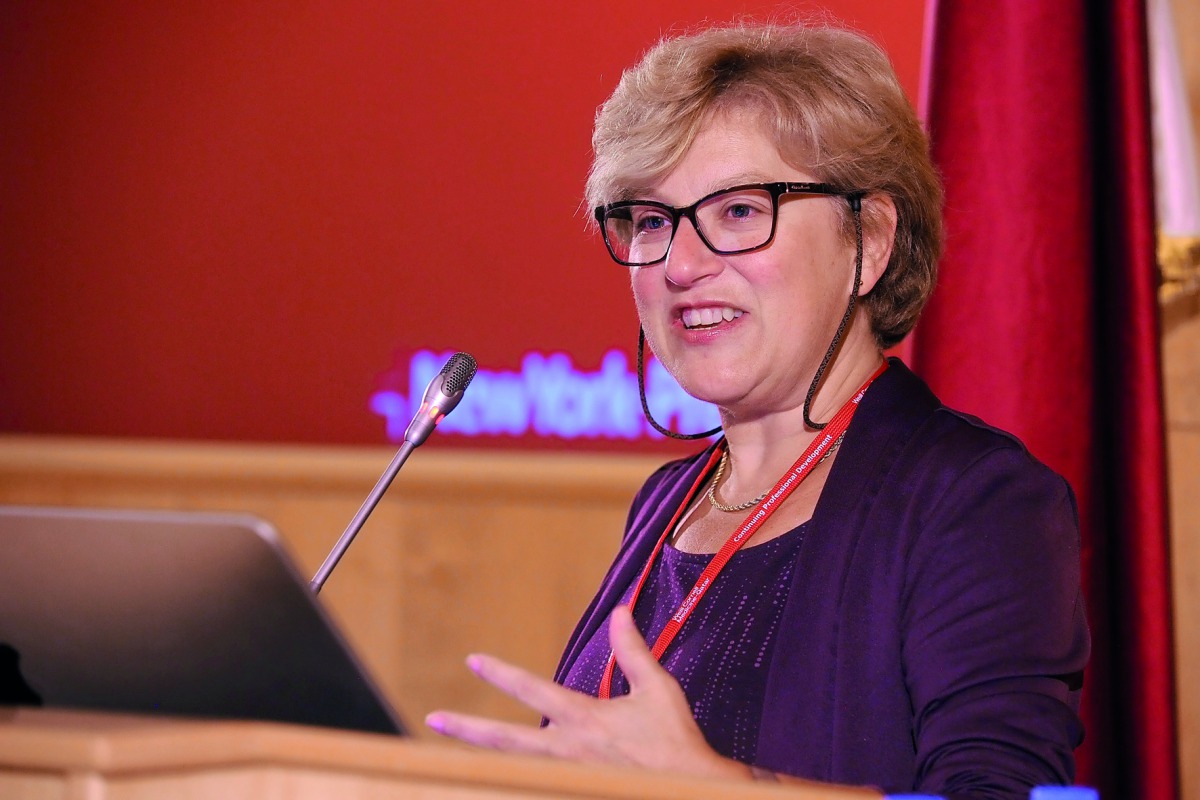
Dr Randi Diamond, Assistant Professor of Medicine at Weill Cornell Medicine in New York speaking at the event.
The legal and ethical issues surrounding end-of-life care were discussed at the latest installment of Weill Cornell Medicine-Qatar’s (WCM-Q) series on the intersections between law and medicine.
More than 200 physicians, nurses and other healthcare professionals convened at WCM-Q to hear experts from around the globe explain and explore key themes in end-of-life care. Themes included maximising quality of life for patients in their final days, palliative care in the global context, strategies for ensuring effective communication among healthcare professionals, patients and their families, and the legal and ethical issues inherent in providing palliative care in a multinational, cultural, and religious community, among others.
Dr Randi Diamond, Assistant Professor of Medicine at Weill Cornell Medicine in New York, said, “Palliative care focuses on providing patients with relief from the symptoms, pain and stress of having a serious illness, regardless of what the diagnosis may be. While palliative care is often for people who are nearing the end of their life, it is also beneficial for people who have a serious illness but are likely to live for an extended time. The overall aim of palliative care is to help the patient and the family achieve the best quality of life in whatever time they may have remaining. Interdisciplinary palliative care teams work side by side with a patient’s other primary care and specialist physicians.”
The symposium, titled ‘Law and Medicine Series: Legal and Ethical Issues in End-of-Life Care’, was the sixth Law and Medicine event hosted by WCM-Q. The series provides healthcare and legal professionals with practical information about legal and ethical issues affecting provision of medical care in Qatar and the wider region. Andrea Tithecott, Partner at corporate law firm Al Tamimi & Co, discussed the legal issues relating to end-of-life care, institutional liability, patients’ rights regarding refusing care and defining the legal capacity of patients and medical research subjects.