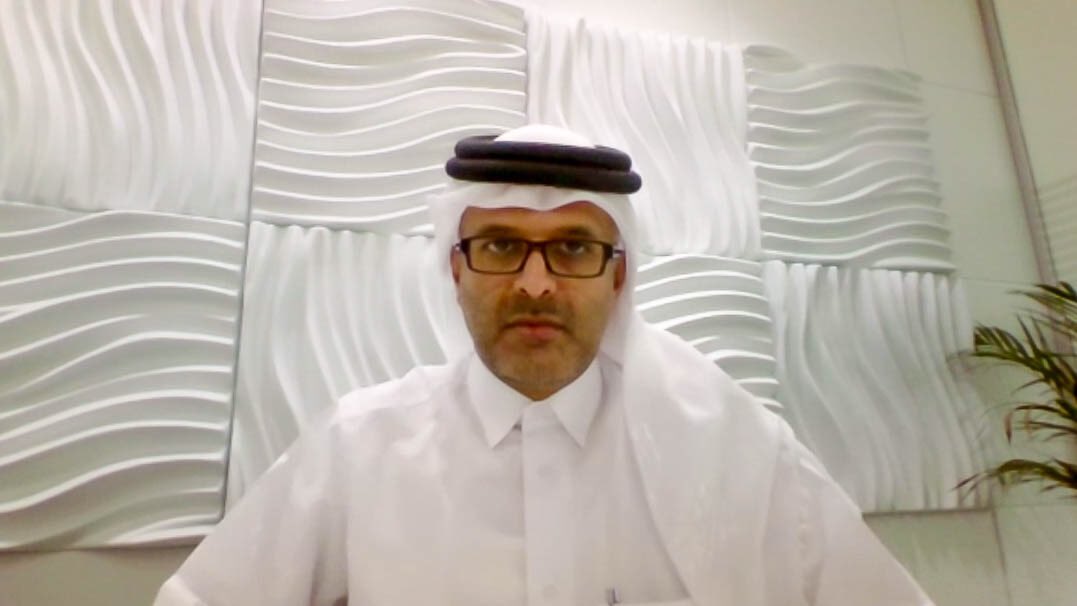
Sheikh Thani bin Ali Al Thani, QICCA Board Member for International Relations
Participants of a distance seminar organised by the Qatar Chamber’s (QC) Qatar International Center for Conciliation and Arbitration (QICCA) have affirmed that many global initiatives and endeavours are calling for the endorsement of cyber arbitration as a tool for implementing the social distance adopted by world countries in light of the current crisis of COVID-19 pandemic.
The recently held video conference seminar titled ‘Current Challenges for Arbitration’ was held in cooperation with ‘Qatar Lawyers’ and the College of Law at Qatar University. About 175 followers attended the seminar online. The seminar reviewed various topics related to the necessary procedures for implementing cyber arbitration to ensure a successful arbitration process.
It also touched on legal obstacles facing remote arbitration. Speaking at the seminar, QICCA Board Member for International Relations Sheikh Thani bin Ali Al Thani said the spread of the coronavirus has posed many challenges to arbitration and on all other legal systems in the world, including arbitration centres.
He noted that arbitration institutions around the world are seeking solutions to continue arbitration process and to meet its challenges such as nonattendance of parties, expert hearing and witness interrogation, as well as travel and travel restrictions for parties, arbitrators and others. He also noted that commercial arbitration, through the flexibility of its rules and procedures, and its adaptipn with the circumstances and variables, would be more qualified to cope with modern technological applications.
Sheikh Thani affirmed that the Qatari arbitration law in some of its provisions allows the use of technological means in the arbitration process, such as concluding the arbitration clause through electronic writing and filing of arbitration applications and exchange of notes and documents electronically.
He stressed that QICCA had recently issued many arbitral awards in arbitration cases that had been finalised online. He expected that the coming period will see an increase in arbitration applications in all countries as a result of the insistence by some contractors on the existence of force majeure case or exceptional circumstances that make the implementation of commercial contracts impossible or cumbersome.
On his part, Dr. Mohamed Al Khuliafi spoke about the impact of crises on the practical reality and the ability of arbitration to cope with these developments, while another participant, Sultan Al Abdullah, reviewed the steps taken by international arbitration centres and institutions to face the crisis, including the Seoul Protocol on holding visual arbitration sessions. Dr. Mona Al Marzouki discussed the obstacles that parties of arbitration would face in case of electronic arbitration, such as the interest of applying the principle of equality and confrontation.
Also speaking during the seminar, Dr. Yasin Al Shazli, excluded any effects of the current crisis on the course of arbitration cases, affirming that arbitration had faced many force majeure circumstances and exceptional circumstances and managed to deal with them.
Dr. Minas Khachadurian spoke about the major guarantees for the litigation of the remote arbitration, underlining the stance of the New York Convention on the implementation of the remote arbitral awards. Dr. Nader Ibrahim also spoke about the Qatari arbitration law, which included flexible rules governing the conduct of arbitration proceedings.