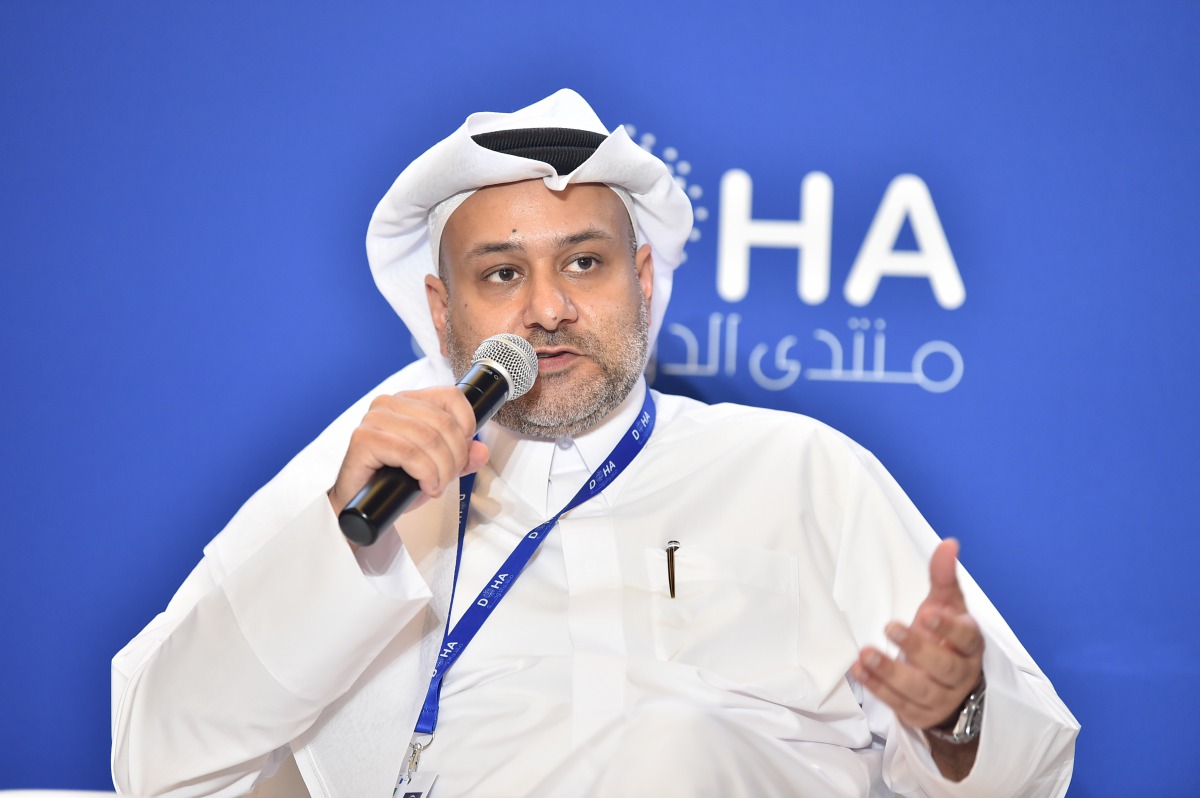
Yousuf Mohamed Al Jaida
Qatar has been rapidly developing its Islamic finance industry and is poised to become a leading hub for the sector. The industry’s total assets grew by a CAGR of 8 percent since 2015 to $129bn in H1 2019, constituting 33 percent of Qatar’s total financial system assets, Qatar Financial Centre’s (QFC) Islamic Finance report noted.
The QFC’s annual report, produced in partnership with Refinitiv and published under the title ‘Unlocking Cross-Border Opportunities’, comes as part of a series of research the QFC publishes on trending topics in the financial sector, with this year’s edition revealing key insights into the Islamic Finance industry in Qatar and beyond.
According to the report, one key initiative set to strengthen Qatar’s Islamic finance sector is the planned introduction of a centralized Shariah Board, which is expected to raise consistency and hence, improve the integrity of the industry.
QFC is also collaborating with Malaysia and Turkey to establish Islamic finance hubs in their respective regions by using common technology. In addition to this, steps are being taken to raise knowledge and awareness of the industry through educational initiatives and events, which should further support the industry’s growth.
Islamic banking in Qatar, amounting to $107bn in assets in H1 2019, is also being transformed in terms of its institutions. Qatar’s first bank merger, between International Bank of Qatar and Shariah-compliant Barwa Bank, resulted in the newly reconstituted Barwa Bank.
Meanwhile, Qatar’s $1bn takaful sector outperformed conventional insurance in terms of growth over the past two years, mainly driven by Islamic subsidiaries of Qatari insurance operators. Its nonbanking financial institutions, consisting of financing and investment companies, reached a combined asset value of just over$1bn, the report noted.
Yousuf Mohamed Al Jaida, Chief Executive Officer & Board Member, Qatar Financial Centre (QFC) Authority commented: “QFC sees significant promise in Islamic finance’s expansion globally and in Qatar, driving an impetus to identify concrete business opportunities on its platform. These are varied and growing rapidly — as is our list of international financial and trading partners.
“Product opportunities abound in Qatar, far more so when one considers the financing needs of our New Emerging Belt Initiative partners. This comparative study identifies major developments and differences between existing Islamic finance centers and pinpoints how QFC will build further on its success to become a regional Islamic finance hub.”
The report noted Qatar has the necessary foundation to take its Islamic finance industry to the next level while benefiting from the experience of other Islamic finance markets. For instance, Qatar could play a major role in the takaful industry by establishing a retakaful operator that caters to the reinsurance requirements of takaful providers, both domestically and regionally, as seen in Malaysia.
In addition, Qatar could further strengthen its Islamic banking regulatory framework, such as establishing a centralized Shariah Board, which would enable more commercial opportunities. Turkey has also set an example through the strategies and incentives, like state-guaranteed corporate loans and relaxed provisions, which have made it one of the world’s fastest growing Islamic banking markets.
Qatar’s Islamic capital market consisted of $20bn in sukuk outstanding and $399m in Islamic assets under management in H1 2019. The government remains the most active player in the sukuk market.
In addition, Qatari banks including Qatar Islamic Bank and Barwa Bank have been active as primary dealers for IILM sukuk, which are partly backed by Qatari sovereign assets, helping to facilitate cross-border Islamic liquidity management.
The Islamic asset management landscape has been transformed with the introduction of the country’s first Islamic ETF, which captured more than one-third of total Islamic funds’ AuM in 2018. The success of the fund has encouraged the creation of new units, including another Islamic ETF that will be focused on Islamic stocks outside Qatar.
Sukuk activities in Qatar can be boosted by introducing incentives that offer prospective sukuk issuers tangible benefits and capitalize on SRI and green sukuk issuance trends, which would attract demand from international investors. It can also study Islamic pension funds and introduce Shariah-complaint REITs, an investment trend that is growing increasingly in the region.