Doha: Oil prices settled higher on Friday but posted their steepest weekly decline since November, as traders assessed potential improvements to the supply outlook that has been disrupted by Russia’s invasion of Ukraine, said the report released by the Al Attiyah Foundation.
Last week, futures benchmarks hit their highest levels since 2008, then pulled back sharply as some producing countries signalled they may boost supply. On Friday, supply concerns grew when talks to revive the 2015 Iran nuclear deal faced the threat of collapse after a last-minute Russian demand forced world powers to pause negotiations.
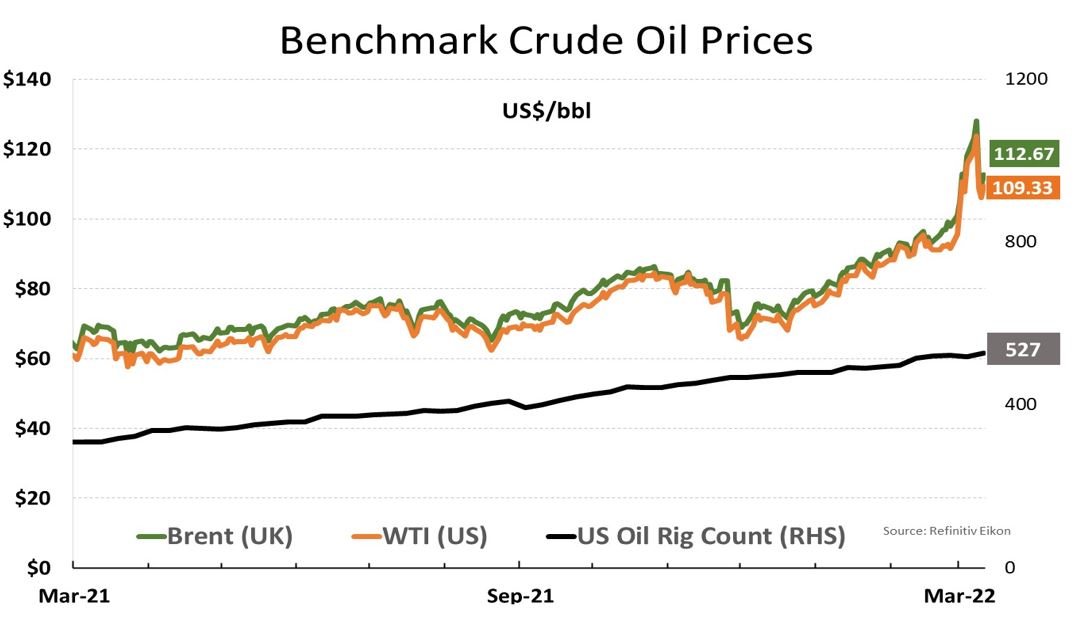
Brent crude futures rose $3.34, or 3.1 percent, on Friday, settling at $112.67 a barrel, US West Texas Intermediate crude futures rose $3.31, or 3.1 percent, to settle at $109.33 a barrel.
The Russia-Ukraine conflict pushed the United States and many Western oil firms to stop buying Russian oil. However, there was talk of potential supply additions from Iran, Venezuela and the United Arab Emirates.
In the near term, supply gaps are unlikely to be filled by extra output from members of the OPEC and allies given Russia is part of the grouping, analysts said. Some OPEC+ producers have struggled to meet production targets, limiting the group’s ability to offset Russian supply losses.
Asian spot liquefied natural gas (LNG) prices declined last week, tracking European gas prices which fell due to stable Russian gas flows and LNG supply.
However, market players remain concerned over the risk of Russian supply disruption amid a tense geopolitical situation following Moscow’s invasion of Ukraine, which remains a bullish factor that could send prices higher. The average LNG price for April delivery into north-east Asia was estimated at $38 per metric million British thermal units (mmBtu), down $2.50, or 6.2% from the previous week, industry sources said. While inventories are running low in Japan and South Korea and would encourage restocking demand, buyers remain reluctant to engage in the spot market and prefer to wait until prices are at more reasonable levels.
Another factor which would support a price rise would be Europe’s attempts to fill its gas storage during the summer gas season which runs from April through October. Meanwhile, the European commission earlier last week revealed a plan to wean its economies off Russian gas, focusing on replacing Russian gas with alternative supplies of 60 billion cubic meters, most of which would come from LNG imports.