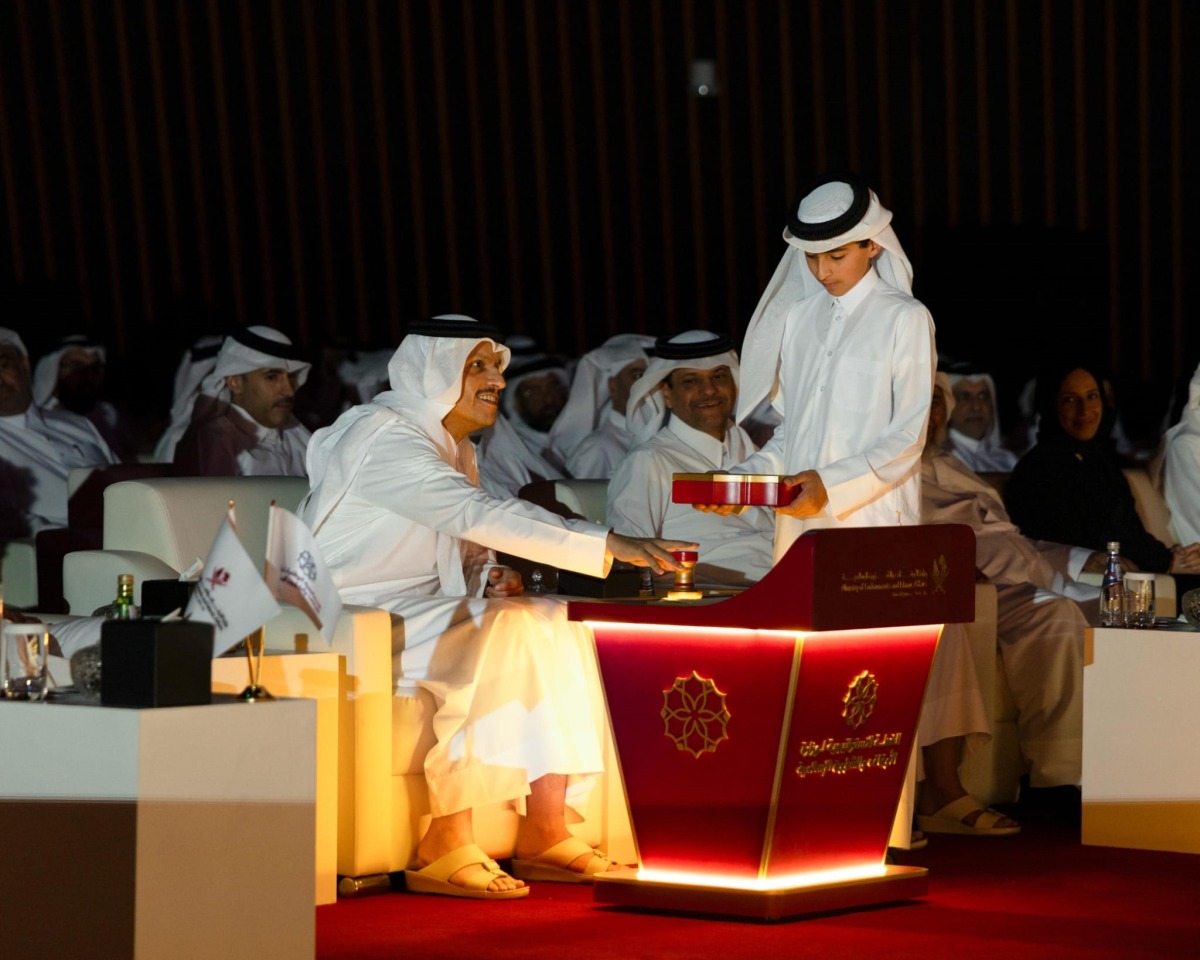
Prime Minister and Minister of Foreign Affairs H E Sheikh Mohammed bin Abdulrahman bin Jassim Al-Thani launching Ministry of Awqaf and Islamic Affairs’ 2025-2030 Strategy in a ceremony held in Doha yesterday.
Doha, Qatar: Prime Minister and Minister of Foreign Affairs H E Sheikh Mohammed bin Abdulrahman bin Jassim Al-Thani has launched Ministry of Awqaf and Islamic Affairs’ 2025-2030 Strategy in a ceremony held in Doha yesterday.
The event was attended by Speaker of Shura Council H E Hassan bin Abdullah Al Ghanim, Deputy Prime Minister and Minister of State for Defense Affairs H E Sheikh Saud bin Abdulrahman bin Hassan Al Thani and Their Excellencies Ministers and other dignitaries.
The new strategy comes as a practical translation of Qatar National Vision 2030 and the Third National Development Strategy (2024–2030), reflecting the ministry’s commitment to strengthening Islamic values, promoting sustainable social and moral development, and contributing to comprehensive national development across spiritual, social, and institutional dimensions.
Speaking at the ceremony, Minister of Awqaf and Islamic Affairs H E Ghanem bin Shaheen bin Ghanem Al Ghanim said the strategy is not merely a planning document, but a binding operational framework that reflects the State’s vision of building a cohesive modern society grounded in values, ethics, social solidarity, family cohesion, and national identity.
He highlighted the directives of Amir H H Sheikh Tamim bin Hamad Al Thani, emphasizing that plans are a means to achieve tangible results that improve people’s lives and fulfill aspirations. The Minister stressed that human development remains the central objective of national progress and that material advancement is closely linked to moral, cultural, and ethical development.
Al Ghanim affirmed that the Ministry of Awqaf and Islamic Affairs plays a pivotal role in the value-based and developmental framework of Qatari society through an integrated system that combines authentic religious principles with modern institutional practices.
He noted that the ministry oversees a broad range of responsibilities, including promoting moderate Islamic teachings, enhancing religious awareness, caring for the Holy Qur’an, managing endowments and zakat affairs, supervising mosques, qualifying religious cadres, and organizing Hajj and Umrah affairs.
Al Ghanim added that the Ministry seeks to highlight Islam’s role in building individuals and shaping awareness while reinforcing the values of moderation, solidarity, and belonging. It also aims to activate sustainable development tools through waqf and zakat to enhance the positive role of religious institutions and contribute to social cohesion and stability.
According to the Minister, the strategy seeks to create a qualitative transformation in the ministry’s performance and societal impact by developing the da’wah system, reinforcing moderate Islamic values, improving religious services, enhancing institutional performance, and strengthening social solidarity and sustainability.
The Ministry’s vision for 2025-2030 is titled: “Consolidating the message of Islam in thought, worship, and behaviour, and establishing harmonious, supportive, and sustainable modern societies.”
The vision is based on the understanding that Islam represents a comprehensive way of life that balances authenticity and modernity while helping build a balanced society capable of preserving its identity and keeping pace with modern development requirements.
The Ministry’s mission focuses on conveying the message of Islam through wisdom and good counsel, nurturing individuals and communities through the teachings of the Qur’an, maintaining mosques and religious obligations, and achieving sustainable social solidarity through zakat and waqf under an institutional governance framework and an innovative environment.
The strategy is also built on a framework of institutional values that include moderation, leadership, excellence, partnership, sustainability, and professionalism, serving as ethical and operational principles guiding the ministry’s future efforts.
The strategy was developed using a comprehensive participatory scientific methodology based on detailed analysis of the ministry’s internal and external environment, as well as careful assessment of national and international developments.
It draws on several national references, including Qatar’s Permanent Constitution, Qatar National Vision 2030, the Third National Development Strategy, sectoral strategies, the Qatar Government Excellence Model, and the United Nations Sustainable Development Goals.
The preparation process included workshops, leadership meetings, focus groups, and analysis of institutional reports and data to establish a strong knowledge base for identifying priorities and future challenges.
The strategy is built around six major strategic outcomes that will guide the ministry’s work during the coming years. They include a da’wah system that strengthens Islamic values and culture while achieving local and global impact, flourishing and well-maintained mosques. Others are a sustainable waqf and zakat system that promotes social solidarity, enhancing Islamic rituals and facilitating their performance through integrated programs and services, an integrated institutional system driven by innovation and excellence and a leading institutional reputation and public image.
These pillars include a wide range of initiatives and development programs, such as improving religious education and Arabic language programs, enhancing the skills of imams and preachers, utilizing modern technologies in mosque management, promoting waqf culture, improving the experience of pilgrims and Umrah performers, empowering national cadres, strengthening volunteer work, and developing institutional and media communication tools.
The Ministry has also introduced key performance indicators to measure progress through 2030. These include improving the quality of religious services, increasing the number of green mosques, raising satisfaction levels among Hajj and Umrah pilgrims, achieving full digital transformation of services, and enhancing public satisfaction with the ministry’s reputation and services.