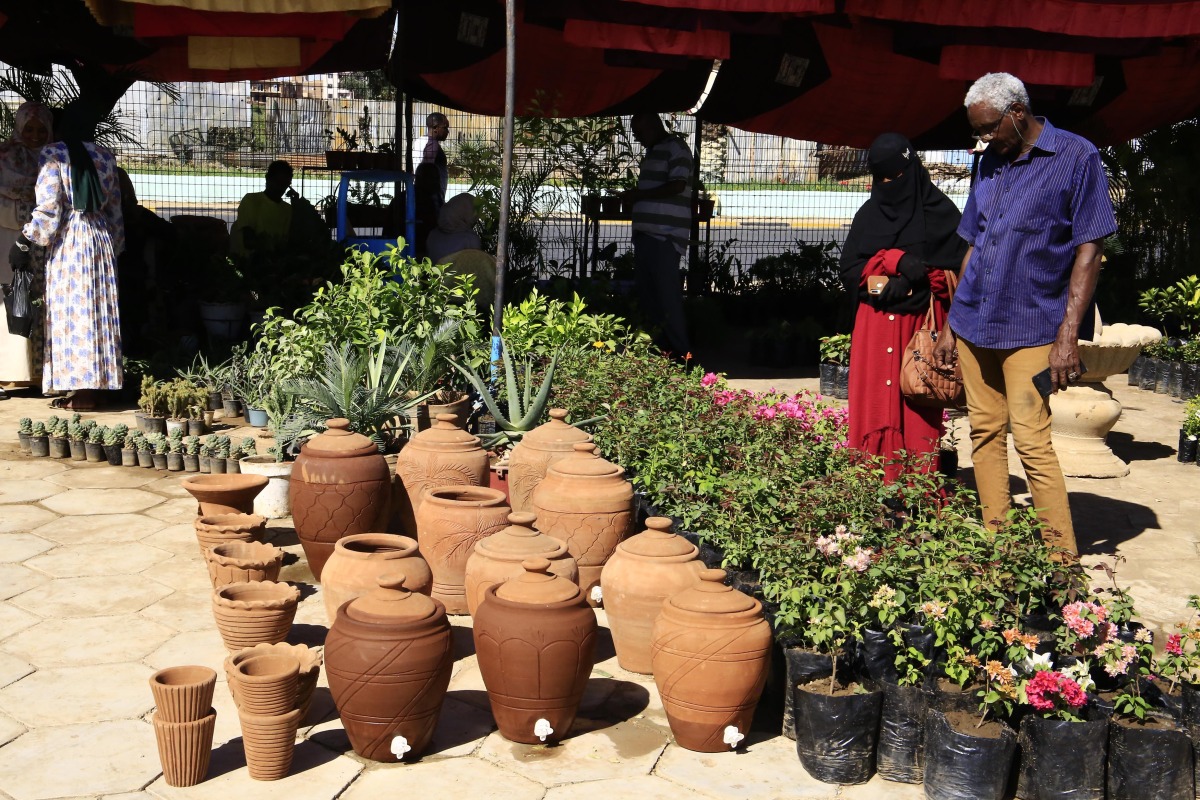
People visit the flower festival in Khartoum, Sudan, on Feb. 7, 2026. (Photo by Mohamed Khidir/Xinhua)
Khartoum: Khartoum bears the scars of almost three years of war. Streets that once thrived with life now stand quiet, buildings pocked by shellfire, and government offices largely abandoned. Yet amid the ruins, a tentative return is beginning as residents slowly reclaim the capital.
Along University Street, once the city's administrative backbone, red-brick government buildings stand battered, their facades pitted by years of neglect and conflict.
"Government institutions aren't operating, and there's no stable electricity," said Mohamed Fadlalla, a government employee in his late 50s, walking through his damaged workplace for the first time in nearly three years. "Most institutions are damaged or burned, and reconstruction will require tremendous effort and time."
Just blocks away, the once-vibrant Nile Street along the riverbank remains quiet, its cafes and restaurants still shuttered.
"There's no life here… still no electricity or water," said Ahmed Al-Sir, who worked in a cafe for more than 20 years.
The war has also crippled Khartoum's economy. Before the conflict erupted in April 2023, the capital was Sudan's undisputed powerhouse, contributing 35 to 40 percent of the national GDP and employing over 45 percent of the country's service-sector workforce, according to economic analyst Abdul-Khaliq Mahjoub. Today, that engine lies fractured.
Mahjoub estimates that 60 to 70 percent of organised economic activity in the capital has been lost, with recovery crawling back to only 20 to 30 percent of pre-war levels.
Yet, after government forces reclaimed Khartoum province from the paramilitary Rapid Support Forces (RSF) last year, signs of revival are beginning to appear.
On Al-Hurriya Street, the capital's main electronics market, the hum of generators blends with the cautious chatter of merchants and shoppers. Some shelves remain half-empty, but trade has slowly resumed.
Trader Anas Saleh has partially reopened his shop. "Business has started to move again, but it's not like before," Saleh said. "People are around, but purchasing power is weak. Still, every customer gives me hope that returning to normal is possible, even if slowly."
Across the Nile, in Omdurman, part of the Khartoum metropolitan area, recovery is more visible. In the sprawling market, vendors line alleys as shoppers weave through crowded lanes, haggling over prices and restocking their homes.
Fabric merchant Muaz Al-Tayeb has noticed a subtle shift. "People are no longer buying just necessities. They're also buying items for their homes. The market is beginning to recover."
But challenges remain. Hafiz noted that traders operate with only 30 to 40 percent of their pre-war capital, curbing expansion and hiring. Prices for basic goods have surged 150 to 300 percent compared with pre-war levels, severely weakening consumer demand.
Despite the return of nearly 1.4 million residents to the capital since early 2026, and the government's relocation of its headquarters back to Khartoum in January, sales volumes in the markets of the Khartoum metropolitan area remain at only 40 to 50 percent of their pre-conflict levels.
"What's happening now is just the beginning," said Abdul-Rahim Al-Amin, a retired engineer. "Recovery is possible, but it will take time and sustained security."
Primary school teacher Amna Yousif captured the quiet significance of the moment as children filed back into classrooms "Children going back to school means families are starting to feel safer."