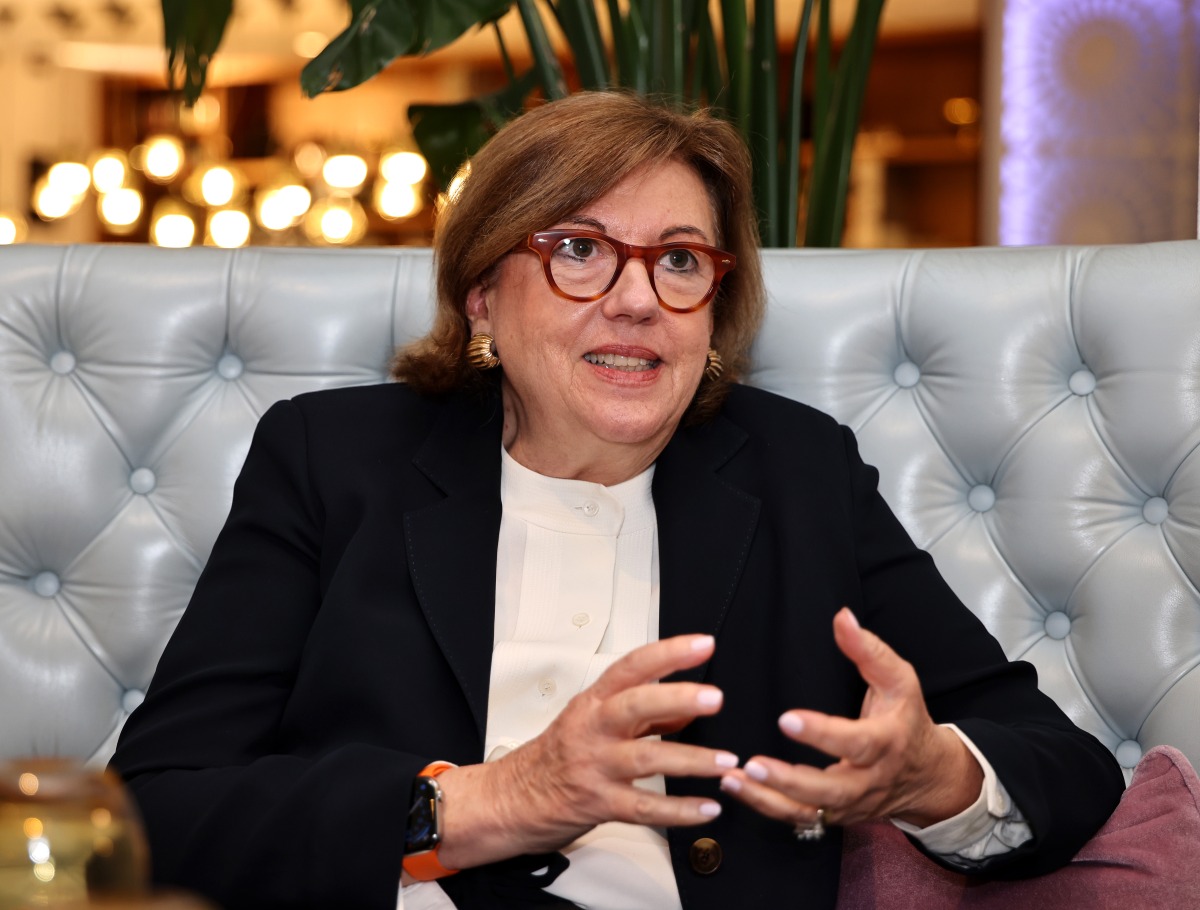
Laura Frigenti, CEO of Global Partnership for Education
Doha, Qatar: Global Partnership for Education (GPE) with a long term partnership with Qatar is set to further deepen collaboration with Qatar Fund for Development (QFFD) and Education Above All (EAA) Foundation to get better education for children in lower-income countries.
“We agreed to move beyond a purely project-based approach and further deepen our collaboration. The next step is for GPE, EAA and QFFD to work together on a structured approach to innovative financing in priority countries,” said Laura Frigenti, CEO of GPE, in an interview with The Peninsula.
Frigenti concluded a two day visit to Qatar yesterday as part of GPE’s global replenishment campaign, which will culminate in a conference this June. The replenishment campaign is a major global fundraising and partnership effort that GPE conducts every few years to raise money and political support, enabling it to continue and expand its work in helping children access quality education, especially in low-income countries.
“We are visiting our partner countries to understand their level of interest in continuing the partnership and to explain what they can expect in the next cycle,” Frigenti said.
“It’s also an opportunity to gauge their commitment and explore more strategic, long-term collaboration.” GPE aims to raise $15bn in grants and innovative financing over 2026–2030 to help nearly 750 million children in 96 countries receive a better education.
Her trip included stops in Dubai, Kuwait, and finally Qatar, aiming to maximise outreach in one comprehensive journey.
In Doha, she met with representatives of QFFD and EAA Foundation, a key channel for Qatari funding. She also paid a courtesy visit to the Ambassador of Italy, recognising Italy’s role as one of the co-chairs of the GPE campaign alongside Nigeria.
Asked about the partnership with Qatari institutions in the previous cycle, Frigenti highlighted the distinct approach they take compared to other regions. “Qatar has preferred to focus on specific countries or issues. They identify a priority area, contact us, and we develop targeted initiatives together,” she said.
“There’s significant alignment, especially regarding out-of-school children and regional priorities. We are exploring whether this relationship can evolve from a transactional partnership to a more strategic and structured collaboration.” Frigenti emphasised Qatar’s leadership in the global education sector. “Qatar has been at the forefront of attention to education, not just in the region but globally, particularly in addressing out-of-school children. Their focus and investment have been highly effective.”
She reflected on the importance of moving beyond country-specific interventions to influencing global education discussions.
“Funding for education remains crucial, yet resources are declining both internationally and domestically. At the same time, the demand for education is increasing due to growing populations.
"This means systems need to expand, and curricula and teaching methods must adapt to prepare students for the labour market.”
With GPE support, partner countries are building stronger education systems that provide children with quality education, putting them on the path to reach their full potential.
“Our goal is to strengthen these systems so that every child, no matter where they live, can access education that equips them for the future,” Frigenti said. GPE has sought innovative solutions to these challenges. “We’ve been exploring non-traditional funding sources and attracting investors who typically wouldn’t consider education. In this region, organisations that focus on infrastructure or private sector development now understand that investing in education is essential for labour market success,” she added.
Beyond funding and policy, Frigenti spoke passionately about the societal importance of education. “Education enables individuals to realise their potential, but it also strengthens societies. It fosters independent thinking, reduces inequality, and creates stability. Societies that do not invest in education are more prone to instability, poverty, and internal inequality. This connection between education and societal stability is critical, particularly in today’s volatile world.”
She also reaffirmed the importance of continuing to advocate for education globally. “Education is a fundamental human right, and investing in it benefits both individuals and societies. With initiatives like the replenishment campaign, and support from partners like Qatar, we can continue to expand access, improve outcomes, and ensure that every child has the opportunity to reach their full potential.”