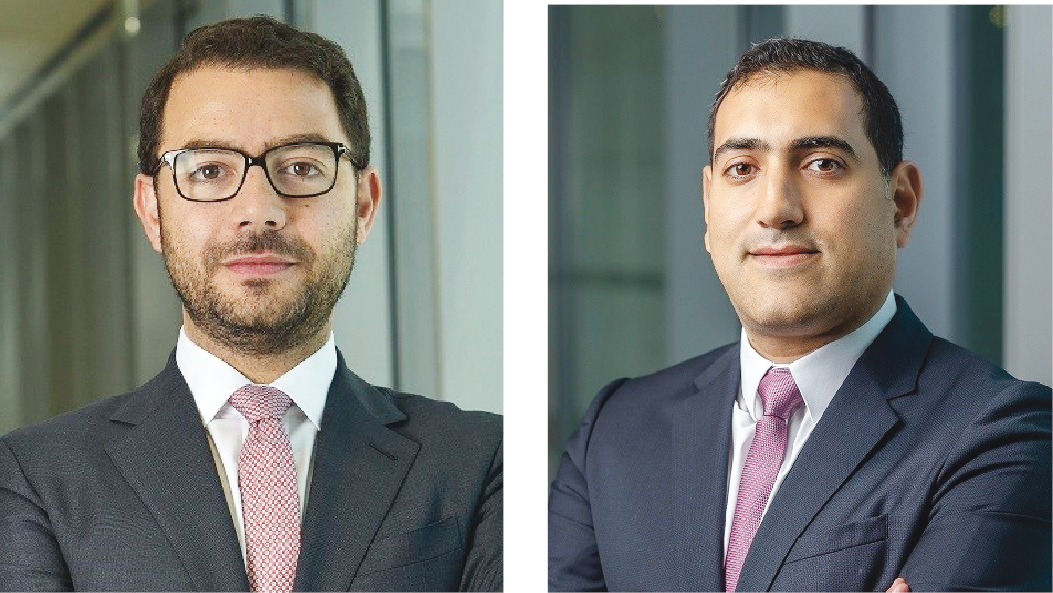
Ramy Sfeir (Left) and Karim Abdallah, partners with Strategy& Middle East
Gulf Cooperation Council (GCC) countries are engaged in almost one trillion US dollars of investment in real estate megaprojects as of early 2020, part of an audacious bid to transform socially and economically, according to a new report by Strategy& Middle East, part of the PwC network. These megaprojects are changing the face of the GCC, adding to these countries’ appeal as tourist destinations, making them more livable for their residents, and promising more environmentally sustainable communities.
Projects running into the tens of billions of dollars always involve risk and the GCC’s real estate megaprojects are no exception. Adopting a wrong institutional setup is one of the key risks.
Understanding existing institutional setup is key for any successful megaproject, the report noted Commenting on the report, Ramy Sfeir, partner with Strategy& Middle East said: “The starting point for any megaproject is a solid institutional setup that will guide project development. Frequently, the project sponsors make the cardinal errors of either delaying decisions about the institutional setup until a later stage, or they choose models that are incompatible with the overall purpose of the development. Instead, they should think of the institutional setup close to the beginning of the megaproject, along with the fundamental concept behind the development”.
As such and as a first step, understanding what the stakeholders do is vital to shaping the proper role of the megaproject sponsor and to designing the right institutional setup in a real estate megaproject according to the Strategy& report.
Selecting the right institutional setup depends on a number of factors. Different institutional setups can be deployed, depending on the ecosystem in which the project operates, and they vary in the level of involvement and responsibility of the megaproject sponsor and the sponsor’s positioning vis-à-vis the other players in the ecosystem. The megaproject sponsor does not need to be limited to one role in the ecosystem; the sponsor can play multiple roles at once.
Overall, five models can be typically adopted with varying roles for the project sponsor. From the most basic model in which the project sponsor takes upon only the master developer role to a model in which the sponsor takes over most roles i.e. Master developer + property developer + regulator + city, infrastructure, and social services providers.
There are several design factors that can help determine the optimal models and sponsor roles. These factors revolve mainly around project ownership, project size/ time line, current and desired ecosystem quality/ availability, project purpose, and funding/ partnerships.
Karim Abdallah, partner with Strategy& Middle East added: “Once the institutional setup is created, the mandate and roles of the project sponsor can be clearly defined and delineated from those of the other stakeholders in the ecosystem. It is important to note that the structure one begins with is not necessarily permanent. As the mandate grows, and the number of entities increases, the optimal structure often changes.” “Deciding on the institutional setup and structure of the delivery entity is critical in real estate megaprojects. Moreover, the design of the institutional setup and delivery entity structure are tightly connected to the project master plan, development approach, and funding approach,” Charly Nakhoul, Principal with Strategy& Middle East.