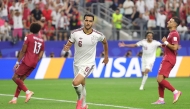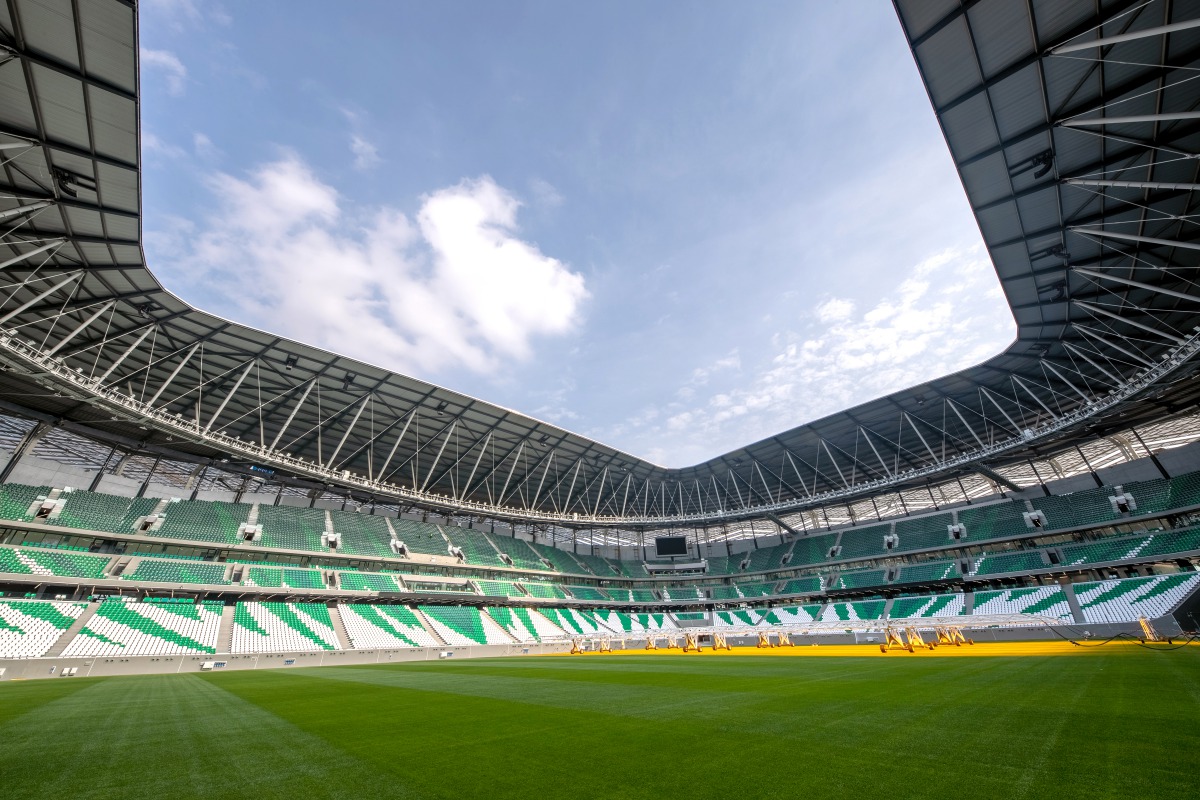
The state-of-the-art Education City Stadium.
Doha: Dr Abdulwahab Almusleh, Senior Consultant to the Minister of Public Health (MOPH), yesterday announced that Qatar conducted a staggering 7900 COVID-19 tests during the AFC Champions League matches held in the country in the last three weeks.
A total of 16 teams from across Asia featured in the region’s top club tournament that began on September 13. The last match of the tournament between Al Nassr and Persepolis will be played today.
From the time the teams started arriving in Doha, a strict health and safety protocol was established by the Local Organizing Committee (LOC) that helped in keeping the players and officials safe throughout three weeks, Almusleh said during a live webinar yesterday.
Yesterday's webinar was titled ‘Hosting mega sporting events in a COVID-19 world’ and the panellists discussed how Qatar put together a plan to conduct a safe AFC Champions League tournament despite the pandemic sweeping the globe.
“The number of tests we have done so far are 7900. Among the various sub-groups associated with the tournament, the officials of the Asian Football Confederation (AFC), the Qatar Football Association (QFA), members of the LOC, the hotel staffers and the players and backroom staff of teams were all tested often,” Almusleh said.
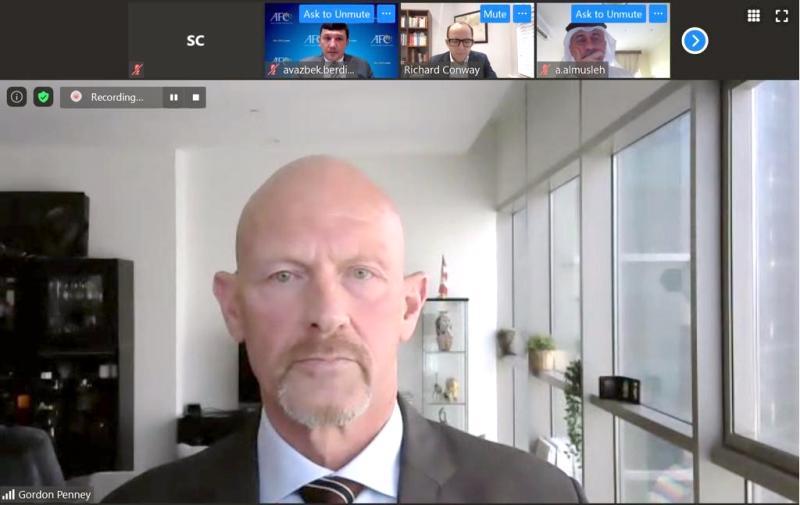
HSSE Assurance Senior Manager, Gordon Penney during the webinar.
“Although we had very short time to plan, and with cases in the countries of the participating clubs high, we still managed to put together a very good plan for the tournament. We had written public health protocols that were sent to participating clubs well before the start of the tournament. This was done before the teams arrived in Doha,” Almusleh said.
“The health protocols were based on the MOPH guidelines. The guidelines were finalised before the teams arrived here in September after Qatar went through several phases as it lifted the COVID-19 restrictions. We were in Phase Four when the tournament started. The protocol was comprehensive - detailing all aspects of COVID-19 that included prevention, mitigation, response and recovery from this diseases if we found any positive cases.
“We put together necessary arrangements for teams, officials, the LOC members. We adopted strict measures at the airport, team hotels, training venues and match stadiums. We did this eyeing any possibilities of a positive case at any of these spots.
“We asked each team and their travelling delegation to bring a certificate of clearance on COVID-19 before they landed here. Majority of them did. There were certain countries which lacked proper testing. Just before the teams and players entered our bubble-to-bubble area, we wanted to make sure all were negative. We tested arriving delegations when they landed at the airport.
“We expected to discover sporadic cases during the tournament. This was the reason to set up the bubble-to-bubble environment. I was surprised to see relatively large number of positive cases among one participating club - six members, in fact, after we tested them at the airport. This happened despite the players arriving with certificates of clearance given to them two days prior.
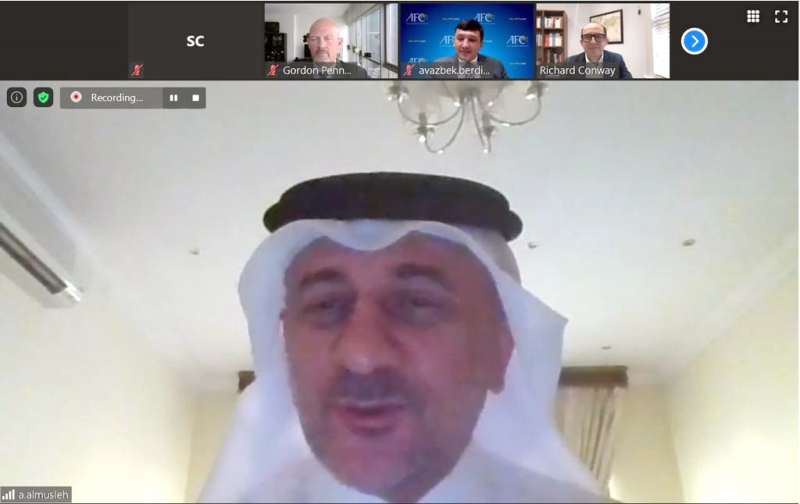
Senior Consultant to the Minister of Public Health, Dr Abdulwahab Almusleh
“We identified the cases through a process called track and trace. That is part of MOPH guidelines. We got to know they tested positive one night prior to arriving here following a dinner ceremony (before flying out to Doha). So the first cluster was those six players and they were detected on Sept 11. We did the test and got the result in 6-8 hours.
“Then we knew the challenges will be big. This was unexpected but we went for fine-tuning right away. Out of the 8000 tests we conducted, we got around 96 positive cases and 56 reactive cases that had mild symptoms,” Almusleh said.
The MOPH official said Qatar has emerged stronger and more confident about hosting top sports events in the future.
“The hosting of the matches successfully gives us assurance that the country is ready for hosting international sports events in the future. This experience gives us a boost on our understanding and experience. If for any reason, a sports event happens in similar situations of a pandemic, the country is surely capable of managing it successfully,” Almusleh said.
Avazbek Berdikulov, Deputy Director of the Competitions and Football Events Division at the AFC, on Friday lauded Qatar for its timely role in conducting the tournament.
“I would like to thank QFA for coming forward and supporting us to host this tournament. It is a gesture that is well appreciated by AFC. The infrastructure in Qatar to host sporting events is really unmatched. I have no doubt that the competition was delivered smoothly,” Berdikulov said yesterday.
“When we planned to resume AFC action - after it was stopped in March - we had a set of discussions with AFC members. We started to work with FIFA and other bodies. We came up with our own set of guidelines on how to resume the action. We discussed all scenarios before resuming. I can proudly say that AFC in cooperation with QFA and LOC, did a tremendous job of putting 16 clubs in one country.
Gordon Penney, HSSE Assurance Senior Manager, said: “It’s an honour to be able to discuss the various parts of the journey itself. I’d like to say running any tournament during normal times - without COVID-19 - involves complexity. So when you inject the COVID-19 situation into that apparatus, hosting a tournament like this doubles the complexity and all of a sudden it becomes a high-pressure environment. It becomes a massive challenge.”