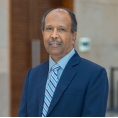
Dr. Tajalsir Kardman
On the International Day of Education, we celebrate education not as a phase confined to classrooms and graduation, but as a driver of development. We also recognize development as the context that gives education purpose and direction. In Qatar, education has seen progress, yet it is no longer an end in itself. It is part of a national project and an instrument for sustainable development, strengthening human capital and enabling people to keep pace with social and economic change. Development, through institutions and national plans, reshapes what education must deliver so it responds to society’s needs, aligns with the labor market, and anticipates future change.
This reciprocity sits at the heart of Qatar National Vision 2030. When education quality rises, the returns on development increase. When development advances, the demand grows for education that is more relevant and agile. That is why education anchors Qatar’s sustainable development pathway and diversification agenda, and why this year’s theme, “The Power of Youth in Co-creating Education,” calls for a shift from passive reception to active participation, and from consuming knowledge to creating impact.
Career development is where this alignment becomes practical. Education produces knowledge and competencies, but development requires pathways and readiness. Career development helps students connect what they learn to who they are becoming. It goes beyond choosing a major or a job, building understanding of self and the world of work: interests, values, opportunities, expectations, and the skills needed to transition and adapt. It strengthens academic decision-making and motivation by giving learning meaning and direction. It also helps young people align strengths with what sectors demand, reducing confusion, limiting random switching, and supporting smoother transitions from education to what follows. In this way, education becomes more purposeful and development more sustainable.
Qatar Career Development Center (QCDC), founded by Qatar Foundation (QF), works to translate this bridge into lived experience for young people. We see career guidance and development as part of education quality, not a marginal service or a seasonal initiative. Our hands-on training, interactive learning, and job-shadowing experiences, including ‘Career Village,’ ‘My Career – My Future,’ and ‘Little Employee,’ give youth a direct window into workplaces, where classroom learning becomes practical capability. They strengthen self-understanding, planning, and decision-making through experience.
Student programs alone, however, are not enough. The decisive factor is the professionalism of practice in career guidance itself. Career guidance is a scientific field grounded in established theories and proven methods, drawing on developmental psychology, counseling practice, assessment and planning, and labor market insight. When guidance depends on improvisation, or when tools and standards vary widely from one school to another, quality becomes uneven. Advice replaces structured guidance, and support becomes a quick suggestion rather than an organised process of growth and learning. Strengthening the connection between education and development requires an institutional pathway that ensures competent practice across schools and the wider system.
For this reason, we have launched the Postgraduate Diploma in Career Development, licensed by the Ministry of Education and Higher Education and delivered in collaboration with Community College of Qatar and EduCluster Finland, a leading global organization in education and career development. The diploma is an applied pathway rooted in Qatar’s realities and shaped by evidence-based best practice. It responds to a long-observed need: moving from scattered efforts to a professional practice with unified standards, clear tools, and measurable, improvable outcomes. It is also a pioneering step beyond Qatar, as the specialization is delivered entirely in Arabic, supporting knowledge localization, strengthening Arabic academic content, and bringing practice closer to students, families, and practitioners through accessible language.
Aligned with the Qatar National Qualifications Framework, the diploma offers 30 credit hours, translating into more than 1,500 learning hours that combine foundations with applied training, individual and group learning, and field-based practice. It enables specialization through three tracks: guidance in schools from early years through secondary education, guidance in higher education, and guidance in workplaces and institutions.
The diploma raises the professionalism of the discipline, standardises its concepts and tools, and builds specialised national competencies in career guidance, strengthening consistency and impact across education and workplaces. It also advances our ambition to lay the cornerstone of an integrated national career development ecosystem that coordinates efforts across education and its partners. By combining national leadership with international expertise, this partnership can deliver cumulative impact: stronger practitioners, more consistent services, better-informed decisions, and a closer link between education and work.
Ultimately, if “The Power of Youth in Co-creating Education” is to become a lived reality, we must empower young people by equipping those who support them in schools, universities, and workplaces. They deserve a professional career guidance ecosystem that turns ambition into a pathway, talent into a skill, and choice into an informed decision.
— The writer is a career Guidance and Development Consultant, Qatar Career Development Center.