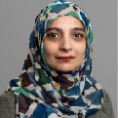
Dr. Carolyne Lunga
There is a renewed focus and debate on the role of foreign and local correspondents in international news reporting today. The ongoing wars in Iran, Gaza, Ukraine, and Sudan have placed this issue inevitably in the spotlight. Beyond local and foreign journalists, news influencers are playing a key role reporting and shining the light on humanitarian crises thereby reconfiguring the news landscape.
Of concern, however, is the continued targeting of journalists while reporting on the frontline, which deters the Fourth Estate from fulfilling its mandate of informing society. The Committee to Protect Journalists (CPJ) in February 2026 reported that, the war in Gaza is the deadliest war for journalists. This number is more than journalists killed in Afghanistan, Vietnam and the World Wars.
The International Federation of Journalists (IFJ) in June 2025, reported that at least 4 journalists had been killed since Israel’s attacks on Iran began. In the article, I discuss the current international news ecosystem to answer: Who is reporting on international news? Who is setting the international news agenda? Which stories are they reporting on? How do they report the news? Who are their sources? Are these reporters in the newsroom or outside?
I argue that international news reporting is constituted of a heterogeneous mix of actors operating within and outside newsrooms and sometimes collaborating to keep society informed on issues of global relevance. Although some journalists firmly contend their objectivity and impartiality in reporting, evidence shows that subjective coverage prevails. This can be attributed to various factors, including ownership and editorial policies.
The questions above draw attention to broader issues of narrative power, particularly in relation to whose voices are amplified and which ones are sidelined and how the war gets understood. Journalism ethics such as truth, verification and accuracy are amplified by players reporting on the issues from diverse perspectives. Research evidence demonstrates that NGOs invest a large number of resources into the coverage of international affairs (e.g. Powers, 2015) which raises critical normative questions on the roles and responsibilities of NGOs, journalists and their audiences. While truth, accuracy and context are fundamental to NGOs, their reporting typically straddles the line between journalistic practice and advocacy. Their reporting is often done to appeal to donors’ interests, despite positive outcomes of putting critical issues on the international agenda.
Generative AI tools such as Microsoft Copilot, Google’s Gemini, and Anthropic’s Claude were used to identify the leading international news stories from January to April 15, 2026. The results were then compared with a list compiled after reviewing stories published on the websites of major global media outlets.
I began with a prompt to identify the top international news stories in January to April 2026. Copilot and Gemini yielded similar results identifying the Iran war, Gaza war and Sudan conflict as among the top international news stories of the day with some divergences compared to Claude. Geopolitics and conflicts including Venezuela’s leadership change after US air strikes and the capture of President Nicolás Maduro, the global economy and technology were part of the results.
Elections and diplomacy, for example in Hungary’s elections which ended Viktor Orbán’s16-year rule also came to the fore. Deploying the same prompt, the output from Claude was more detailed including geopolitics and war and referring to the Iran war and the Strait of Hormuz crisis as the “single biggest story of the decade”.
US President Donald Trump’s global tariffs, the launch of the Artemis II are cited as examples among others. Classifying these issues, geopolitical tension and war, global economy, technology (specifically Generative artificial intelligence), the Iran war and closure of the Strait of Hormuz, the energy market disruptions and global economic impact take the lead. Surprisingly, Anthropic and Claude were not listed among the leading news stories of the first quarter of 2026 despite dominating public discourse due to Claude’s unprecedented power and risks to the stability of financial systems.
In 2026, Galtung and Ruge’s (1965) values still hold relevance demonstrating that editorial decision making is still influenced by enduring professional norms, beliefs and journalistic standards. Furthermore, the stories demonstrate that news is shaped by various influences including political and economic factors a view of Shoemaker and Reese’s (1996) Hierarchy of Influences Model.
For example, the ongoing Iran war magnitude, involvement of elite nations, and negativity qualifies it as international news. Its coverage by international media including Al Jazeera, France24, BBC, RT, New York Times, The Guardian, among others demonstrates that mainstream media still hold significant power in setting the news agenda.
They interview academics, war, finance, security experts, foreign ministers and citizens in line with their editorial policies. Sometimes they repost content from elite sources’ social media accounts such as Donald Trump’s Truth Social Platform, tweets of Presidents, Prime Ministers and Foreign Ministers.
On the other hand, news influencers are not subject to gatekeeping as they provide unfiltered content and share their experiences, carrying out interviews on social media platforms such as X, TikTok and Facebook, providing first‑hand accounts and unedited raw information. These news influencers often comprise a heterogeneous group, including freelance journalists, local media practitioners, activists, academics, humanitarian workers, and civilians who leverage their proximity to events and digital presence to document and disseminate war narratives outside traditional newsroom structures.
There are several names of journalists, film and documentary makers, podcasters and youtubers who are leveraging on digital platforms reporting and providing context and commentary on these issues. They interview locals, eyewitnesses, local businesspeople, survivors of attacks, and experts who provide alternative accounts on their experiences of the wars and humanitarian crises and provide valuable information that is normally lacking in mainstream media.
Since 2010, newsrooms have cut down their budgets or closed down permanently due to financial and sustainability problems. In times of war, it is both costly and risky for news organisations to send reporters abroad. Large global media organisations, supported by vast financial resources and expansive international bureau infrastructures, are structurally well positioned to report on events in real time and these are playing a critical role reporting the Iran war, energy shortages impact on the economy worldwide, Trump’s tariffs among others.
Examples include BBC News (UK), Al Jazeera Media Network (Qatar), France 24 (France), Deutsche Welle (Germany) NHK World‑Japan (Japan), Cable News Network (CCN) (US). The New York Times (USA), The Guardian (UK), The Washington Post (USA), Financial Times (UK). Their presence offers a range of perspectives on global and humanitarian issues.
International News Agencies / Wire Services supply newsrooms globally with news including Reuters (UK/Global) with journalists operating in over 100 countries. Qatar News Agency (Qatar), Associated Press (AP) (USA), Agence France‑Presse (AFP) (France), Bloomberg News (USA), Deutsche Presse-Agentur (DPA) (German) offer a balanced view of sports, entertainment, business and political news. Leading English dailies in Qatar, The Peninsula, Qatar Tribune and Gulf Times, publish international stories from QNA, AFP, DPA, among others.
The practise of newsrooms sending journalists to cover stories in unfamiliar contexts for a short period of time continues to date, a phenomenon called ‘parachute journalism’. In election reporting and disasters, parachute journalists, land in the foreign country for a short space time to cover breaking news. They normally work with local journalists who know the language and the place to acquire access and more information about the event. Since, they do not have experience of the place they are reporting about, their reporting is criticised for bias and lack of depth and context.
The international news landscape will continue to evolve, shaped by political and economic factors, amplifying diverse voices through coverage by global mainstream media organisations, news influencers such as activists, academics and NGOs who all play an important role in shining a light on matters of public interest.
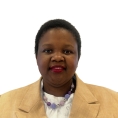
Dr. Carolyne Lunga is an Associate Professor in Digital Communication and Media Production (DCMP) at the University of Doha for Science and Technology (UDST)