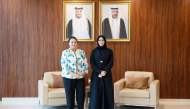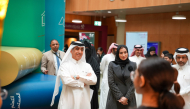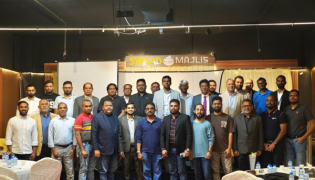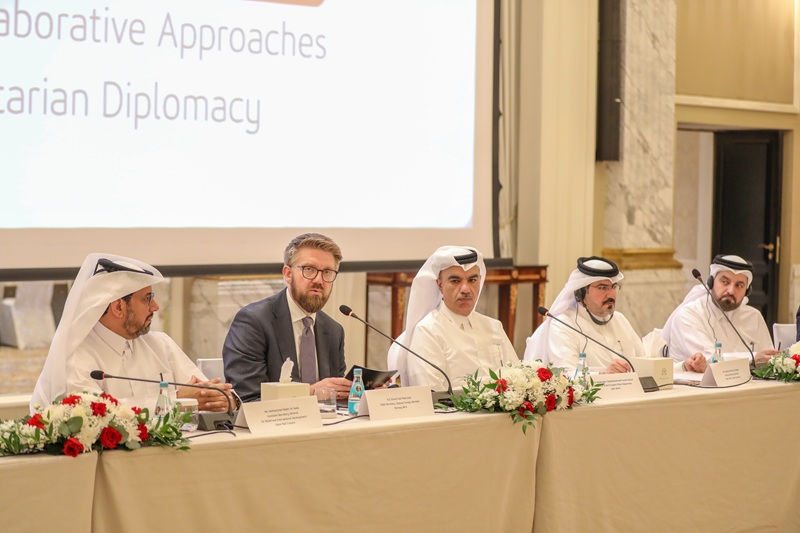
Officials during a roundtable on humanitarian diplomacy.
Doha, Qatar: Qatar Red Crescent Society (QRCS) convened a high-level roundtable on humanitarian diplomacy in partnership with Prosper Global and partners from the International Red Cross and Red Crescent Movement, bringing together senior government officials, diplomats, humanitarian leaders, and experts from Qatar and abroad to examine ways of strengthening principled humanitarian action in conflict settings.
The meeting provided a platform for constructive dialogue on enhancing cooperation and coordination mechanisms to address the growing humanitarian consequences of conflicts.
It formed part of ongoing efforts to draw lessons from contemporary humanitarian practice and explore innovative approaches that bridge diplomatic engagement and humanitarian action.
Held against the backdrop of Qatar’s increasingly prominent role in mediation and conflict resolution, the roundtable sought to advance collective efforts to safeguard humanitarian space and improve the lives of civilians affected by crises and armed violence.
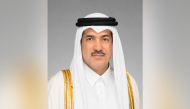
Opening the event, Acting Secretary-General of QRCS Abdulla Sultan Al-Qatan, welcomed participants and underscored the importance of strengthening international partnerships and fostering complementarity between governmental institutions and humanitarian organizations to ensure more effective responses to escalating global humanitarian needs.
The roundtable was attended by State Secretary at the Ministry of Foreign Affairs of the Kingdom of Norway H E Eivind Vad Petersson, Director of the European Affairs Department at the Ministry of Foreign Affairs of the State of Qatar H E Ambassador Fahad bin Mohammed Kafoud, United Nations Assistant Secretary General, Resident and Humanitarian Coordinator in Ukraine Matthias Schmale and a number of ambassadors, diplomats, and representatives of international humanitarian organizations.
In his remarks, Al-Qatan emphasized that effective humanitarian action depends on a clear understanding of the distinct mandates and comparative advantages of both states and humanitarian actors. “We believe that cooperation between governments and humanitarian organizations must be grounded in a clear understanding of roles and responsibilities. Humanitarian organizations, through their proximity to affected communities, their under standing of needs, and their engagement with relevant stakeholders, play a vital role in identifying humanitarian priorities and mobilizing support. Such cooperation must respect institutional mandates, safe guard the independence of humanitarian decision-making, and preserve the trust required to reach those most in need.”
Assistant Secretary-General for Communication and Resource Development at QRCS Mohammed Ahmed Al-Beshri, summarized the key outcomes and reflections from the discussions.
He emphasized the importance of translating dia logue into action and called for sustained collaboration among governments, humanitarian organizations, components of the International Red Cross and Red Crescent Movement, and other stakeholders to strengthen humanitarian diplomacy and expand access to humanitarian assistance.