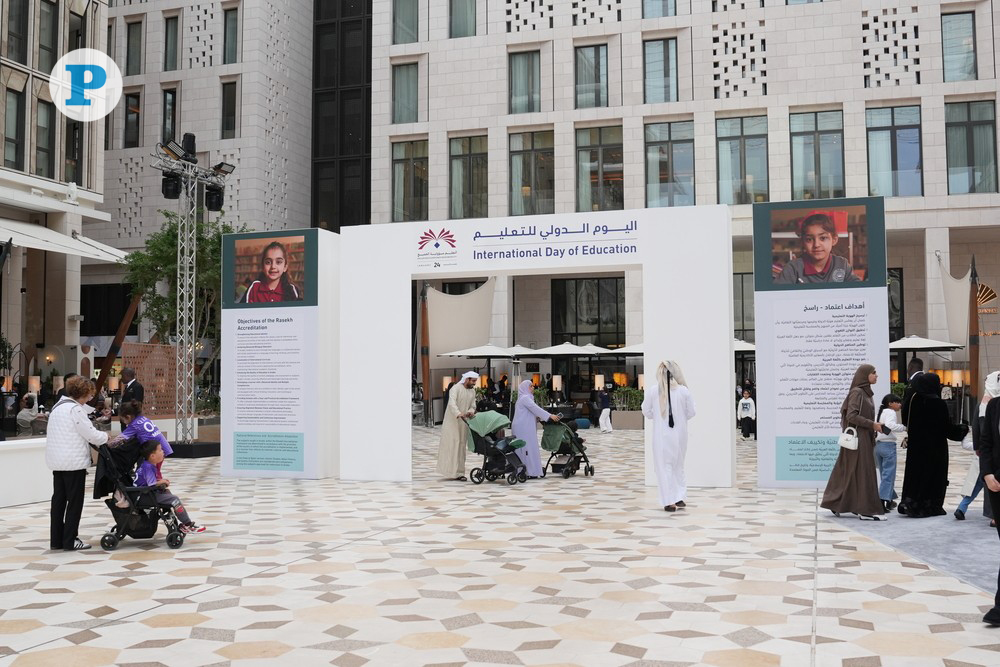
Qatar Foundation's International Education Day activities held at Barahat Msheireb under the theme “Education is Everyone’s Responsibility.
Doha, Qatar: Qatar Foundation (QF) marked the International Day of Education with a two-day community celebration highlighting immersive learning, educational innovation, and global dialogue on multilingualism, with a strong focus on the Arabic language and cultural identity.
The event spotlighted QF’s Rasekh initiative as Qatar’s bilingual, identity-based education model and a key pillar of national education reform, aimed at strengthening cultural and linguistic foundations while engaging with global learning.
Vice President of Strategic Educational Initiatives for QF’s Pre-University Education, Sheikha Noof Ahmed bin Saif Al-Thani, in a statement, said: “The International Day of Education is a global occasion to renew our commitment to the right to education as a cornerstone of human and social development, and a shared responsibility that requires coordinated efforts between educational institutions and the wider community.”
Held at Barahat Msheireb under the theme “Education is Everyone’s Responsibility,” the event traced the development of education at QF and the vision guiding its growth.
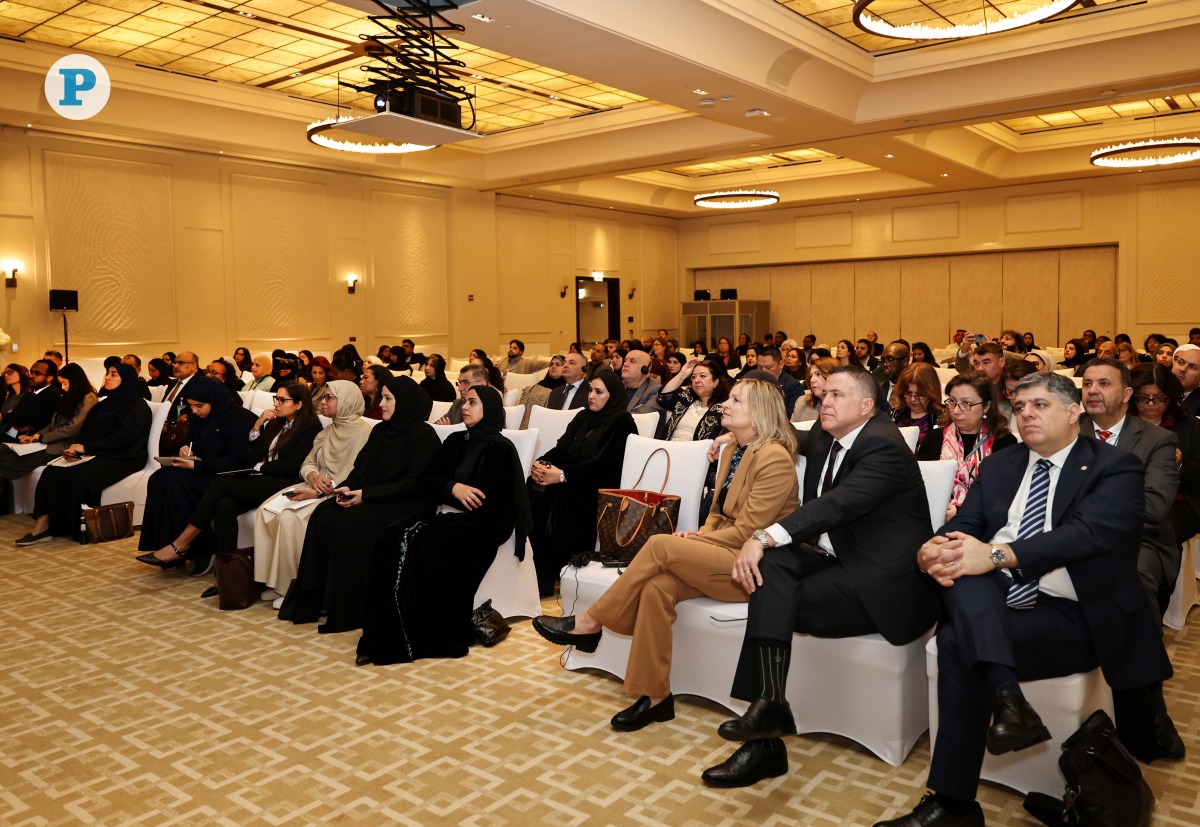 Vice President of Strategic Educational Initiatives for QF’s Pre-University Education, Sheikha Noof Ahmed bin Saif Al Thani (fourth right), with other officials at Thunai Conference. Pic by: Salim Matramkot/The Peninsula
The event also included a Storytelling Platform, where students, educators, and community groups shared educational experiences through dialogue and performance, highlighting storytelling’s role in building values, creativity, and lifelong learning.
Projects Coordinator, Strategic Initiatives Office, at QF’s Pre-University Education, Noor Al-Sulaiti, speaking to the media, explained that the International Day of Education in Qatar focuses beyond learning alone to include the Arabic language, national identity, culture, ethics, and innovation.
“We wanted the public to be part of the International Day of Education,” said Al-Sulaiti, highlighting that the event allowed visitors to explore QF’s wide range of programmes and initiatives designed to support education and enrich children’s learning experiences.
She added that the celebration reflects QF’s belief that education is a shared responsibility. “Education is everyone’s responsibility, and this is us taking our part towards the community.”
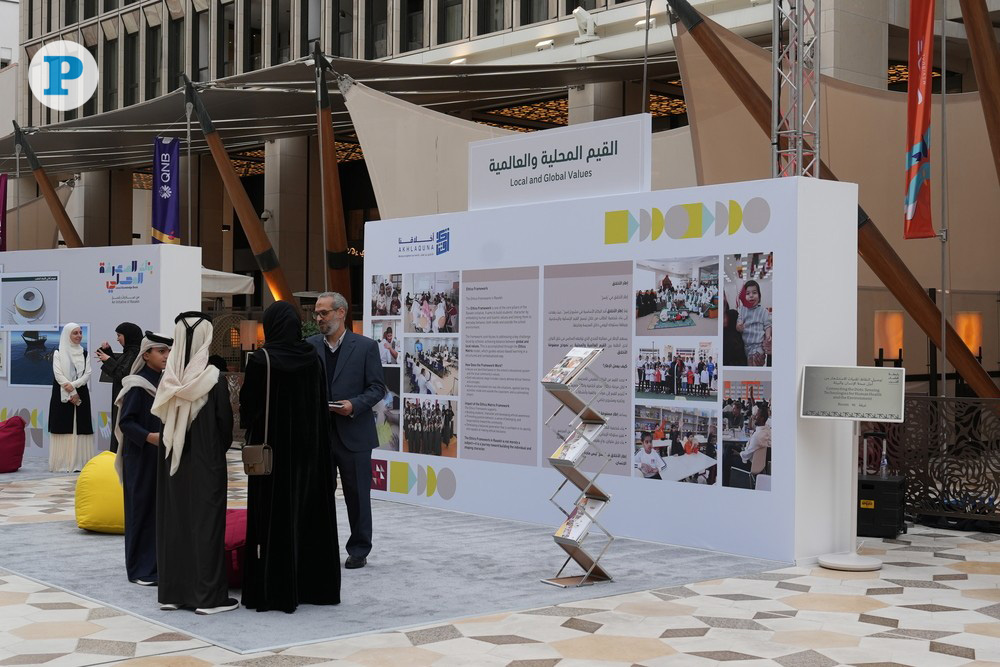
Emphasising QF’s approach, she said the goal is to make education engaging, enjoyable, and impactful. She pointed to the Fada’id reading platform as an example, describing it as an immersive experience rather than a traditional book-based platform.
“We want learning to be a nice journey for children,” she said, adding that QF is committed to developing locally rooted curricula and programmes rather than relying on imported models.
Rasekh Village provided a hands-on experience that brought the model’s ideas to life. Interactive exhibits and learning pavilions showcased ways to support balanced bilingual education, cultural identity, and locally rooted global learning.
The event also unveiled the Rasekh Accreditation, a new framework for QF and international schools in Qatar, aimed at strengthening bilingual education, localising learning, and reinforcing cultural values. It was announced that the first group of schools has been nominated for accreditation.
QF’s International Day of Education 2026 celebration also featured the Takaafu (Equity) Conference, and Thunai Conference at Mandarin Oriental, Doha.
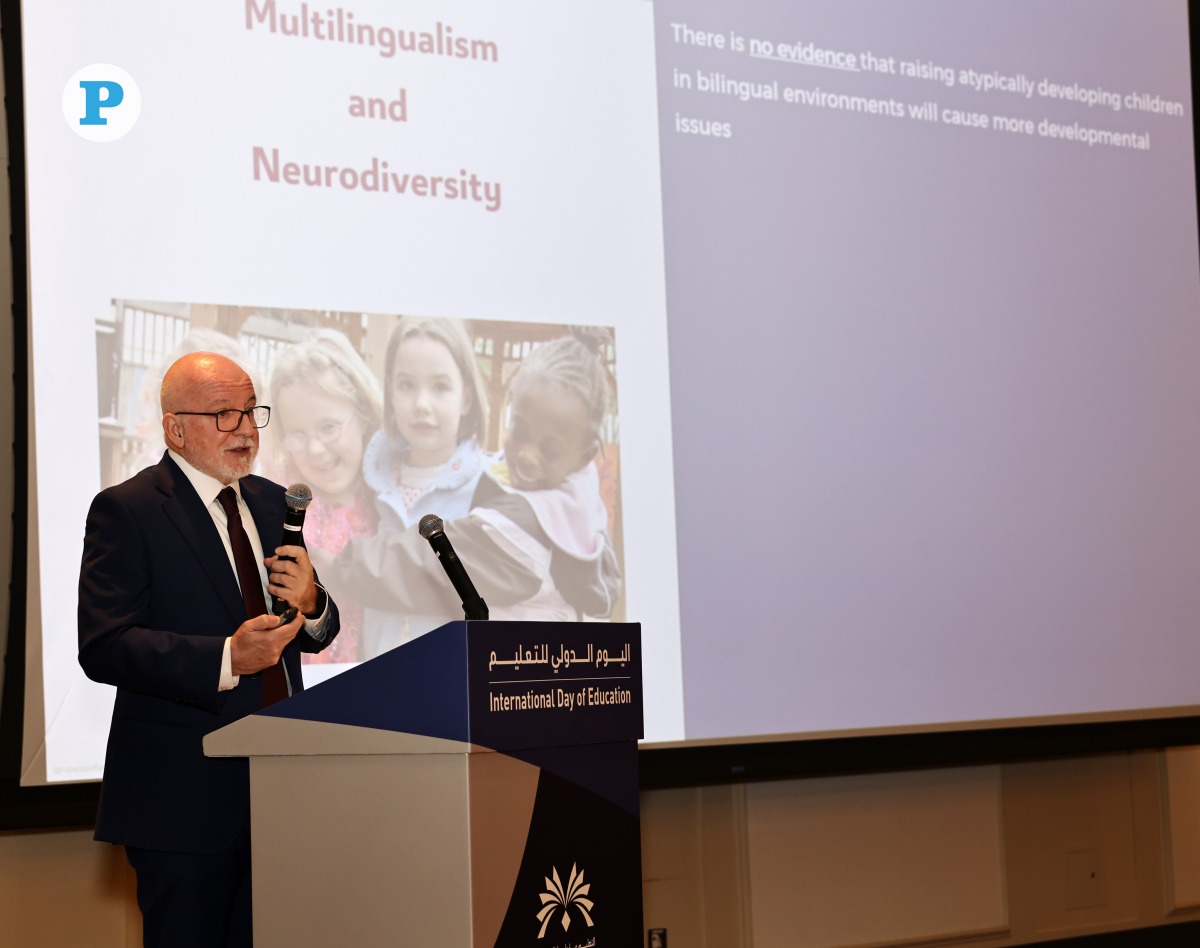 Professor Roberto Filippi delivering a talk on Co-Creating Multilingual Futures Learning to Thrive in a Rapidly Changing World. Picture by: Salim Matramkot / The Peninsula
The Takaafu (Equity) Conference reflected QF’s strong commitment to inclusive education, ensuring that every child has an equal opportunity to reach their full potential. The conference featured a series of lectures and panel discussions led by Professor Barry Carpenter, the UK’s first Professor of Mental Health in Education at Oxford Brookes University and a globally recognised expert in inclusive education. The sessions focused on neurodiversity and special educational needs.
The Thunai Conference highlighted the value of bilingual education that combines a global perspective with strong cultural and linguistic roots.
Among the speakers was Professor Roberto Filippi of UCL, an expert in cognitive psychology and multilingualism and director of the Multilanguage and Cognition Lab.
In his talk, “Co-Creating Multilingual Futures: Learning to Thrive in a Rapidly Changing World,” he emphasised viewing students’ languages as assets in learning. He emphasised that multilingualism enhances flexible thinking and engagement, leading to greater well-being, achievement, and a stronger sense of belonging in schools.
“Children raised in multilingual environments often show more efficient attention control,” he said.
“This is linked to the early maturation of brain areas involved in decision-making and reasoning and skills that are crucial for education.”
“Multilingualism is not the exception, it is the norm, not only in the UK but across the world,” said Professor Filippi.