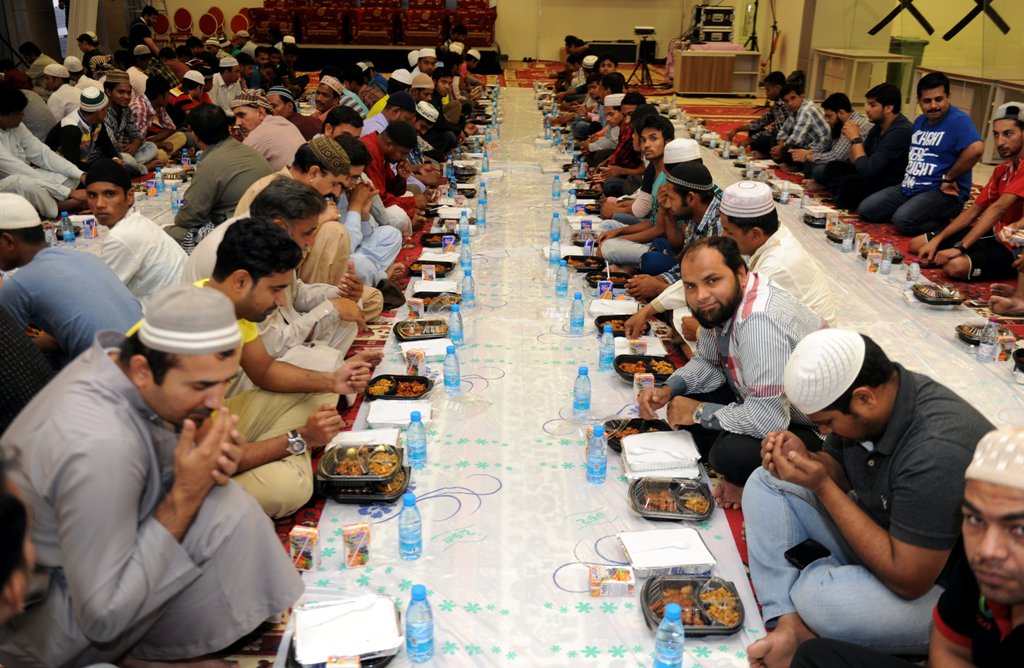
File photo used for representation
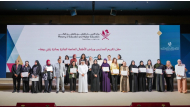
Doha, Qatar: The General Directorate of Endowments at the Ministry of Awqaf and Islamic Affairs has announced the launch of the Iftar Al-Sa’im (Iftar for the Fasting) project for the holy month of Ramadan 2026 at a press conference held yesterday at its headquarters.
The project has expanded to nine iftar tent sites in densely populated and labour areas, serving more than 360,000 fasting individuals throughout the holy month.
The Iftar Al-Sa’im project is one of the most prominent endowment-based and community initiatives implemented by the Ministry of Awqaf and Islamic Affairs during Ramadan, under the Endowment Fund for Righteousness and Piety.
The project aims to reinforce the values of social solidarity and compassion, fulfil the conditions set by endowers, provide humanitarian support to workers and individuals in need, and help fasting individuals observe Ramadan in a dignified, well-organised environment.
Addressing the press conference, Assistant Director-General of General Directorate of Endowments and Chairman of the Iftar Al-Sa’im Project Committee Eng Abdullah bin Mohammed Al-Mir, affirmed that the project represents one of the ministry’s most important annual community initiatives due to its religious, humanitarian, and social dimensions.
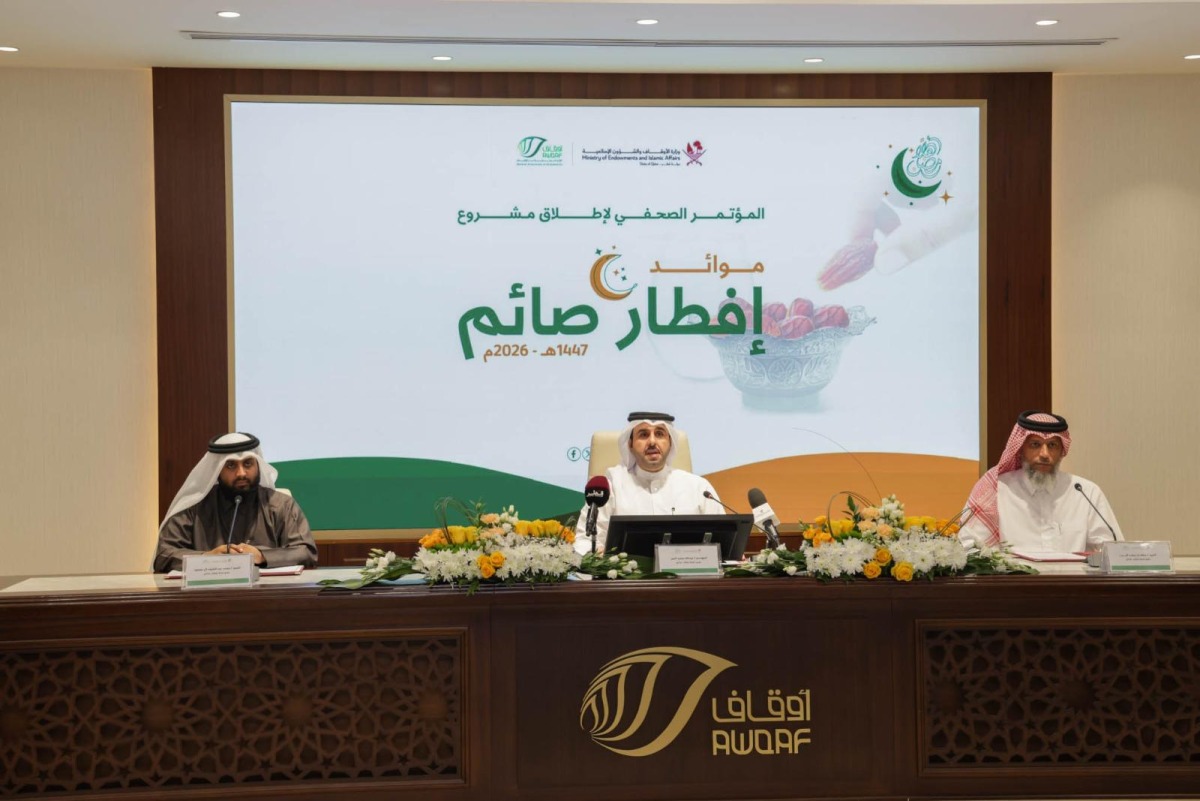
Al-Mir explained that this year’s increase to nine iftar tent locations reflects the ministry’s commitment to expanding the project’s reach and benefiting the largest possible number of fasting individuals. He added that the total capacity of these sites exceeds 360,000 beneficiaries over the course of Ramadan.
He emphasised that the ministry is keen to provide varied iftar meals that comply with approved health and nutritional standards, ensuring balanced meals that meet the needs of those fasting.
Al-Mir praised the strong turnout and support from philanthropists and benefactors, stressing that this interaction reflects society’s awareness of the importance of endowment work and its vital role in serving those in need and strengthening social cohesion.
He highlighted that one benefactor fully sponsored the cost of an entire iftar table at one of the nine sites, amounting to QR650,000, through which approximately 45,000 iftar meals will be provided during Ramadan.
Al-Mir explained that the 2026 Iftar Al-Sa’im project offers endowers, companies, institutions, and individuals flexible and diverse options for participation and support. Donors can choose the site they wish to support or contribute partially according to their capacity through five main payment and participation vouchers.
Among the available options are fully sponsoring an entire iftar site in one tent, serving around 45,000 fasting individuals throughout the month at a cost of QR650,000; sponsoring one day of iftar for approximately 1,500 people at a cost of QR21,000; sponsoring an iftar tray for ten fasting individuals for QR180; sponsoring the iftar of one person; or making open-amount donations to support the project.
Assistant Director of the Mosques Management Department and a member of the Iftar Al-Sa’im Project Committee Mohammed Abdul Latif Al Mahmoud, explained that private iftar requests are required to be submitted through the approved electronic system and then reviewed by the concerned department in accordance with established regulations.
He said that this ensures organisation, fairness in distribution, fulfilment of donors’ conditions, and the delivery of support to those who deserve it.
Regarding the iftar tents, Al Mahmoud stated that they are equipped with air-conditioned fully prepared to serve meals in line with approved specifications and standards, providing a suitable environment for fasting individuals and reflecting the ministry’s commitment to delivering integrated and high-quality services.
He added that the best specialised restaurants have been selected to prepare the meals, with strict adherence to health measures.
The meals include rice with meat or chicken, dates, fruit, bottled water, yoghurt, and environmentally friendly, recyclable dining utensils. Dozens of experienced supervisors from the ministry oversee the distribution of iftar meals to ensure proper organisation of workers and individuals, and to provide all requirements and services for fasting beneficiaries.
Assistant Director of the Sheikh Abdullah bin Zaid Al Mahmoud Islamic Cultural Center and a member of the project committee Sultan Saad Al-Badr, said that the committee has placed special emphasis this year on enhancing the educational and awareness aspects accompanying the iftar tents, particularly for non-Arabic-speaking Muslims.
He explained that the project includes organising guidance and awareness sessions at the iftar tents in coordination with the center, delivered by 12 preachers at a rate of three times per week.