Dr. Salem Al-Naemi
Doha, Qatar: The University of Doha for Science and Technology (UDST) kicked off the 2026/2027 year, enrolling 2,000 new and returning students, among whom 25 percent are Qatari nationals.
As the country’s premier institution for applied learning, UDST enters this fresh chapter committed to driving innovation, broadening its degree programmes, and cultivating hands-on student achievement.
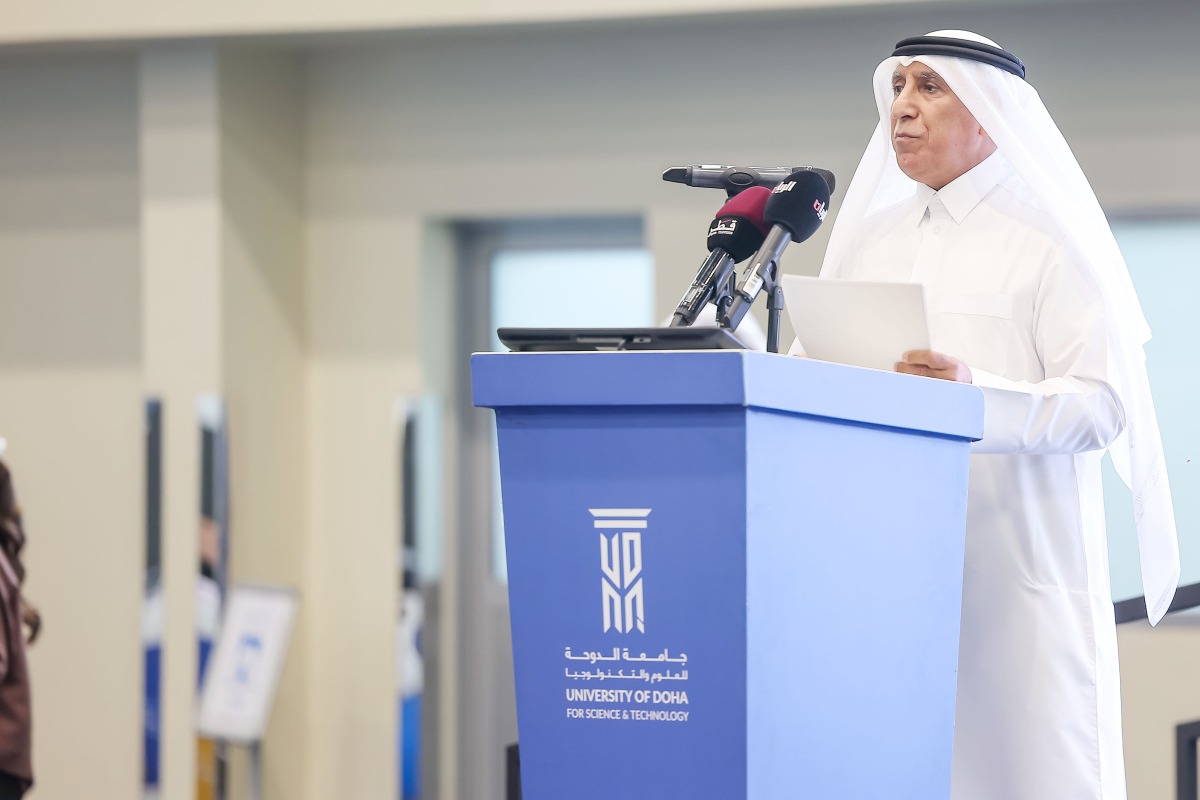
During the orientation programme held yesterday, the President of UDST, Dr. Salem Al-Naemi, said, “At UDST, every new academic year represents a renewed commitment to empowering the next generation of innovators, professionals, and leaders.”
Across its five specialised colleges, such as Business, Computing and IT, Engineering, Health Sciences, and General Education, UDST delivers over 80 degree options designed to match industry demands and advance Qatar’s strategic goals.
“Our expanding academic offerings reflect our vision of anticipating the future while responding to the evolving needs of our nation, Dr. Al-Naemi said. “As our students begin this exciting chapter, they join a university where applied learning, innovation, and industry collaboration come together to prepare them for meaningful careers and lifelong success.”
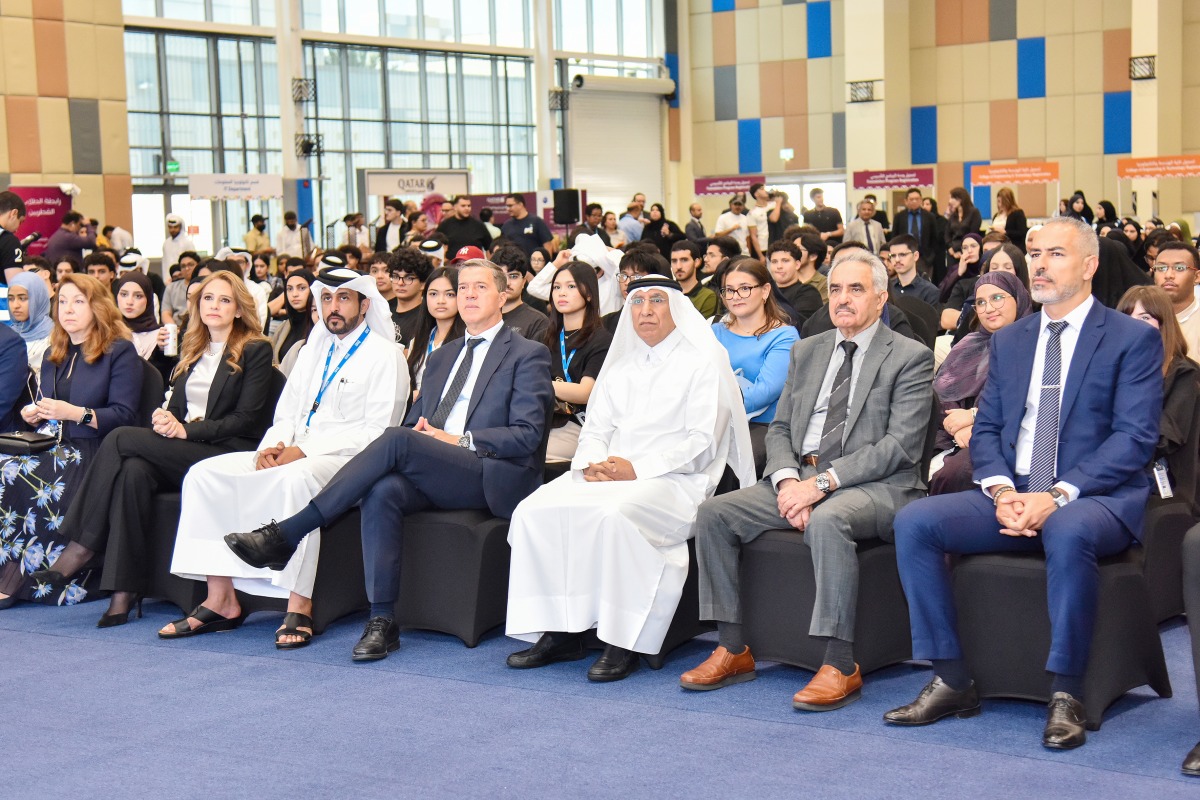 President of UDST Dr. Salem Al-Naemi with other officials and students during the event.
Speaking to The Peninsula on the sidelines of the event, UDST’s Dean for the College of Health Sciences, Dr. Shahrokh Esfandiari, said, “It is an immense joy to welcome our new cohort to the College of Health Sciences. As an applied university, our core mission is that when our students graduate, they are fully work-ready from day one. A major advantage for our graduates in Qatar is that key professional hurdles, such as the mandatory two-year experience requirement and the Prometric exam, are lifted, allowing them to enter the healthcare workforce immediately.”
In line with Qatar’s transition toward a skill-based economy, the university has launched new degree programs designed to sharpen local talent and meet modern market demands, including the Executive Master of Health Administration, the Bachelor and Diploma of Science in Animal Health and Veterinary Science.
“Our college thrives on direct collaboration with key national stakeholders, including the Ministry of Public Health, Hamad Medical Corporation, and Primary Health Care Corporation, said Dr. Esfandiari. “Meeting with them regularly allows us to tailor our programmes directly to Qatar’s immediate healthcare needs.
He said, “In my 35 years across international academia, I have rarely seen a model that adds this much practical value and academic rigor to healthcare education.”
The dean expounded that across the university’s nine departments and 16 accredited programmes, the class sizes are “kept intentionally” small to preserve top-tier quality.
“Because of this, we are seeing unprecedented demand, with the bar set exceptionally high, often receiving top-performing applicants with high school scores above 90 percent,” Esfandiari said.
“To those who are not admitted on their first attempt, I encourage you not to give up but enhance your academic profile and apply again.”
He further added that “We pride ourselves on offering unique, high-caliber pathways, such as our Bachelor in Pharmacy Technology, a specialised degree programme that is virtually unmatched globally, backed by Canadian accreditation and moving toward European recognition.”
The university launched the academic year by welcoming its newest class during ‘Ahlan,’ a campus-wide orientation designed to ease the transition into university life.
Through its expanding portfolio of master’s, bachelor’s, diploma, and certificate programmes, UDST provides practical, hands-on education designed to equip graduates with the real-world skills necessary to advance the goals of Qatar National Vision 2030 and succeed in a rapidly evolving global economy.