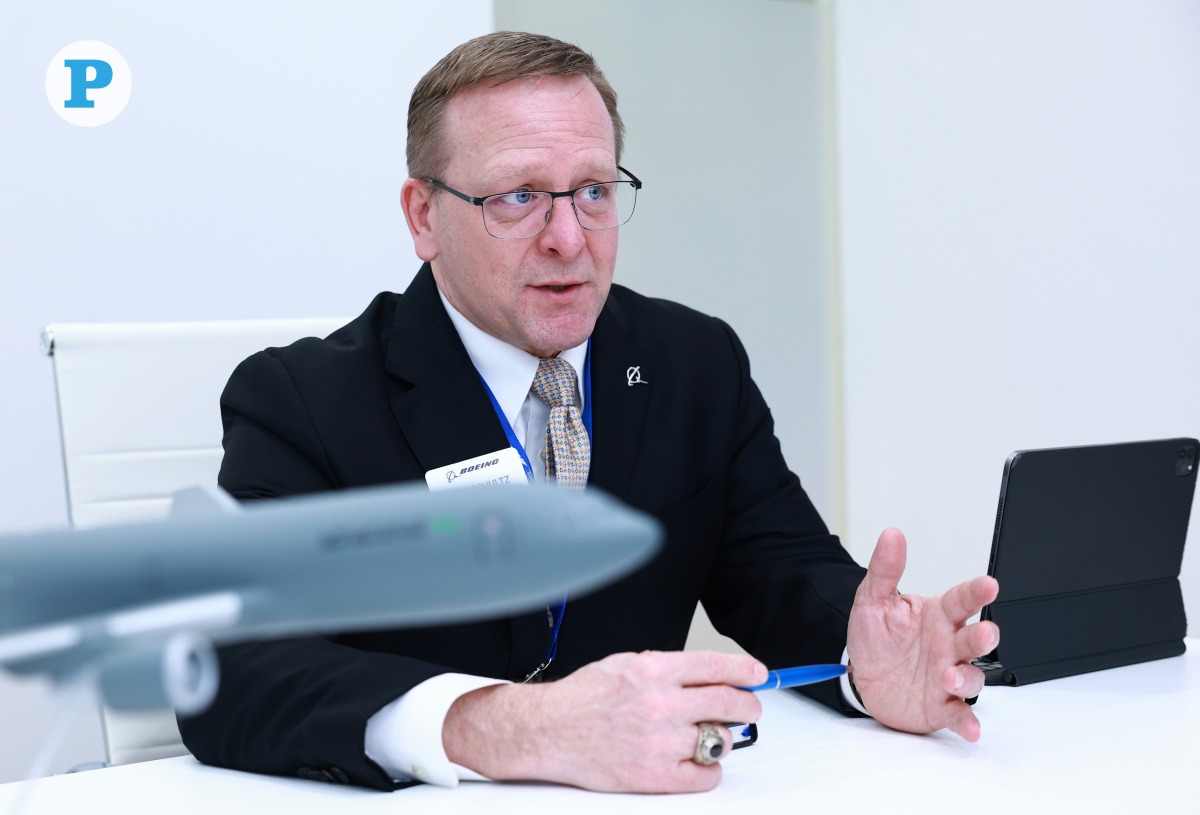
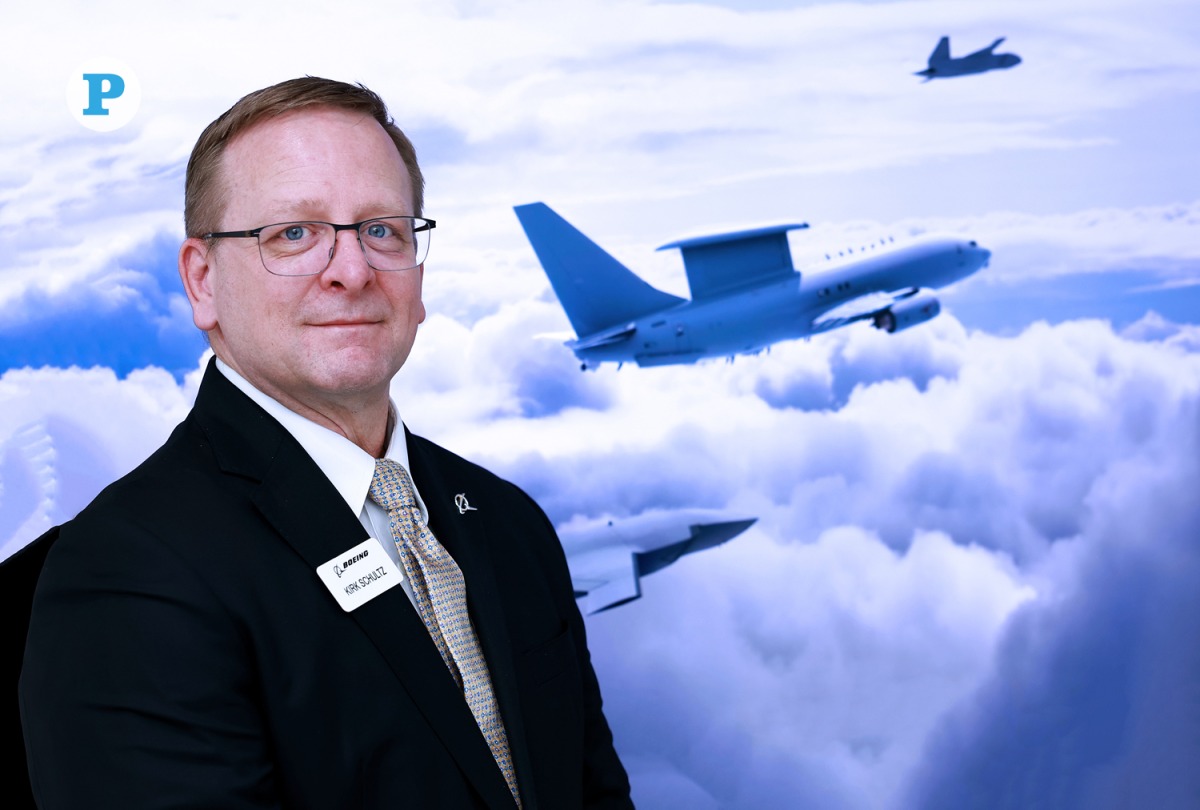
Kirk Schultz, Regional Director for International Business Development at Boeing Defence, Space & Security. Picture by Rajan Vadakkemuriyil / The Peninsula
Doha, Qatar: Boeing views its partnership with Qatar as one of its most strategically important relationships worldwide, with cooperation extending well beyond aircraft platforms to long-term sustainment, technology development and workforce investment.
Speaking to The Peninsula on the sidelines of DIMDEX 2026, Kirk Schultz (pictured), Regional Director for International Business Development at Boeing Defence, Space & Security, said Boeing’s presence in Qatar reflects the depth of its engagement with the country’s defence institutions.
“Partnership with Qatar is one of our most important partnerships in the region and worldwide,” he said, noting that Boeing works closely with the Qatar Armed Forces, Qatar Amiri Air Force and Qatar Amiri Naval Forces.
“We are here to support Qatar. We are here to support the Ministry of Defence across the board. This relationship is extremely important for Boeing, for the United States and for the customer.”
Schultz explained that while platforms often form the starting point of defence cooperation, Boeing’s approach goes much further. Qatar already operates a fleet of Boeing aircraft, including the F-15QA, and the AH-64 Apache helicopter, with additional interest in platforms such as the KC-46 aerial refuelling tanker.
Positioning Qatar within Boeing’s broader global strategy, Schultz described the country as a key regional and international player.
“Qatar is a significant regional player and a primary partner of both the US and Boeing,” he said, remarking that the country hosts the largest footprint of Boeing personnel anywhere in the Middle East.
On industrial cooperation, Schultz confirmed that Boeing maintains a permanent office in Doha and is engaged in ongoing dialogue with local defence and industrial entities.
“We are constantly working with partners on how best to meet the needs of Qatar as a nation and the Ministry of Defence in particular,” he said.
He pointed to recent progress on the MQ-28 collaborative combat aircraft, describing it as a fully autonomous platform designed to operate alongside fighter aircraft.
“We recently launched a missile from one of our MQ-28s in Australia successfully in December 2025,” he said, adding that such technologies, along with projects like the F-47 in the United States, are shaping future defence capabilities for the US and its regional partners.
“Boeing continues to invest in Qatar through STEM grants,” he said.
“We look to Qatar as having a future workforce in support of what Boeing does. It makes Qatar better, and therefore it’s going to make Boeing better as we continue our regional partnerships.”
Schultz said opportunities for deeper collaboration remain strong, particularly around aerial refuelling capabilities. “In the near term, the KC-46 is a tremendous capability that has significant interest in the region and in Qatar specifically. I hope that we are successful and that this capability will be procured within Qatar,” he added.
As Boeing continues to deepen its engagement with Qatar, Schultz’s comments underscore a strategy built on long-term partnership, advanced technology and sustained local presence, positioning the country as a cornerstone of Boeing’s defence activities in the Middle East.