Cairo: With the arrival of the holy month of Ramadan, many seasonal professions associated for centuries with the blessed month re-emerge, bringing prosperity to those who practice them.
Whether making lanterns, confectionery, and their supply brings to life a vibrant economy each year, providing a source of income for thousands of families who have inherited these seasonal professions and adapted them to modern developments to ensure their continued presence in welcoming the holy month.
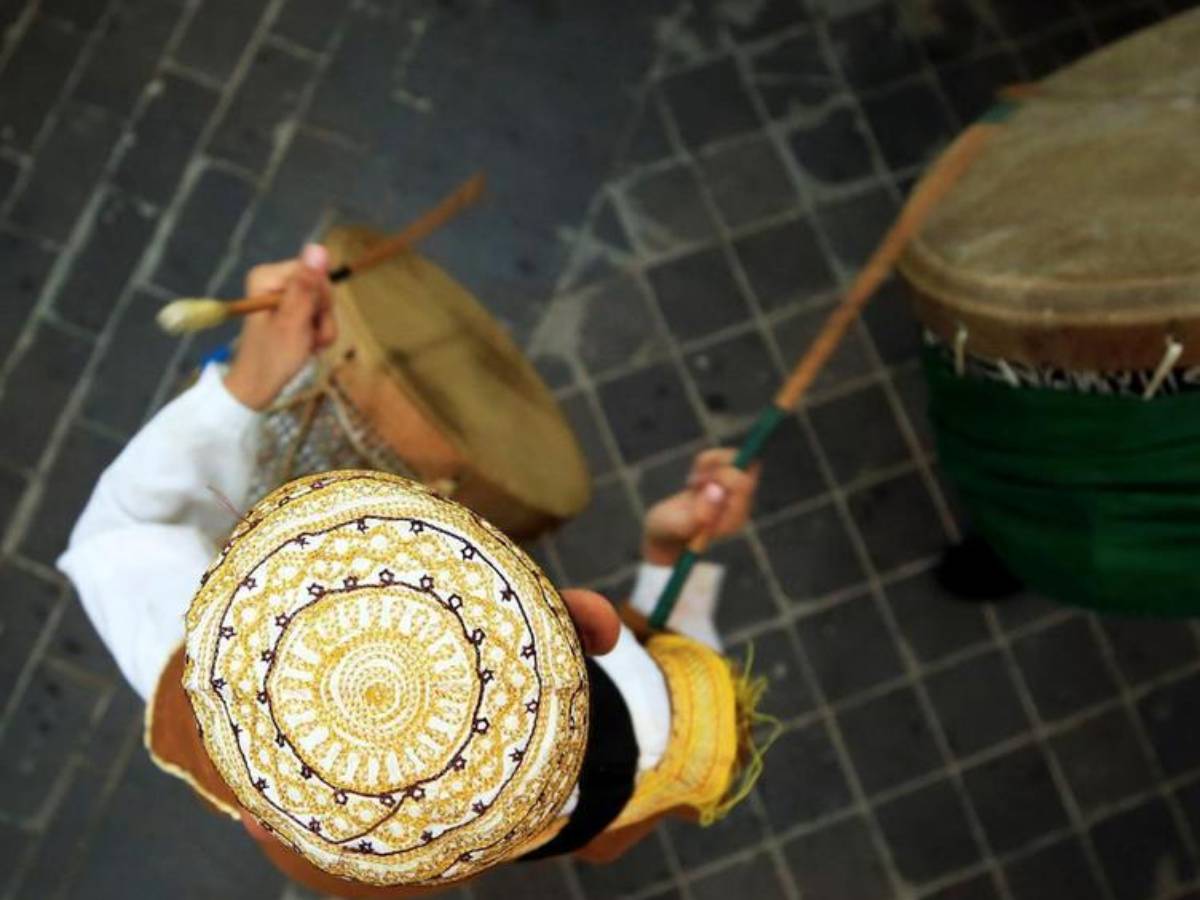
The mesaharaty (the traditional night caller who wakes people for the pre-dawn mea) closely tied to Egyptian heritage during Ramadan and remains resilient to the fast pace of modern life. Lantern-making has remained a thriving craft in Egypt, as these lanterns symbolize the joy and celebration of Ramadan’s arrival.
They not only bring delight to children but also decorate the facades of homes, restaurants, and shops. There is hardly a street in Egypt is without a lantern hanging at its center or entrance, alongside khayamiya (traditional decorative textile art), which has also seen widespread popularity over the past decade. These decorations now adorn homes and building entrances like artistic displays, featuring phrases and designs celebrating the fasting month.
As preparations for Ramadan intensify, Qatar News Agency toured Khayamiya Street in the Darb Al Ahmar district of Cairo, where shops and artisan workshops experience growing activity with the approach of the holy month, especially lantern manufacturing. The craft has evolved significantly to include modern designs while maintaining its traditional forms, which remain prominent despite competition from imported products.
In this context, Mohamed Worbi, an owner of a shop specialising in lanterns and khayamiya decorations, said in a statement to Qatar News Agency that preparations for the holy month reach their final stage during the month of Sha’ban, when all types of khayamiya products, decorations, and lanterns witness strong demand from small shop owners and families seeking items at affordable prices.
He added that work continues throughout the year in preparation for this season, which begins to gradually gain momentum in the month of Rajab, reaches its peak in Sha’ban, and continues into the beginning of Ramadan.
He noted that seasonal professions in this field rely on preparing raw materials for various goods and products suited to the financial circumstances of different families.
Meanwhile, Ahmed Rabie, a khayamiya craftsman, said in remarks to Qatar News Agency that the craft of producing khayamiya, decorations, and traditional tables is a purely Egyptian industry that continues to develop over time.
He said that handicrafts associated with Ramadan, such as lanterns and decorations exist throughout the year, but activity intensifies significantly three to four months before Ramadan, when preparations and production are increased to ensure readiness for the holy month.
Regarding the distinctive nature of seasonal professions associated with the holy month of Ramadan in Egypt, Dr. Abdelrahim Rehan, an antiquities expert and member of the History and Antiquities Committee at Egypt’s Supreme Council of Culture, explained that lantern production begins well before Ramadan, particularly in the Bab El Khalq district of Cairo, which is renowned for this craft.
He noted that the lanterns are made using local materials, especially colored glass, which has long been characteristic of Islamic decorative art in Egypt.
Rehan said in a special statement to Qatar News Agency that Ramadan decorations also rely on decorative papers purchased from specialized traders concentrated in well-known Cairo districts such as Al Ataba and Sayyida Zeinab. He added that Ramadan has also been traditionally associated with local drinks such as tamarind, licorice, sobia, and carob.
He further explained that there are dedicated vendors who sell these drinks from mobile carts moving through streets and neighborhoods, in addition to sweet shops offering traditional items such as kunafa and qatayef. These sweets hold an important place in Egyptian heritage and popular culture and remain central elements of Ramadan cuisine.
He added that the mesaharaty profession continues to exist in many popular and rural neighborhoods, where it provides seasonal income through gifts and donations given by residents at the end of the holy month.
With the exception of the Mesaharaty profession, the impact of seasonal occupations extends throughout the year beyond Ramadan, as they create a small economic cycle involving suppliers, workers, transportation, and distribution. These professions provide employment opportunities for youth, help preserve traditional crafts at risk of disappearing, and support families that rely on this income to cope with economic challenges.
In this context, economic researcher Ahmed Adam said in a statement to Qatar News Agency that although the mesaharaty profession has nearly disappeared in major cities, its survival in villages and historic towns represents an important form of cultural preservation. He explained that other seasonal crafts are often not full-time occupations, as practitioners usually have primary jobs that sustain them throughout the year.
He noted that this reflects an essential aspect of Egyptian culture, in which workers adapt their skills and temporarily shift professions during Ramadan to bring joy to others while earning additional income.
Adam added that what distinguishes these seasonal professions in Egypt is not only their financial return but also the cultural rituals surrounding them, which have created a living tableau in Egyptian streets. He explained that despite competition from imported products (especially inexpensive, attractively designed lanterns) the traditional lantern made of metal and colored glass has regained popularity among Egyptian consumers, particularly in working-class neighborhoods.
He noted that this traditional lantern has preserved the spirit of heritage, alongside other seasonal professions in rural and popular areas, such as kunafa makers, whose work is closely associated with Ramadan.
For his part, Barakat Safa, Deputy Head of the Stationery and Toys Division at the Cairo Chamber of Commerce, said that seasonal professions in Egypt represent an important source of income for traders and manufacturers, while also contributing to the unique character of Egyptians’ celebration of Ramadan.
Safa added in a statement to Qatar News Agency that those working in these professions have increasingly diversified their products, including lanterns made from plastic, metal, wood, and khayamiya fabric. As a result, prices vary according to people’s needs, allowing everyone the opportunity to celebrate and experience the joy of Ramadan’s arrival.