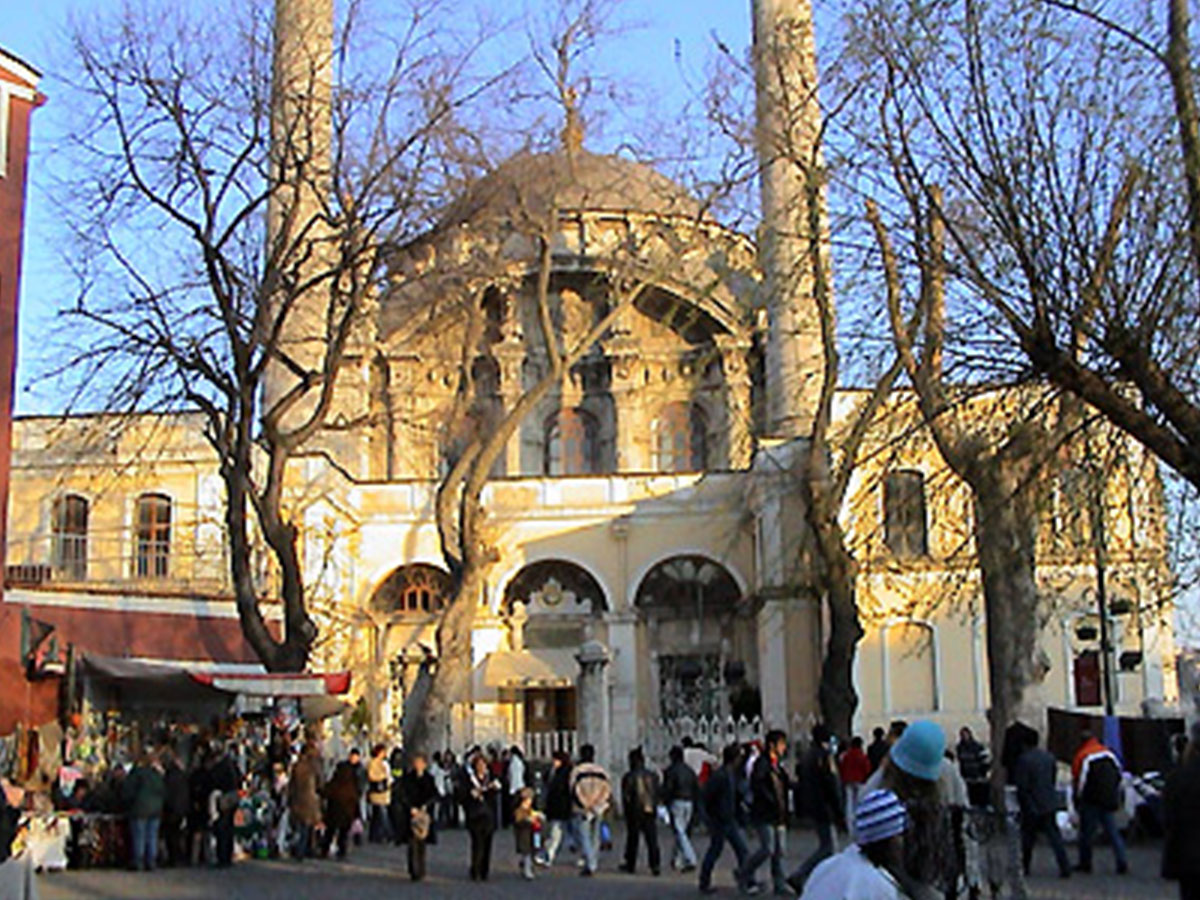
Istanbul: In the heart of the historic Fatih district in Istanbul, Turkiye, where daily life intersects with the features of Ottoman history, stories lie hidden among the old alleyways, reaching beyond the walls of mosques and the bustle of markets.
Among these stories stands a mosque, small in size yet great in symbolism, known as "Sanki Yedim", or "As If I Ate”.
Built in the 18th century during the Ottoman era, it is not distinguished by grand architectural design or elaborate decoration. Rather, its renown comes from a unique story that embodies the values of modesty and frugality, and shows how simple sacrifices can leave a lasting mark on a city’s memory.
According to narrations, the story of the mosque dates back to a man who lived in the Fatih district. It is said that his name was Kececi Hayreddin Efendi, while another narration identifies him as Sakir Efendi. He wished to build a mosque at his own expense, but it seems that he was of limited financial means. Whenever he walked through the market and felt the desire to buy meat, sweets, or fruit, he would tell himself, "Sanki yedim” - meaning "as if I Ate” - refrain from buying, and instead put the price of what he wanted in a special box in his home.
He maintained this practice for many years, until, through this simple act of saving, he accumulated enough to build a small mosque to serve the people of his neighborhood. His dream was realized after nearly twenty years.
Those in charge of the mosque emphasize that its mission is not limited to performing religious rituals, but extends to providing a space for tranquility and social interaction, which explains the clear emotional connection between the mosque and worshippers.
The mosque’s imam, Hatibi Abdullah Kutluoglu, said in remarks to Qatar News Agency (QNA): "The mosque carries a clear message about the value of saving and thrift; that if a person were to spend everything they earn, they might one day find themselves in need of others”.
"This mosque is a beautiful example of the value of saving, and our ancestors have left us a lasting legacy that embodies this idea”, he added.
For his part, Professor of Ottoman history, Ibrahim Bazan, explains that Kececi Efendi drew inspiration from a common Ottoman tradition among sultans and wealthy individuals, who were keen to build mosques and dedicate them as endowments for the people after their death, leaving a lasting legacy.
He added, "his vision was clear; he wanted a mosque that would serve the people of his neighborhood, a place where they could gather for prayer and where children could attend Quran memorisation classes. The area was in urgent need of a mosque, and he fulfilled this need with his modest funds, but with great determination”.
Despite its simple design and lack of decoration, the mosque has a distinctive presence. It covers an area of approximately 200 square meters, accommodates around 200 worshippers, and features a large dome and four lead-covered quarters, as well as a single minaret with a balcony constructed from reinforced concrete. On its main entrance, a marble plaque is inscribed with a brief story of the unusual name of this unique mosque.
Worshippers highlighted to QNA that the mosque has a special spiritual character that distinguishes it from other mosques. They stressed that its atmosphere instills a deep sense of tranquility, and that entering it provides them with inner peace and spiritual calm not found elsewhere, making their visits a unique religious experience with a distinct emotional dimension.
Despite the passage of time, the mosque has faced severe challenges. It suffered significant damage during World War I, but the people of Istanbul restored it in 1960, allowing it to remain a witness to the story of a man who, though not wealthy, possessed vision, patience, and determination.
Today, more than two centuries later, the "As If I Ate" Mosque still stands, a testament to the fact that frugality do not mean deprivation; rather, they can shape history, leave a lasting impact, and instill values that are passed down through generations.