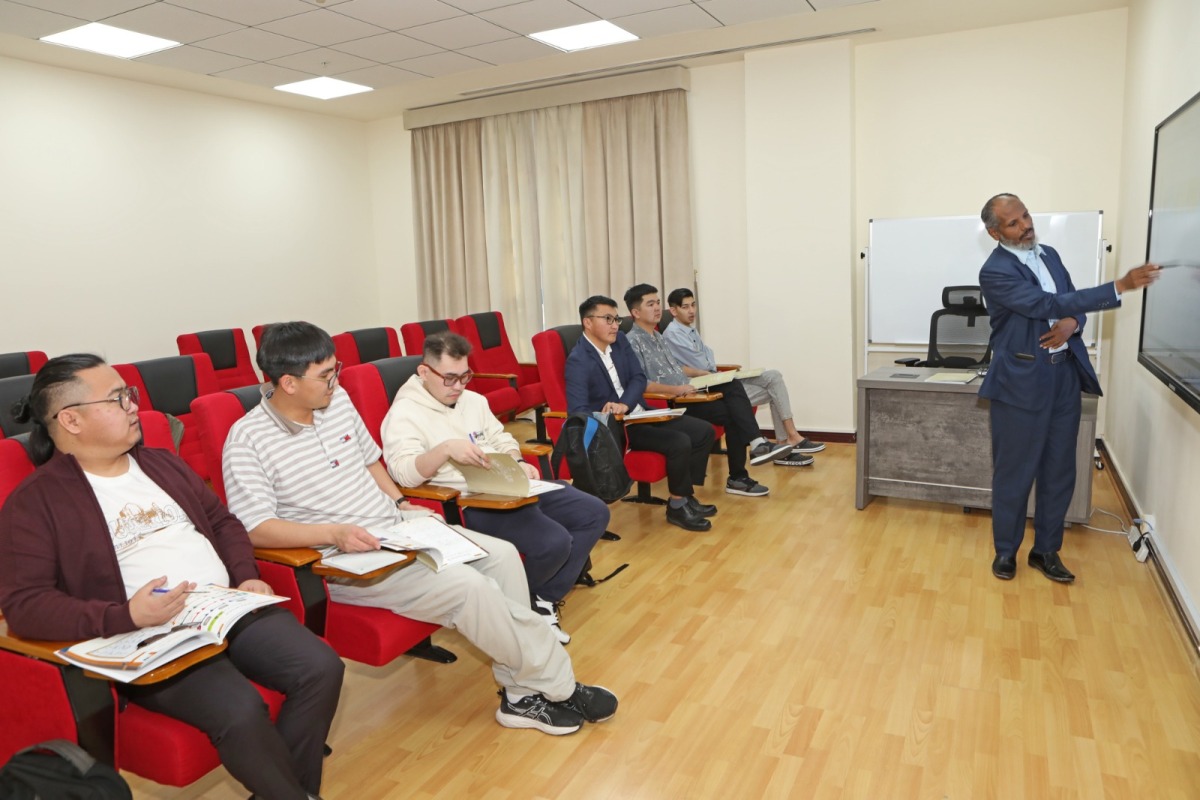
Doha, Qatar: The Sheikh Abdullah bin Zaid Al Mahmoud Cultural and Islamic Centre at the Ministry of Awqaf and Islamic Affairs is hosting 12 male and female students from the Republic of Mongolia to participate in a specialised educational course in Arabic for non-native speakers.
The course runs for a full month, from December 1 to 31, 2025, as part of the Centre’s continuous efforts to promote the Arabic language and enhance its global presence.
The course aims to develop the participants’ linguistic skills and strengthen their ability to use Arabic as a language of communication and culture, in addition to being the language of the Holy Qur’an. This contributes to deepening their understanding of Arab and Islamic culture.
Dr. Saleh bin Ali Al Marri, Director of the Sheikh Abdullah bin Zaid Centre, affirmed that hosting these students stems from the Centre’s global mission to serve and disseminate the Arabic language, and from its belief in the importance of international educational programmes in enhancing civilizational communication and spreading Arabic, as it is a key to understanding Arab culture and a bridge for communication among peoples and civilizations.
He explained that hosting students from Mongolia follows previous successful experiences in teaching Arabic to non-native speakers, including hosting students from the Russian Federation and the Kingdom of Cambodia.
The course includes instruction in the fundamentals of the Arabic language, with a focus on developing the four core skills: reading, writing, speaking, and listening. This is delivered through an approved academic curriculum specially prepared by the Centre for such courses.
The curriculum, titled “The Path to Arabic,” was developed by the Centre and is considered one of the leading programmes for teaching Arabic to non-native speakers, in accordance with the latest international educational standards. It is implemented by a select group of experienced and highly qualified instructors in this field.
The Centre noted that its Arabic language educational programmes have attracted large numbers of learners from various nationalities and backgrounds over the years, particularly those interested in cultural and religious affairs.
This reflects learners’ confidence in the quality of the curricula and the competence of the teaching staff.
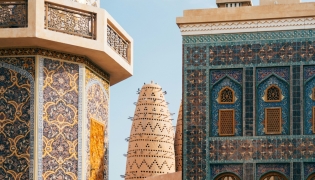
The accompanying programme includes cultural introductory tours to several prominent landmarks in the State of Qatar, including the Museum of Islamic Art, in addition to introducing participants to the mission and objectives of the Sheikh Abdullah bin Zaid Al Mahmoud Cultural and Islamic Centre.
This enhances the educational experience and links language learning to its cultural and civilisational context.