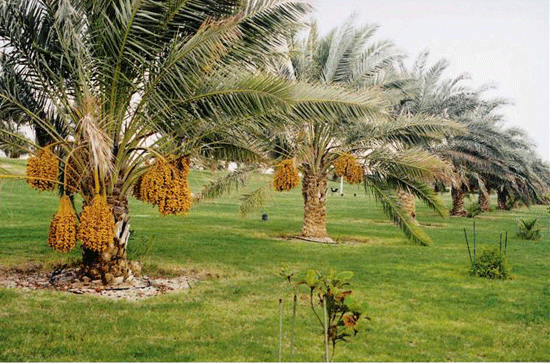
DOHA: With plans to plant at least nine types of new date palm trees, Qatar aims to be self-sufficient in date production sooner rather than later.
A pilot project which has already been launched with the above objective in mind, is yielding encouraging results, says a senior environment ministry official.
The agricultural affairs department in-charge of the pilot project is part of Qatar’s Ministry of Environment.
Massoud Jarallah Al Marri, head of agricultural research division at the agricultural affairs department, said that over the next four years date production in the country will go up substantially.
The production of dates here will be bolstered so much so that self-sufficiency is achieved, he said. “As of now too, local production meets a lot of demand.”
Plans are afoot to tremendously improve the quality of the locally produced dates as well, the official pointed out.
Qatar Foundation, according to Al Marri, has funded a QR15m date palm research initiative to help improve the genetic traits of the local varieties of dates.
Al Marri said that nine new types of date palm trees will be planted in the country to boost production and as part of plans to develop Qatar’s own brand of dates.
The GCC states are large producers of dates and Qatar is fast catching up with its neighbours in date production.
Dates contain essential nutrients and are a major source of dietary potassium.
A date festival has become a popular annual event in Qatar, with agricultural development officials insisting that the event is part of a campaign to convince families to get natural and traditional food back on their dining tables and encourage them to discard junk and risky food.
The idea behind holding date festivals during the harvest season in the summer months is to highlight the nutritional and medicinal values of dates.
Statistics for the year 2010 suggest that there were an estimated 145,000 date producing palm trees in the country covering total area of 335,000 hectares.
The Qatar Foundation-funded research initiative has ensured the trial and use of new technologies to boost date production in the country and improve the quality of the produce. Al Marri said that projects have been launched to bolster animal fodder production as well, with the aim of increasing production and improving the quality of the fodder locally produced.
It is a new technology of fodder production in which the use of water for irrigation purposes is minimal, he pointed out.
The new produce will gradually replace the fodder which is being currently cultivated here. Also, the production technology being used is fit for hot climates like the one which obtains here, said Al Marri.
He said that livestock resources of the country are also being raised and improved.
For example, livestock are being vaccinated and being given hormonal treatment for diseases. He hinted that these initiatives will ensure that Qatar emerges, sooner rather than later, a regional leader in sustainable and improved date production systems and animal husbandry.
The Peninsula