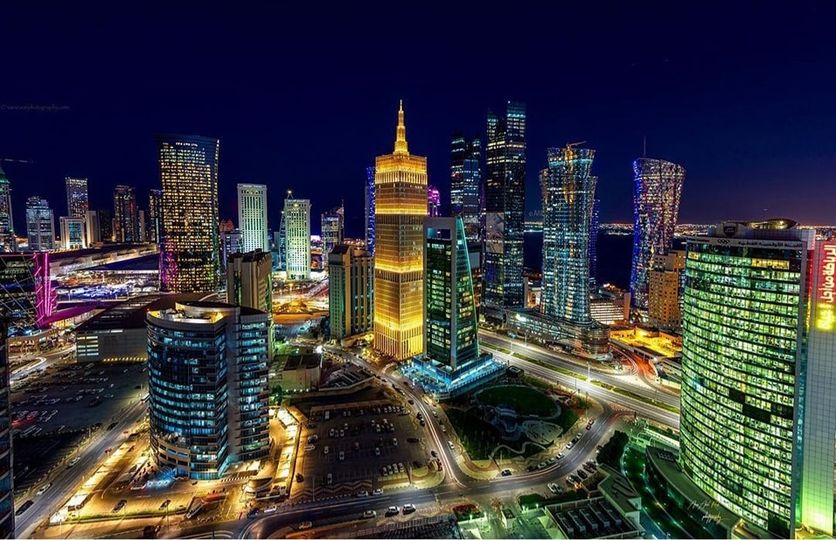
Doha: Qatar, with its diversified growth, robust institutions and forward-looking partnerships, stands out as a compelling destination for both domestic and international investors seeking resilience and long-term returns in a region navigating global uncertainties, according to the latest S&P Global Ratings report.
Despite a landscape beset with geopolitical tension and oil-price fluctuations, Gulf Cooperation Council (GCC) corporate and infrastructure credit profiles are forecast to remain stable through 2026, according to the report titled GCC Corporate and Infrastructure Outlook 2026: Stability Despite Uncertainty. The findings offer a grounded yet optimistic view for investors in Qatar’s expanding economy.
S&P’s analysis shows that around two-thirds of rated GCC corporates and infrastructure issuers carry investment-grade credit ratings, with an overwhelming 97 percent maintaining stable outlooks.
This stability narrative aligns well with Qatar’s broader economic trajectory. Standard Chartered and other financial institutions project robust GDP growth for Qatar in 2026, supported by robust liquefied natural gas (LNG) expansion and diversification efforts that extend beyond hydrocarbons into sectors such as finance, tourism, and trade.
Qatar’s investment landscape is underpinned by strong macroeconomic fundamentals. Non-hydrocarbon sectors now contribute a majority of the nation’s GDP, reflecting successful diversification strategies. Public-private partnership (PPP) legislation and the expansion of financial services have further broadened the opportunities for both domestic and foreign investors.
The country’s banking sector, for example, continues to exhibit strong capitalisation and liquidity, according to recent S&P Global Ratings assessments. This resilience supports corporate lending and private sector expansion, even as global market conditions remain uneven.
Qatar’s sovereign wealth fund, the Qatar Investment Authority (QIA), with approximately $580bn in assets under management, is actively enhancing investment partnerships with global financial institutions. A notable example is a new $25bn strategic investment agreement with Goldman Sachs, which aims to channel capital into cutting-edge sectors such as artificial intelligence, fintech, digital infrastructure, and private credit. This collaboration underscores Doha’s ambition to position itself as a regional financial hub while driving diversification beyond energy exports.
Across the GCC, stable credit profiles and supportive funding conditions have created an enabling environment for infrastructure financing. S&P highlights that capital markets remain accessible, with rated Gulf firms raising significantly more funding in early 2026 than in the same period last year.
In Qatar, this translates into opportunities in sectors such as transport, utilities, and digital infrastructure, fields that align with the national development agenda under Qatar National Vision 2030. The greater involvement of private capital, encouraged by PPP frameworks, is catalysing long-term investment in both social and economic infrastructure.
However, risks persist. S&P’s baseline assumes limited credit impact from geopolitical tensions, but warns that severe disruptions, particularly in energy export routes, could affect financing conditions and economic performance.
Qatar’s proactive reforms and infrastructure investments have helped maintain investor confidence even as global markets remain volatile. Real GDP per capita is projected to rise sharply by 2026, reflecting elevated productivity and progress toward higher-income status.
The banking system’s stability, coupled with strong sovereign support for key sectors, continues to attract capital inflows.
Enhanced regulatory frameworks and investment incentives, including tax exemptions and foreign ownership reforms, are also contributing to a more attractive investment climate.
The GCC outlook affirms a period of credit stability rather than exuberant expansion, driven by steady economic growth, supportive government spending, and evolving infrastructure financing models.