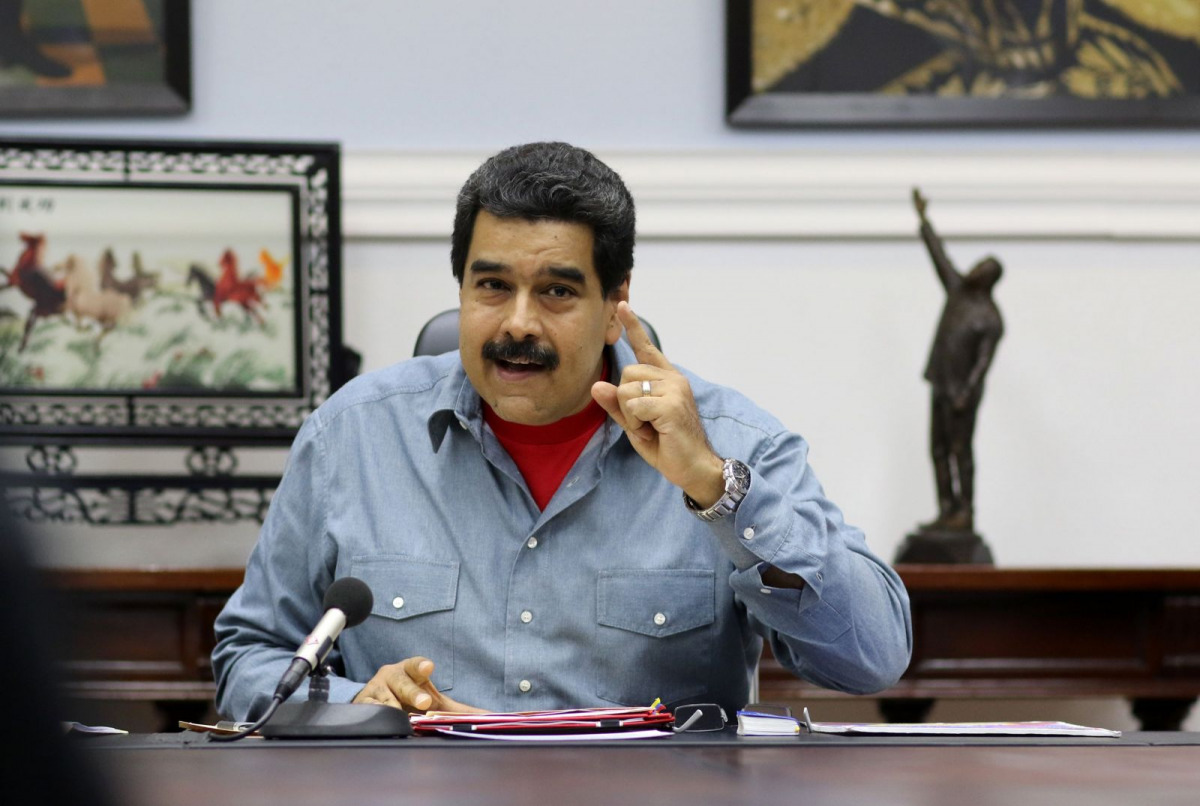
Caracas: Facing mounting pressure from food shortages, looting and increasingly violent protests, Venezuelan authorities on Friday announced the next stage for a recall referendum against embattled President Nicolas Maduro.
But Maduro's camp said it would go to the Supreme Court to contest the process, accusing the opposition of fraud in gathering the signatures needed to call a referendum.
The decision by the National Electoral Board (CNE) to let the lengthy recall process move ahead also came with a warning from the board's chief, Tibisay Lucena, who told Maduro's opponents that any acts of violence would immediately halt the proceedings.
After repeated opposition protests, Lucena finally announced the CNE would take fingerprint scans from June 20 to 24 to confirm the identity of people who signed the opposition's referendum petition, submitted on May 2 with 1.8 million signatures.
That is the next step in a marathon process to call a vote on sacking the leftist president, whom opponents accuse of driving oil-rich Venezuela to the brink of economic collapse.
The electoral board, which the opposition accuses of dragging its feet to protect Maduro, appeared to have caved in after protests turned violent Thursday and left a prominent lawmaker bloodied and beaten.
But a Maduro loyalist appointed to oversee the process, Jorge Rodriguez, vowed to go to the Supreme Court to stop what he called "this crime against the constitution."
He said the opposition's petition included dead people, children and others ineligible to sign.
- 'Emphatic' warning -
Protests, looting and violent crime have been mounting in Venezuela as the country reels from shortages of food, water, medicine and electricity.
On Thursday, police fired tear gas to break up a protest led by lawmakers in the opposition-majority congress, who tried to march on the CNE's headquarters.
It was the fourth time in recent days police had cracked down on similar marches.
A brawl broke out and punches flew when the protesters faced Maduro supporters.
Julio Borges, the congressional majority leader, was attacked with clubs, punches and kicks from Maduro backers, leaving him with a bloodied nose.
Maduro blamed the violence on his political enemies and vowed to throw the "provocateurs" into prison.
Lucena, the country's top electoral official, also had a warning for the opposition, even as she agreed to let them move ahead with the referendum process.
"We want to say very emphatically (that) any aggression, disturbance or violence will lead to the immediate suspension of the process until order, peace and respect are reestablished," she told a press conference.
At least 200,000 people who signed the recall referendum petition must now confirm their identity with fingerprint scans.
Under the constitution, the opposition would then have to gather four million more signatures -- 20 percent of the electorate -- to trigger a recall vote.
Maduro's opponents are racing to call a referendum before January 10, as a successful recall vote before that deadline would trigger new elections rather than transfer power to the vice president.
Seven in 10 Venezuelans want Maduro to go, according to polls.
- New looting sprees -
In a sign of growing unrest, new looting sprees broke out overnight in Petare, a sprawling, impoverished neighborhood in eastern Caracas, when residents descended on two food delivery trucks and 10 businesses, carting off their stock.
"People are going out and looting because they're hungry. They can't find any food," said Robert Arcila, a 22-year-old who sells eggs on the street and was nearby when looters sacked a truck hauling sausages and cheese.
"All of Venezuela's crises are converging," said Amnesty International's Erika Guevara, the rights group's director for the Americas.
Home to the world's largest oil reserves, Venezuela has taken a punishing beating from the sharp drop in the price of crude, on which its economy is built.
It is stuck in a deep recession and its inflation rate is the highest in the world.
Exacerbating the situation, a drought has dramatically cut output at the country's hydroelectric dams, forcing the government to implement daily power cuts and close state offices all but two days a week.
AFP