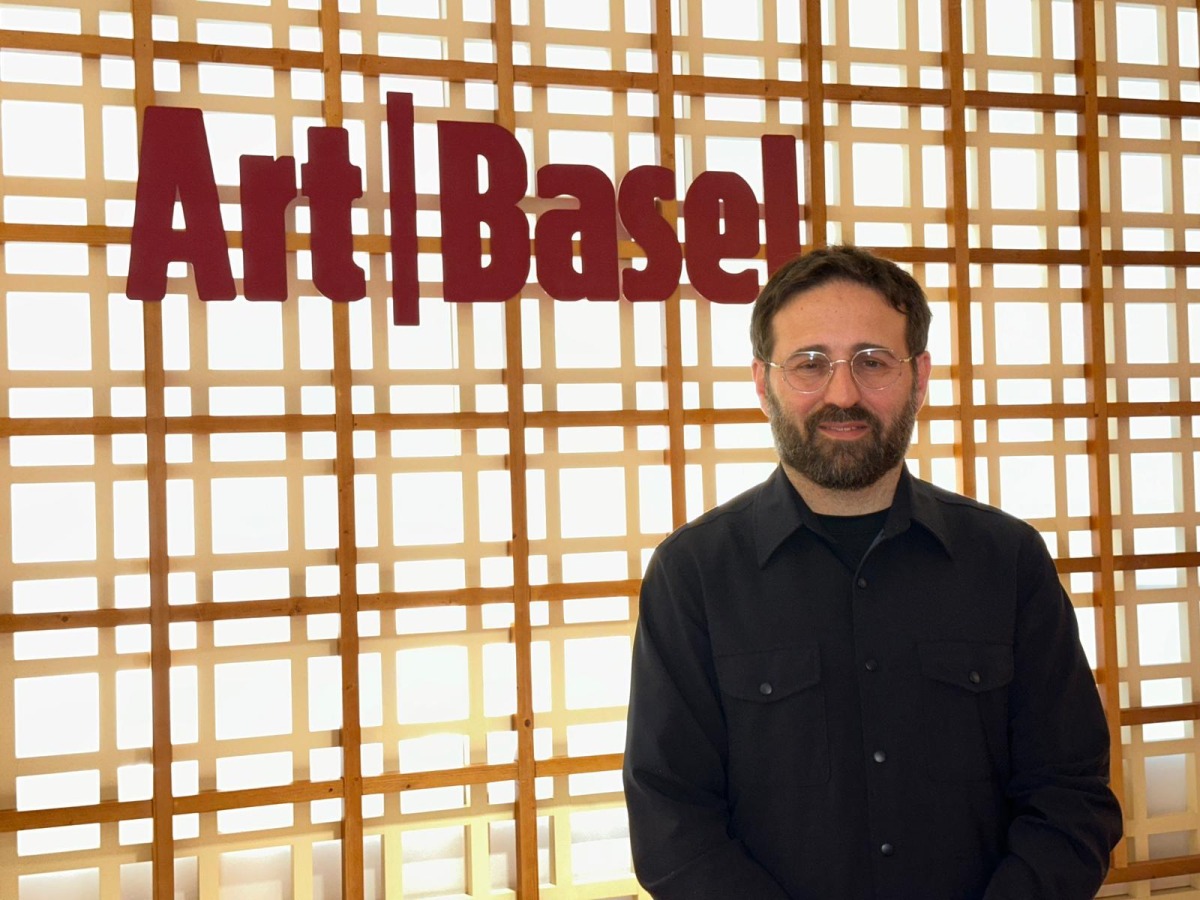
Vincenzo de Bellis, Global Director of Fairs and Exhibition Platforms at Art Basel
Doha, Qatar: Art Basel Qatar has been deliberately designed to stand apart from the fair’s established editions in Basel, Miami Beach and Hong Kong, reflecting both the cultural specificity of the region and the shifting centre of gravity in the global art world, according to Vincenzo de Bellis, Global Director of Fairs and Exhibition Platforms at Art Basel.
Speaking to The Peninsula on the sidelines of Art Basel Qatar, de Bellis said it was “non-negotiable” that the Doha edition should not feel like a copy-and-paste of existing fairs. “From the very beginning we wanted this to be different and meaningful for this place,” he said, noting that the decision to spread the fair across multiple venues and adopt a slower, more reflective pace was central to that vision.
One of the defining features of Art Basel Qatar is its emphasis on solo presentations, a format de Bellis described as both strategic and conceptual. The approach allows for deeper engagement with individual artistic practices, encouraging audiences to spend time with works rather than consuming them quickly.
“Fairs are not only marketplaces, they are platforms,” he explained, adding that visibility, encounters and understanding are just as important as commercial success, particularly in a new market.
Asked what has stood out in Doha, de Bellis highlighted the strength and quality of the regional art scene. He said many Western curators and collectors remain unfamiliar with artists from the Middle East and North Africa, and one of Art Basel’s goals is to use its global platform to bring that work to wider international attention.
Balancing international expectations with meaningful local engagement was another key consideration for the debut edition. De Bellis said the decision to feature an equal split between artists from the region and those from elsewhere was intentional. “For international visitors, it’s about discovering something new,” he said. “For local audiences, it’s about encountering global artists they may know digitally but not have seen physically.”
He believes the launch of Art Basel Qatar is also part of a broader transformation in the art world, where cultural leadership is no longer driven solely by Western centres.
“The paradigm shift started a long time ago,” de Bellis said. “The MENA region is certainly one of the areas now taking centre stage, and we are proud to be part of that story.”
While the Art Basel Qatar model differs from other editions, de Bellis stressed that evolution is central to all Art Basel projects. “We cannot enter a new region without considering cultural and market differences,” he said, adding that the Doha fair will continue to grow and adapt in response to feedback, partnerships and the needs of the local ecosystem. “We are here for the long run.”
Looking ahead five years, de Bellis outlined clear markers of success. These include greater international recognition for artists from Qatar and the wider region, increased participation of MENA galleries in Art Basel’s other global fairs, and a growing base of collectors and visitors engaged with the Doha edition.