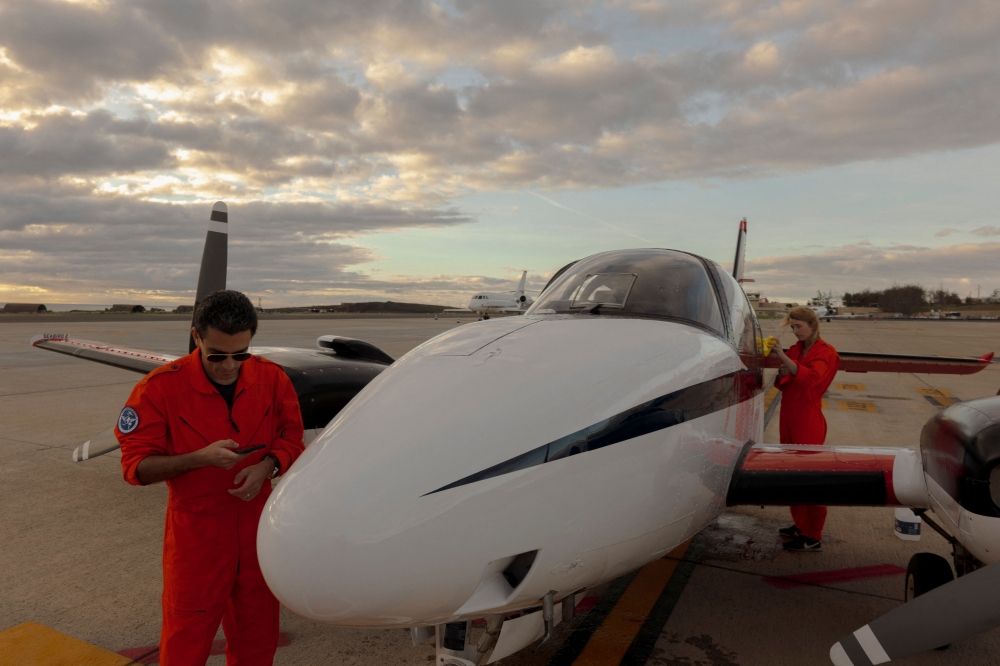
The crew of the Humanitarian Pilot Initiative (HPI) flight gets ready to the takeoff in Las Palmas on January 23, 2026. (Photos by Michele Cattani / AFP)
Off the coast of the Canary Islands: Every hour is crucial when searching for distressed west African migrant boats in the Atlantic, where the long route and harsh weather easily spell disaster, a nonprofit that conducts aerial surveillance told AFP during a recent mission.
AFP rode along with the organisation Humanitarian Pilots Initiative (HPI) as it raced to locate several missing pirogues -- long, rickety canoes -- that had left The Gambia but never showed up at their final destination.
The mission: search an area larger than Switzerland, from hundreds of metres (yards) in the air, with an aim of rendering aid before it is too late.
"People could be dead or dying from dehydration, heat stroke or any other conditions," pilot Omar El Manfalouty told AFP.
Migrants departing from west Africa and travelling up the Atlantic are usually trying to reach Europe via the Canary Islands off northwest Africa.
The Spanish archipelago is the jumping off point for their continued journey onward to the European continent.
With many recent departures taking place from further south in The Gambia and Guinea, migrants are now spending longer at sea and facing more hardships.
More than 3,000 migrants died in 2025 while attempting to reach Spain clandestinely, according to the Spanish NGO Caminando Fronteras.
While HPI has operated since 2016 in the central Mediterranean, it is a relative newcomer to the Atlantic.
In the Mediterranean, it has already helped spot more than 1,000 boats, alerting international NGO rescue ships which then go and help.
AFP flew with HPI on its third mission in nine months in the Atlantic, riding for several days in the NGO's Beechcraft Baron 58 nicknamed "Seabird".
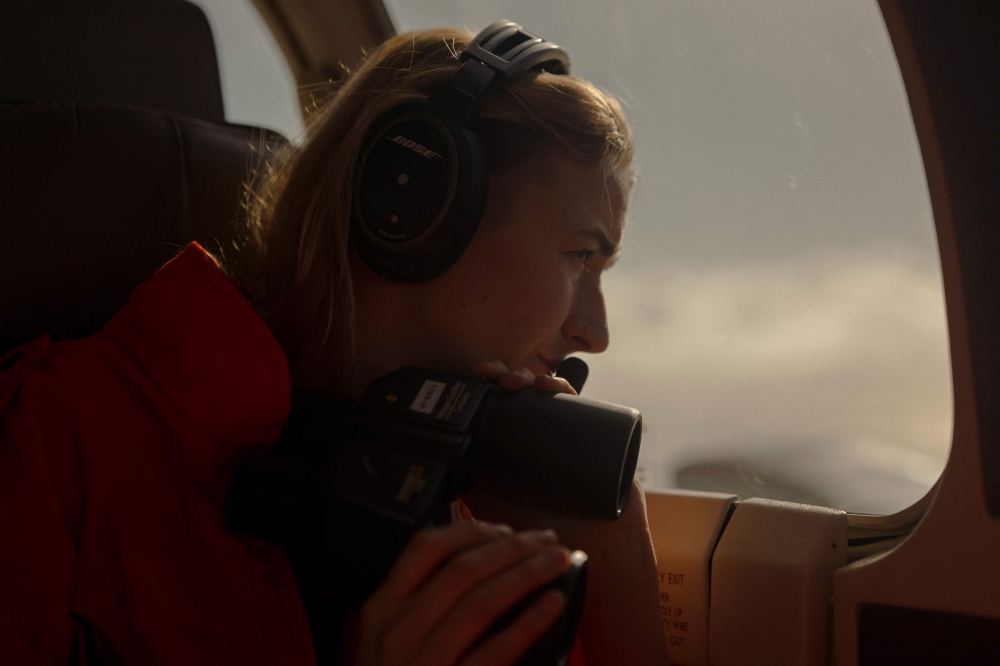 The HPI Tactical Coordinator looks out of the aircraft's window to monitor the Atlantic route between West Africa and the Canary Islands on January 22, 2026.
'Vast area'
"The Atlantic Ocean is huge. It's a vast area and it's impossible to cover it in its entirety," said El Manfalouty.
"We brought our longest-range aircraft here and we're focusing on the area which other actors cannot reach, approximately between 300 and 500 nautical miles from the Canaries," he said.
Once HPI spots a vessel, it sends an alert for emergency response to nearby merchant ships so that they can provide immediate support. From there, Spain's maritime safety and rescue authority, Salvamento Maritimo, takes over.
"Having an aircraft in the area to support from the air with 10 times the speed (of boats) makes a lot of sense," said Samira, the mission's tactical coordinator who asked not to use her last name due to threats the NGO receives in several European countries.
One morning in January the crew received an alert from another NGO that a boat which had departed The Gambia carrying 103 people, including nine women and three children, was missing. HPI quickly mobilised.
The trip from The Gambia to the Canaries is 1,000 nautical miles, meaning there is a vast region where the boat might be, Samira said. On her tablet, she plotted out several routes.
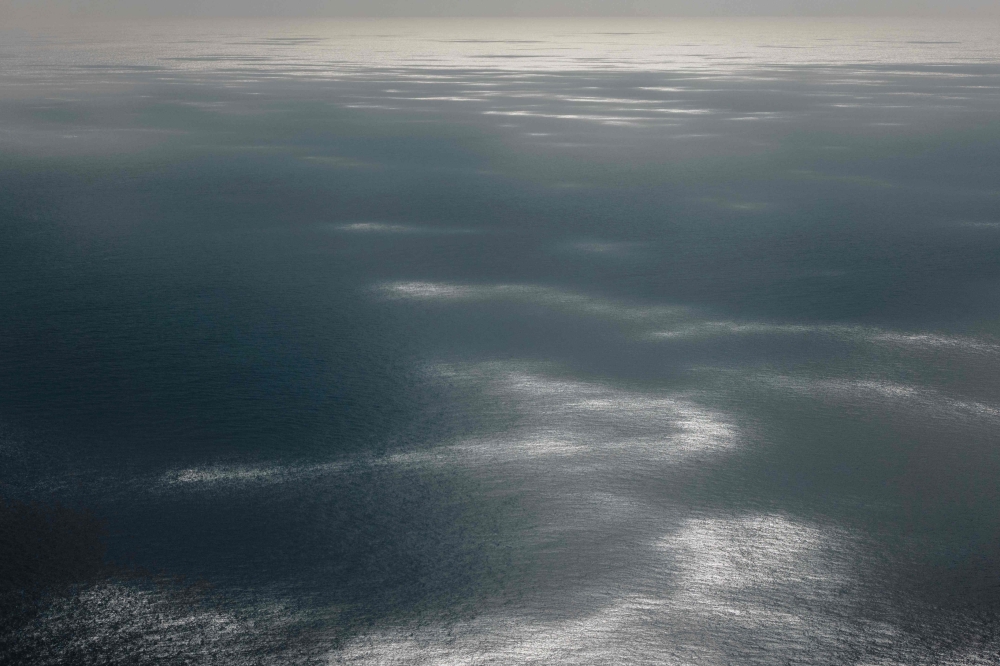 A general view of the Atlantic Ocean between West Africa and the Canary Islands during a HPI aerial monitoring mission on January 22, 2026.
Eyes glued
Once the plane reached the patrol zone, the aircraft descended below cloud cover and followed straight, parallel trajectories. Three crew members kept their eyes glued to the windows for the pirogue.
While in the air they received word of another vessel: a second boat, which left The Gambia seven days earlier with 137 people on board.
With the strong winds and swell, "the boats may have drifted", Samira said.
Boats have previously drifted so far as to reach the Caribbean or South America without any survivors.
After three consecutive days of flying, the crew had covered nearly 3,800 nautical miles, but there was still no trace of the two boats.
As of publication, neither of the vessels had reached the Canaries.
Near a migrant reception centre in Las Palmas, a major city in the Canary Islands, Ousmane Ly, a recently arrived 25-year-old Senegalese man, gazed at the beach. Other migrants, also from Senegal, were taking advantage of the sunny day to take photos.
 Ousmane Ly poses in a park of Las Palmas as he recently arrived in Gran Canaria after crossing the Atlantic route from Gambia, on January 19, 2026.
The joy of having made it outweighed the difficulty some were having walking after days crammed into a pirogue.
Their hands, arms and legs bore wounds caused by the salt water.
He recounted how once they boarded the pirogue, he and the other passengers were covered with a tarpaulin: "I closed my eyes and thought of my mother," he said.
The tarpaulin -- used to protect them from the sun during the day and cold at night -- was removed only 10 days later, when the boat was rescued by Salvamento Maritimo.
There were 108 people on board, two of whom were found dead during the rescue.