By Fazeena Saleem
DOHA: Qatar University (QU) has created a health education cluster to serve as a pillar of excellence in health education and research in the country, according to a senior official.
The cluster will function as the national provider of higher education in health and medicine.
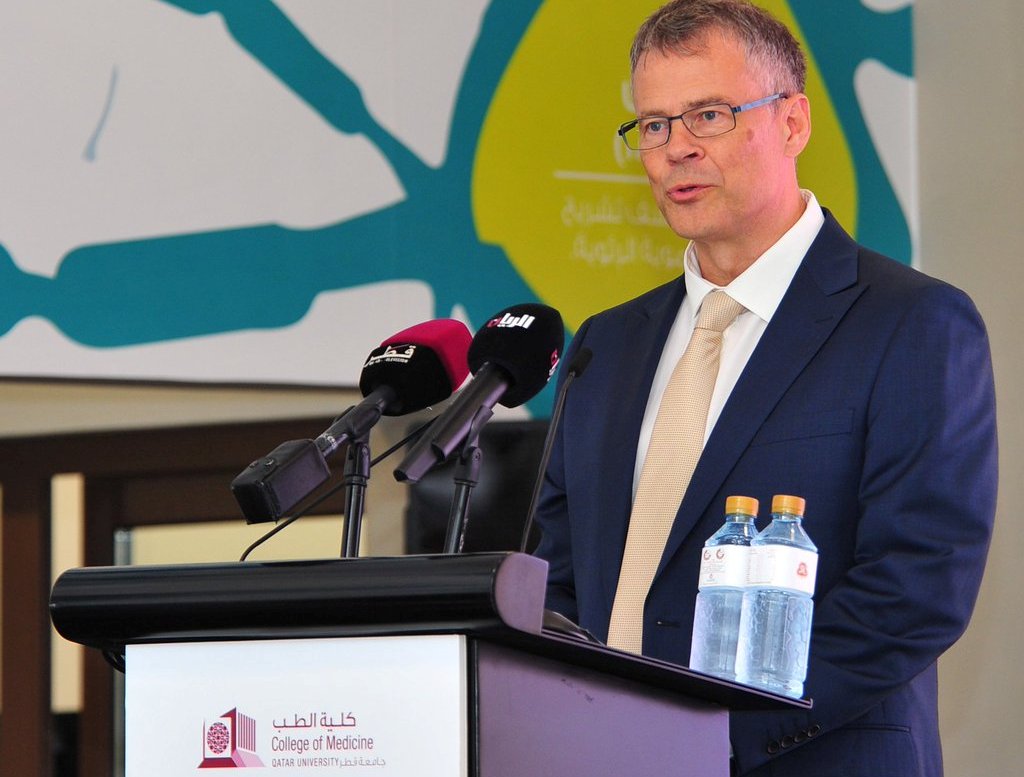
Through high-quality inter-disciplinary programmes and three member colleges, it will prepare competent graduates capable of shaping the future of healthcare in the country, according to Dr Egon Toft, Vice-President, Medical Education, at QU.
The members are College of Health Sciences (CHS), College of Medicine (CMED) and College of Pharmacy (CPH).
“The cluster model by comparison aims to enable an enhanced learning environment and student experience through the pooling of talents, the optimal use of physical resources and a holistic approach to medicine and patient care,” Dr Toft said. The cluster also aims to be recognised regionally for excellence in inter-professional health education and inter-disciplinary health research.
“We want to be the first choice for students and scholars interested in these fields and, most importantly, to become a catalyst for innovation at the national level,” said Dr Toft.
The synergistic efforts of the member colleges of the cluster in teaching, research and community outreach will serve to advance knowledge in the health and medical fields, address local and regional challenges and contribute to population health and research in Qatar.
Dr Toft pointed out that relatively small student populations across health and medicine disciplines, low number of Qataris in some of them and high administration/student ratio in individual health colleges or departments could drain resources and negatively impact student experience.
For faculty and researchers, close alignment across the cluster can help address academic requirements in a complementary manner, streamline faculty collaborations in research and teaching, and ensure coordinated and effective interactions with external stakeholders.
“The focus on health and close alignment with the sector creates tremendous potential to develop future health-related colleges and programmes to serve the emerging needs of the healthcare sector in the country. All of this will provide new opportunities for students, faculty and healthcare practitioners, and enable the cluster to serve as the principal supplier of highly-qualified healthcare professionals to the health labour market,” he said.
Another benefit of the cluster is that it creates an enabling environment for interdisciplinary research which integrates information, data, techniques, tools, concepts and perspectives from several disciplines to solve problems that extend beyond the scope of any one discipline.
“Most health problems can be best addressed through such overarching perspectives and researchers from diverse disciplines will benefit considerably from this approach,” said Dr Toft. The QU Board of Regents approved the formation of the health cluster in January. The cluster is expected to become fully functional next month.
The Peninsula