Doha, Qatar: The Ministry of Communications and Information Technology (MCIT) launched the second phase of the adopt Microsoft Copilot program, and at the same time celebrated the graduation of the first batch of the program, in which 9 governmental and semi-governmental entities participated.
Assistant Undersecretary for Infrastructure and Operations Affairs at MCIT Sami Mohammad Al Shammari told Qatar News Agency (QNA) that the goal of this program launched by the MCIT is to enable the workforce in governmental and semi-governmental entities to use artificial intelligence tools in daily work.
He noted that the Copilot program constitutes the first large-scale experiment to use generative artificial intelligence tools within governmental entities in Qatar.
He highlighted that the first phase of the program achieved significant results, including an adoption rate of 62 percent, more than 9,000 active users, and 1.7 million tasks executed through "Copilot," which saved more than 240,000 working hours.
The program was expanded due to the success of its first phase to include 17 governmental and semi-governmental entities, which include specialized training programs through the Qatar Digital Academy, to ensure that every employee has the necessary skills to deal with smart tools with the highest efficiency.
He indicated that deploying artificial intelligence tools in government agencies would contribute to raising the competitiveness of the State of Qatar in international indicators related to digital transformation and government innovation.
He added that this cooperation with Microsoft ensures that national cadres have access to the latest artificial intelligence technologies, and reflects the state’s commitment to building a more innovative and efficient government work environment.
In his opening remarks at the honoring ceremony for government agencies that participated in the first phase of the adopt Microsoft Copilot program, Sami Mohammed Al Shammari confirmed that they had successfully completed this phase, and proved their ability to adopt advanced technologies and integrate them into the work environment effectively to enhance the efficiency of government services and raise the level of digital readiness.
He noted that the MCIT launched this program with a strategic vision that is in line with the goals of the Digital Agenda 2030, which seeks to build a digital society by developing talents and providing access to the best training programs in a way that stimulates digital innovation in various sectors of the country.
He indicated that the vision focused on the third national development strategy, which aspires to build a future-ready workforce capable of skillfully employing modern technologies to raise the quality of government services by improving the speed of daily operations and enhancing data-driven decision-making.
The program was designed to give national cadres the opportunity to acquire practical skills in using "Copilot" to support the shift toward a smarter and more productive work environment.
Thus, the program met the national trend towards adopting and optimally employing artificial intelligence technologies, which enhances operational efficiency and establishes a more innovative and productive work environment.
He emphasized that the first phase of this program yielded outstanding results that exceeded the goals set for it, and reflects the level of interaction and benefit of national cadres in the various participating entities, expressing thanks and appreciation to the leaders and work teams in the entities that participated effectively in the first phase and for their continued support of this pioneering experience.
He pointed out that the program achieved results in its first phase that exceeded the goals set for it, which showed high levels of interaction and commitment, reflecting a real readiness to adopt modern technologies to support the performance of tasks in the government work environment, and to start using the features of "Copilot" in facilitating workflow and raising the efficiency of task completion.
He noted that the second phase of the program will be under the umbrella of the Qatar Digital Academy, and will include 17 additional government entities, and will build on the lessons learned from the first phase, and will work to expand the scope of success, and enhance the quality of training by benefiting from the experiences and data accumulated from the participants in the first phase.
For her part, General Manager of Microsoft Qatar Lana Khalaf addressed the importance of the program and its successes, and artificial intelligence applications and their clear impact in Qatar, appreciating the cooperation between the MCIT and Microsoft.
She emphasized that the adopt Microsoft Copilot program has become not just a tool, but an extremely important artificial intelligence program for every employee, entity, and government institution, reviewing the program's various stages since its initial launch to become an integral part of the work and an important added value in this regard.
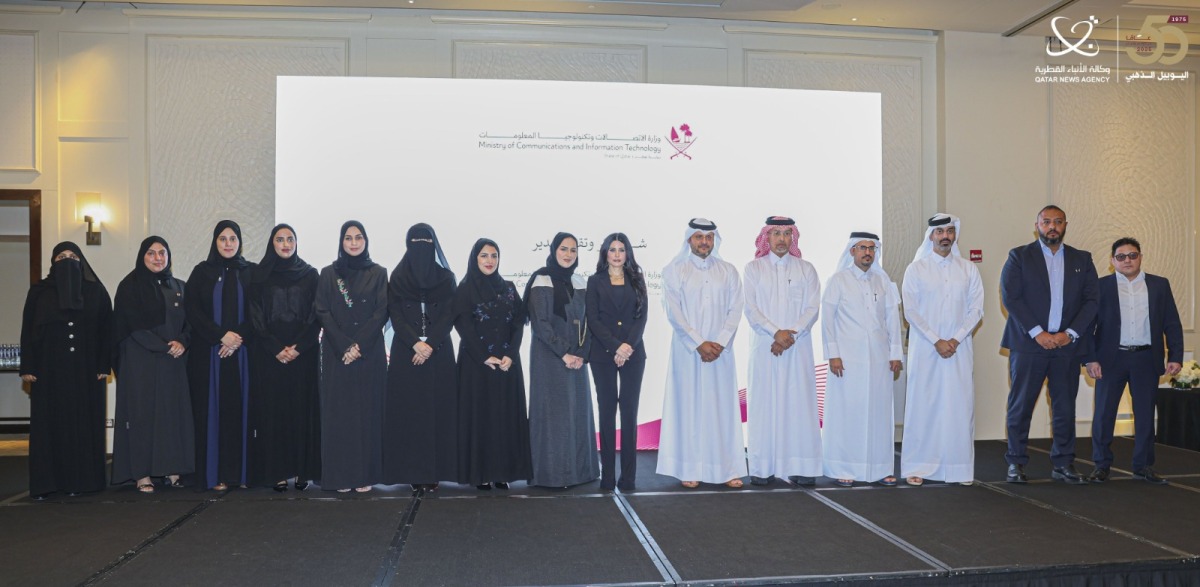
During the ceremony, representatives of the entities that participated in the first batch of the program were honored, and they expressed their happiness with the knowledge, skills and benefits they gained from the program, all of which contribute to achieving the accomplishment quickly and the content accurately and with great responsibility, which in its entirety leads to improving services and greatly enhancing digital skills in the work environment.