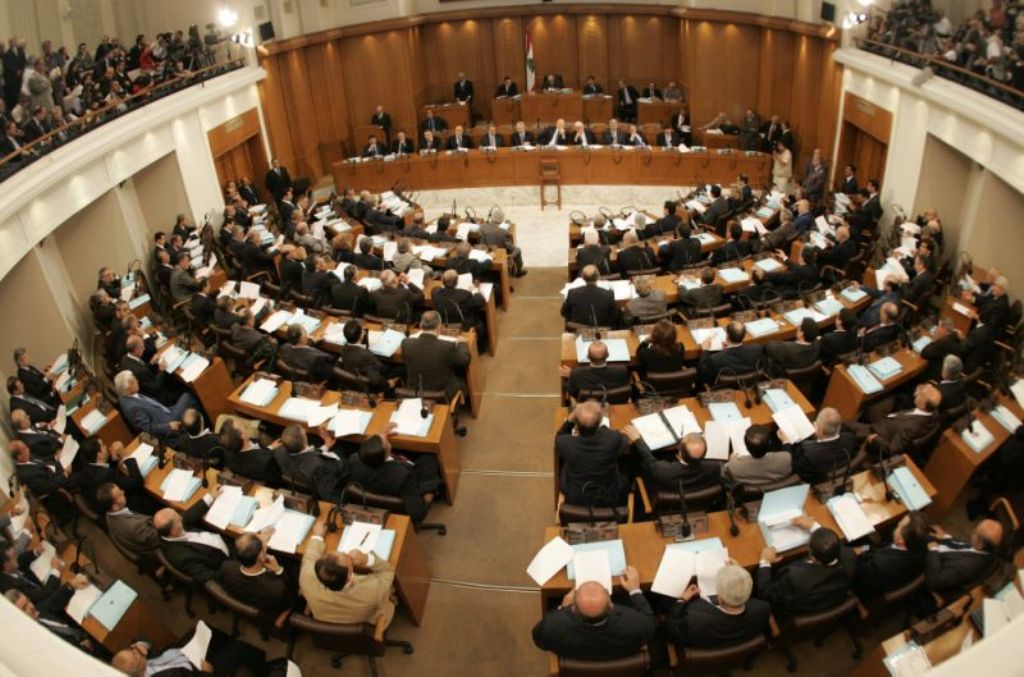
Beirut: Lebanese political parties are currently in discussions over setting a new parliamentary electoral law by May to choose 128 members of parliament after the elections have been postponed twice for security reasons.
The debate is mainly over the possibility of founding a format compiling both the proportional and the majority systems. However, some parties are calling for the old electoral system to remain.
Lebanese President Michel Aoun had previously said that elections based on proportions represents majorities as well as minorities as opposed to the majoritarian-based law that divides Lebanon into small constituencies. He added that would lose votes under the new law, however he believes it does not matter since it ensures that everyone is represented and will lead to stability in the country.
In an interview with QNA, Neemtallah Abi Nasr, member of Change and Reform bloc, which represents the Free Patriotic Movement founded by Aoun, said the movement is against the majoritarian-based electoral law and stands with endorsing the proportional system, and will support a temporary combined law as a settlement between all parties.
He said there maybe a technical extension for the current parliament if the new law is to be implemented, adding that an extension would be accepted in this case in order to properly train all personnel that will handle the elections.
A four-party panel including representatives from the Free Patriotic Movement, the Future Movement, the Amal Movement and Hezbollah was formed to bridge the gap over a new voting system to replace the disputed 1960 majoritarian system after Interior Minister Nahed Machnouk announced that a decision needs to be reached by Feb 21, three months before the elections as per law. The panel said that they are working to reach a hybrid law that will satisfy all parties.
Currently, the majority-based electoral law means each religious community has an allocated number of seats in the parliament. They do not represent only their co-religionists, however; all candidates in a particular constituency must receive a plurality of the total vote, which includes followers of all confessions. The system was designed to minimize inter-sectarian competition and maximize cross-confessional cooperation.
Candidates are opposed only by co-religionists, but must seek support from outside their own faith in order to be elected.