Dr. Carolyne Lunga
World Press Freedom Day marks an important time on the calendar of media professionals including journalists, photojournalists, broadcasters, editors, producers worldwide to reflect and remind society on the important role that media play in informing and educating society. This year The World Press Freedom Day Conference 2026, entitled “Shaping a Future of Peace”, takes place in Lusaka, Zambia on May 4. Several online events have been organised online by UNESCO and its partners to commemorate this day in Austria, Bangladesh, Cambodia, France, Japan among others.
The events cover a wide range of contemporary issues affecting the media including digital transformation and artificial intelligence, threats to media freedom, stories of journalists who demonstrate resilience under very challenging circumstances, the role of women in journalism among others.
In Switzerland, European Broadcasting Union (EBU) convenes a conference on the state of journalism in Gaza, which explores what it takes to restore safe, independent and sustainable reporting in Gaza. The event brings together EBU Members, newsroom leaders, press freedom advocates, humanitarian actors and security experts to share practical experience and identify concrete steps to rebuild capacity, protect journalists and safeguard the public’s right to information. The event comes at a time when the Committee to Protect Journalists (CPJ) reported in February 2026 that the war in Gaza is the deadliest war for journalists as this number is more than journalists killed in Afghanistan, Vietnam and the World Wars. According to CPJ, at least 207 Palestinian journalists and media workers have been killed in Gaza and that they were targeted despite wearing identification as press workers.
In recent times, journalists have found themselves operating under very challenging conditions due to the ongoing conflicts in Iran, Ukraine, Sudan. Journalists have been killed by air and drone strikes and subjected to violence and labelled as terrorists while undertaking critical assignments. Apart from reporting from the frontline, journalists are targeted online by economic and political power holders to deter them from pursuing certain stories.
Systematic attempts to silence them through cyberbullying, death threats, doxxing, disinformation and misinformation are prevalent. Online harassment is a common problem particularly for female journalists as reported by a United Nations Women 2026 report. Female journalists, women human rights defenders, activists, and other public communicators experience the non-consensual sharing of personal images, including immoral content exposing their location are published online. Male journalists alike find themselves under similar circumstances if they are known to be reporting about powerful people.
Organisations such as the CPJ, Reporters Without Borders (RSF), UNESCO among others continue to call for the strengthening of protections for journalists and various media workers online and offline. This is crucial as the press plays a vital role in democratic societies. Without a free press, society will not be able to contribute to public discourse and decision making about issues affecting them. During this time when we are witnessing rapid advances and the integration of generative artificial intelligence in newsrooms, there is a strong potential for these technologies to be harnessed in the fight against abuse and the targeting of journalists.
While it is incredibly important to acknowledge the profound challenges confronting the contemporary press, it is equally critical to celebrate the work of journalists who demonstrate resilience and persistence under these very challenging circumstances. For instance, freelancers contribute significantly to the dissemination of information, yet their efforts are seldom acknowledged.
The advent of digital technology witnessed a growth of digital‑native news organisations (DNOs) which hold power to account, keep society informed on everyday issues including local crime, water contamination, school administration issues, unemployment at grassroots level, drug abuse stories and share videos and articles via social media, or WhatsApp. These journalists often uncover stories that are frequently overlooked by large global media outlets.
Through investigative reporting and verification, these unsung heroes utilise the internet and mobile phones to research and keep society informed by amplifying the everyday realities of citizens despite economic precarity, and limited or lack of institutional support. In some instances, they provide leads to mainstream media to undertake in-depth investigative work. Universities offering journalism courses, under the banner of collaborative journalism, engage in local reporting by partnering with local media houses. This provides future journalists with opportunities to cultivate important skills on ethical and professional reporting while promoting the public interest.
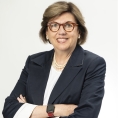
Dr. Carolyne Lunga is an Associate Professor in Digital Communication and Media Production (DCMP) at the University of Doha for Science and Technology (UDST)