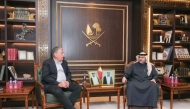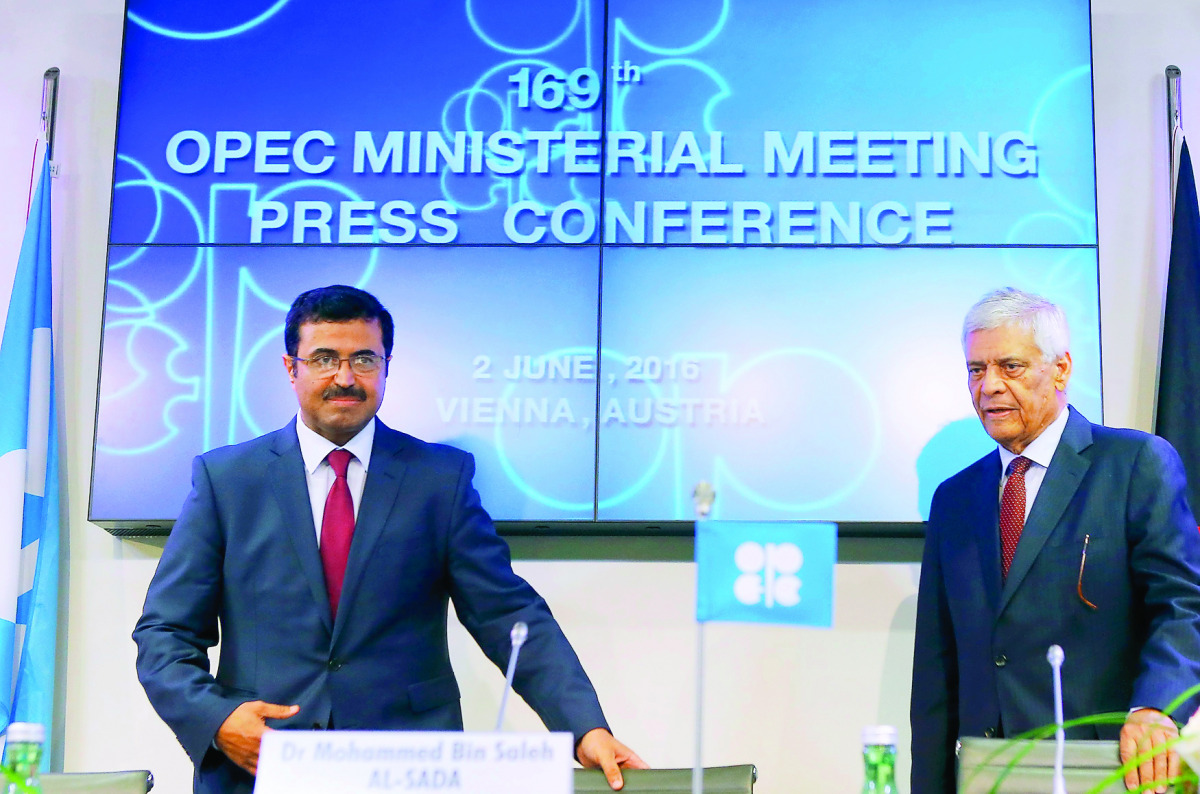
Minister of Energy and Industry H E Dr Mohammed bin Saleh Al Sada, who is also the Opec President, addressing the media in Vienna (file picture).
Qatar created waves in global finance and business world in 2016. The country hit the international media headlines when Russian state holding company Rosneftegaz in December signed a deal with the Qatar Investment Authority (QIA) and commodities trader Glencore (GLEN.L) to sell a 19.5 percent stake in state-owned oil major Rosneft .The privatization deal, which Rosneft Chief Executive Igor Sechin called the largest in Russia's history, was announced by Rosneft in a meeting with President Vladimir Putin.
Again in December, Qatar Petroleum (QP) announced the decision to merge state-owned liquefied natural gas producers Qatargas and RasGas Co Ltd.
Qatar stunned the Mideast debt market in May with issuance of the then record $9bn bonds. Qatar’s unprecedented $9 billion Eurobond sale has pressed the re-set button for the Gulf region’s debt market.
Under the leadership of H E Dr Mohammed bin Saleh Al-Sada, who is also the current President of Opec, Doha hosted a crucial meeting ahead of the successful Vienna meet that decided to the much-awaited oil production freeze. The Vienna decisions to cut the production was a follow up to the Doha conference. The meeting held in Doha between Qatar, Saudi Arabia, Russia and Venezuela at proposed an accord to freeze oil output at January 2016 levels and called on other producers to do so.
Qatar stunned the Mideast debt market in May with issuance of the then record $9bn bonds. Qatar’s unprecedented $9bn Eurobond sale has pressed the re-set button for the Gulf region’s debt market. The country sold $9bn of bonds in three maturities on Wednesday, almost double the amount expected by analysts. The issue helped push 2016 offerings from the Middle East and North Africa, which includes Saudi Arabia and the United Arab Emirates, to $29.3 billion, already a record for the first half of a year. Almost $14bn worth of sovereign debt has been issued in 2016, including a $9bn USD-denominated bond in May
The year saw Qatar ranking top in luxury spending. Spending on luxury goods and experiences in Qatar is highest in the GCC region. Average spending on luxuries in Qatar is $4,000 per month per household — the highest among five countries in GCC (Saudi Arabia not included), said a senior official of American Express Middle East reveale din April.
Average spending for GCC countries on luxuries is $2,000.Qatar Development Bank (QDB) launched its multi-service support center, “One Stop Shop,” to cater to small and medium-sized enterprises (SMEs) at partner Qatar Business Incubation Center’s (QBIC) premises in 2016..
In order to develop a resource center with all the necessary services that are needed by the SME community under one roof, QDB coordinated with the Ministry of Justice (MoJ), Ministry of Energy & Industry (MEI), Qatar National Bank (QNB), Ooredoo and Qatar Postal Services Company (QPost) for the launch of the “One Stop Shop.”
In November, QDB announced Twenty-six Qatari Small and Medium Enterprises (SMEs) have been shortlisted to tender for six business opportunities offered by Qatar Development Bank (QDB) and Qatar Shell.
December also witnessed the opening of New Doha Port. The first phase of Qatar’s Hamad port began full-fledged commercial operations ,, allowing the country to expand its global ocean trade.
The $7.4bn port, which is designed to take over operations from the country’s congested Doha port, has been handling ad-hoc general cargo and roll-on, roll-off ship calls since the end of 2015.
Regionally, Saudi Arabia surprised the market by raising $17.5bn (£14bn) from its first foray into the global bond markets. The Kingdom set record for emerging market issuance after turning to global bond markets.
Globally, the year began with fresh concerns about the extent of China’s economic slowdown.