The commodity sector has had a mixed week with the energy sector witnessing a lot of selling while the agriculture sector was supported by short-covering and China increasing goodwill buying ahead of high-level trade talks next month The commodity sector has had a mixed week with the energy sector witnessing a lot of selling while the agriculture sector was supported by short-covering and China increasing goodwill buying ahead of high-level trade talks next month. Acting as a drag on the whole commodity space has been the dollar, as the Bloomberg Dollar Spot Index of ten major currencies headed for its strongest weekly close since May 2017.
Industrial metals - led by aluminum - traded lower with a combination of geopolitical, trade and economic risks weighing on the demand outlook, especially from China. Precious metals traded close to unchanged on the week. This following a roller-coaster week where another attempt to break higher failed as the dollar jumped. Silver was particularly volatile, as it added another 3.5 percent down day to the two already recorded this September.
US traded natural gas also fell and ended up being the biggest looser among the key commodities shown above. Record seasonal production is not being met by a similar rise in demand and this has resulted in storage caverns filling up at a rapid pace. The injection season, where production exceeds demand lasts until mid-November, at which point increased winter heating demand begins to reduce stock levels.
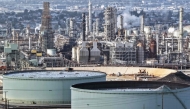
The crude oil pendulum swung violently the past few weeks, following the September 14 attack on oil-processing facility, the world’s biggest, and the Khurais oilfield. With the immediate risk of retaliation and escalation fading, the $5/b risk premium that the market attached to the price in the days following the attack continued to deflate.
We see enough risks to supply on the horizon to think that a sustained return to $60/b Brent and below is unlikely at this stage. A potential trade war escalation however could further damage the price as it would add pressure to an already weak growth outlook from China and India to Germany and the US.
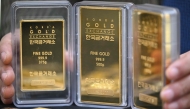
This past week gold and silver investors resoluteness was once again being tested after the gold posted its biggest one-day drop in three weeks on Tuesday, while silver added another 3.5 percent down in the day, to the two already recorded this September. The 4 major parts continuing to impact the outlook with alternating force are: the dollar, bond yields, equities and geo-politics.
Investor participation remains high: During the rally on Tuesday to $1535/oz total holdings in bullion-backed Exchange-traded funds jumped by 22.2 tons. It is currently less than 55 tons below the 2012 record of 2,572 tons. Also, on Tuesday, the number of total outstanding futures contracts on the gold contract traded in New York, the so-called Open Interest, reached a record 659,000 lots.
While expressing a firm belief in gold, these developments also raise concerns about a correction should the market fail to hold onto support, currently between $1500/oz and $1484/oz. It is also worth keeping in mind that a move down to $1446/oz would be categorized as being a weak correction only within a strong uptrend.
While the current geopolitical developments in the Middle East have so far only had a limited impact on gold, it is instead the US–China trade talks and the dollar which hold the key to its outlook. The risk to global growth - which has supported the collapse in global bond yields - has led to renewed rate cuts from major central banks.
We maintain a bullish outlook for gold.
The short-term outlook may however turn challenging given the mentioned strengthen of the dollar. We view the dollar strength - which is the main theme in our Q4 Outlook to be published on October 3 - as temporary. However, given the size of recent established gold longs, we may witness a period of nervous trading in gold, silver and platinum.