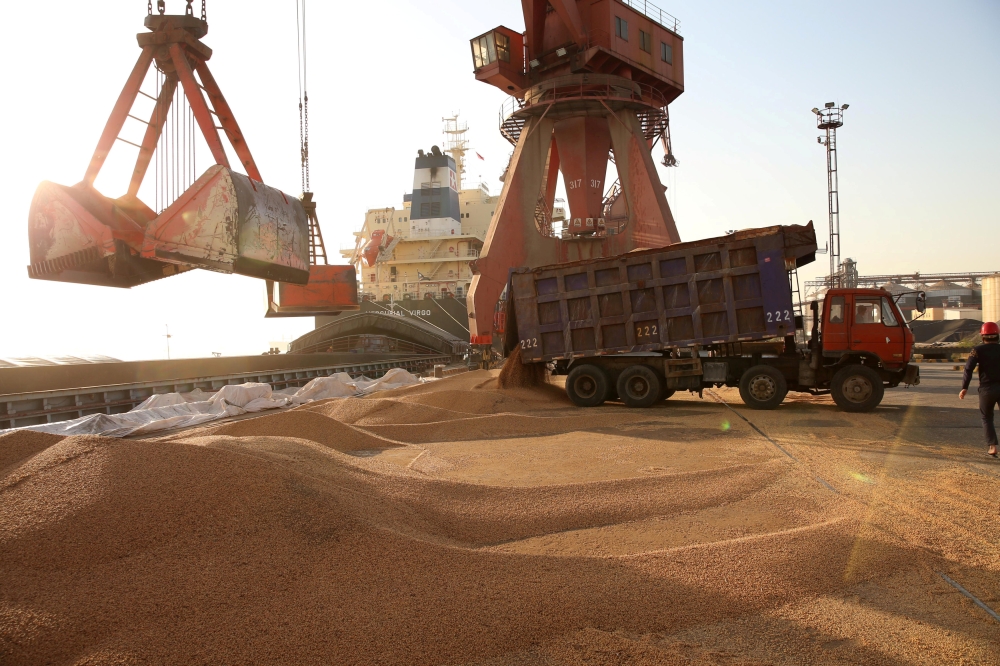
Workers transport imported soybeans at a port in Nantong, Jiangsu province, China April 9, 2018. Reuters
China’s demand for soybeans in livestock feed is set to decline in 2023 as the world’s biggest importer strives to lower reliance on foreign supplies and bolster grain security.
The country’s massive feed industry is expected to cut soybean use by 9.1 million tons this year, as the soymeal ratio in rations drops by 1.5 percentage points, the agriculture ministry said in a statement this week.
China has been seeking to reduce its dependence on foreign cargoes, especially from the US, by boosting local production and lowering use of soymeal.
The country imports more than 80% of its domestic requirements, according to data from the US Department of Agriculture.
The nation’s soybean imports are still running at a high level even with the drop in consumption in feed as cargoes are also used to meet demand for cooking oil and to replenish reserves.
Inbound shipments rose more than 10% from a year earlier to about 90 million tons in the 11 months through November and were the largest in three years, China’s customs data show.
Industrial feed producers cut consumption of soymeal by 11% from January to November, or a reduction of 4.44 million tons from a year earlier, even with a 4% increase in feed output, the agriculture ministry said. Beijing is conducting a three-year campaign to lower the use of soymeal in rations.
As part of the drive, China has been promoting low-protein feed recipes, exploring alternative protein resources such as kitchen waste, and feeding more grass instead of grain to cows and sheep.