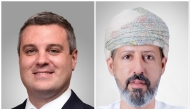
Dr R Seetharaman, Doha Bank CEO, speaking to media in Davos, Switzerland.
DOHA: After a decade of stagnated productivity, the Fourth Industrial Revolution is expected to create up to $3.7 trillion in value by 2025 which was a key subject discussed at Davos.
Technologies such as the internet of things, advanced robotics, artificial intelligence and additive manufacturing are already helping to generate net productivity increases, Doha Bank CEO Dr R Seetharaman said yesterday while sharing key takeaways from the just-concluded World Economic Forum (WEF)
However, to achieve the desired broad-based economic and societal impact and to maximize productivity benefits, technology must be adopted at scale and diffused throughout the ecosystem, he said.
Advanced robots and computers can perform a range of routine physical activities. Manufacturing companies, suppliers and customers will ultimately be connected on a common IoT platform. Governments need to develop the right set of policies and protocols to facilitate the dissemination and adoption of technology at the national level.
He said blockchain continues to feature almost everywhere, with firms across fintech, insurance and even travel talking about ways to use technology to power their businesses in the future. The Cryptocurrency Bitcoin was also touched upon at Davos on account of its huge surge in recent times and challenges in regulating the same.
World merchandise trade volume is forecast to grow 3.6 percent in 2017 and trade growth should moderate to 3.2 percent in 2018. American President Donald Trump has told global finance leaders he will always put the US first when it comes to trade, but “that does not mean America alone”.
Some Global leaders expressed concern at Davos due to greater protectionism, greater fragmentation and undoing what globalisation has been able to achieve.
At the Davos Forum, various investors, activist shareholders from millennial funds and some pensions are increasingly demanding greater visibility on how companies are responding to the issues from gender parity.
The reforms undertaken by Qatar were highlighted at the forum. Qatar Budget 2018 has allocated for key sectors such as health, education and infrastructure Total allocations for health, education and transportation reached QR83.5bn or 41 percent of total expenditure. A new law for Public Private Partnership (PPP) businesses in Qatar should provide an additional level of comfort to the private sector and foreign investors.
In Feb 2017, Qatar issued a new law on arbitration (the “Arbitration Law”), inspired by the UNCITRAL Model Law (the “Model Law”), an international template for law on arbitration. In terms of food security, Qatar now have many local companies that are supporting the country and it can develop these businesses further and boost its food production to provide both locally and internationally.