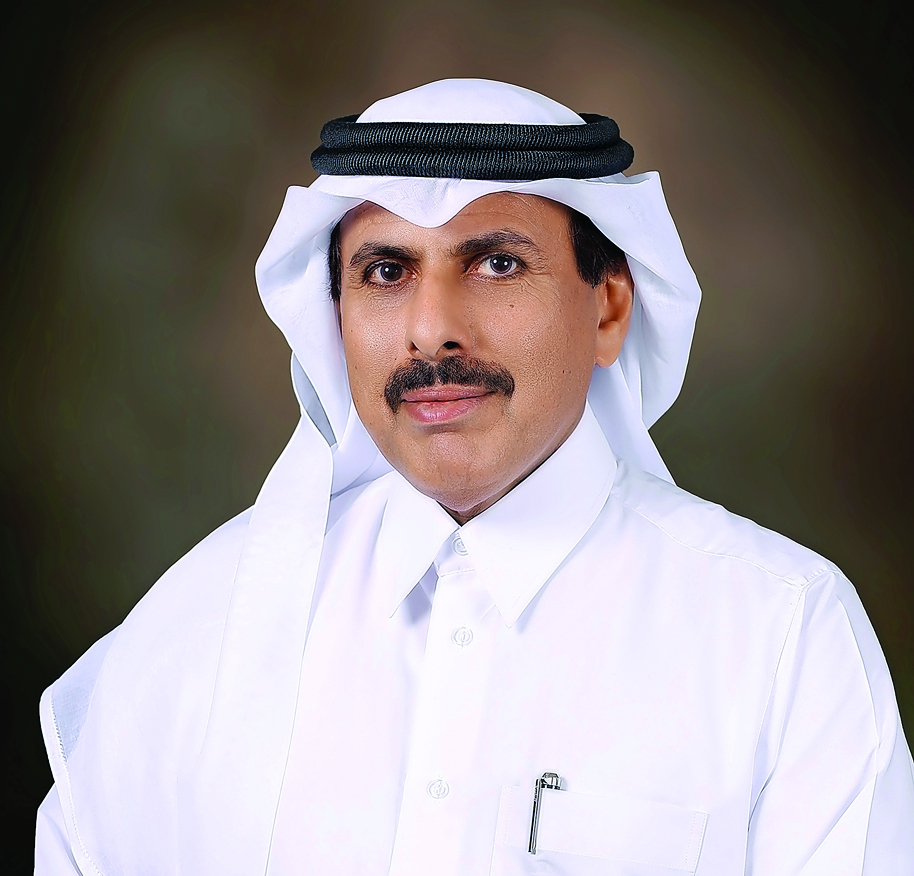
Qatar Central Bank Governor H E Sheikh Abdulla bin Saoud Al Thani has said the blockade imposed on Qatar was like a real stress test for the economy. The resilience of the Qatari economy and the strong confidence of the investors was realised during the blockade.
Speaking to The Euromoney, ahead of The Euromoney Qatar Conference in December, the QCB Governor said 10 years since the financial crisis, global economy appeared to have moved out of the danger zone, even though downside risk still exists. Efforts by the central banks and other authorities across the globe enabled this positive development in the face of many uncertainties and risks. Below is the full text of the interview.
Q: Are you happy with the way the Qatari financial sector has responded to the blockade?
Response: As you know, around one-and-a-half years is over since the economic blockade and we have returned to ‘business as usual’ mode in every aspect of our economy. The response of the financial sector to the blockade is praiseworthy. There was no disruption in provisioning of financial services anytime following the blockade.
Banking sector has provided seamless financial services to their customers even in the midst of initial disturbances. The deposit outflows from non-resident deposits in the first few months of the blockade were well absorbed by the banking sector through proactive liquidity management with the guidance and support of QCB. In recent times, there has been inflow of non-resident deposits from US, European and Asian countries reflecting the confidence of foreign depositors in Qatari financial system. The recent reports from the credit ratings agencies indicate that banks have recorded improvements in their rating.
The equity market also returned to positive trajectory after its initial fall in prices as an immediate impact of blockade. Proper management by QFMA and confidence in the fundamentals of the Qatari economy have led to steady recovery in the equity market. The Qatar Stock Exchange has been one of the best performing market across the globe during 2018.
We did also witness some speculative attack on our currency in offshore markets. Strong communications to market participants about our commitment to the currency peg and our deep reserves were used to ward off speculative and motivated attacks on the currency. After the announcement of our commitment to the Dollar peg, the attack immediately fizzled out and we have full stability in the exchange market.
Overall, the effective responses from the banks and the financial markets and continued confidence of local and foreign investors were very satisfying and encouraging.
Q:What did you learn from the blockade and the financial sector’s reaction to it?
Res:The blockade was like a real stress test for the economy. The resilience of the Qatari economy and the strong confidence of the investors was realised during the blockade. The blockade necessitated to attain self-reliance in essential food-items and focus on local entrepreneurs.
Diversification of trade and finance has come to the fore in response to the blockade and will be sustained in the future. Banking sector, having learnt important lessons from the economic blockade, has also been improving their funding structure with focus on more stable and long-term sources.
Moreover banks have strengthened their contingency plans and capabilities to take care of stressful conditions. On the regulatory side all the three regulators are continuously evaluating and suitably implementing regulatory standards to ensure that the system remains safe, sound and solid.
Q: How is the process to consolidate the banking sector into fewer, larger institutions progressing?
Res: Bank mergers have their own advantages and disadvantages. In general, merger talks are motivated when the banks involved expect that the value of the combined entity will improve after the merger. When the operating environment becomes tight for a large number of smaller banks, the shareholders initiate the talks to reap the maximum benefit through reducing corporate risk and stabilizing earnings.
The recent talks on the bank merger in Qatar are in their initial stages of discussion. Once the proposal is submitted to QCB, we will examine its merits and demerits. In any chance, the Central Bank will not interfere in their negotiations; banks have to sign a MoU based on our corporate governance standards, and have to come out with a feasible proposal. The proposal also have to be subjected to detailed legal and financial due diligence.
Q: What about local capital markets — have your plans to develop a more liquid market evolved now some GCC capital flows are restricted?
Res: The capital inflows to Qatar are more broad-based and are not restricted to the GCC region. Irrespective of all the developments in the GCC, Qatar will continue its efforts for the development of financial market by making it more liquid and encouraging global investors.
Q:Are you worried about global markets and asset prices? What effect could a global market correction have on Qatari valuations?
Res:We have been closely observing the global market conditions, especially after the trade tensions between the US and China. However, the domestic equity market so far remained insulated from the global developments. In fact, Qatar Stock Exchange (QSE) registered the strongest gain in the GCC region during the year so far. The QSE index moved back to the pre-blockade level.
Apart from the improvement in macroeconomic fundamentals, the rise in QSE is primarily driven by the foreign investors and their positive outlook of Qatar economy. It may be noted that the tightening financial market conditions have mainly impacted those EMEs which are facing the problem of twin deficit (current account and fiscal position). As a result, we don’t expect much risk to the domestic stock market from volatility of the global markets, due to our favorable macroeconomic fundamentals.
Q: Will FinTech find a place in the Qatari financial system – where and what benefits will it bring?
Res: Financial sector is in a wave of digital transformation as per trends seen across the world, generating opportunities for FinTech developments. We have a sensitive approach to FinTech in Qatar since digital brings benefits but can also create challenges due to the risks that surround the domain.
Therefore, we are aiming at developing a cyber resilient FinTech, keeping cyber security as a core component of every development. Opportunities for FinTech are immense. Domains such as risk management, regulatory compliance and payment systems for example, are offering a vast potential of development. Qatar Central Bank is already working in that direction as per the QCB strategic plan 2017-2022 for the financial sector. We have also signed several MoU’s with the UK, Turkey, Singapore, etc., for collaboration in this area.
FinTech can bring many benefits to Qatar including but not limited to big data analysis, data analytics, opportunity to enhance financial services including financial inclusion, etc. Further, FinTech can help solve challenges, such as ensuring compliance with regulations more effectively and faster, securing payment processing and faster loans processing. In general, FinTech improves the performance and profitability of financial institutions by accessing agile technologies that can remove barriers, increase efficiency of services and financial inclusion.
FinTech also plays greater role in the diversification of the economy by supporting the development of a local SME and start-up ecosystem, providing them with the right environment to develop these solutions in safe environment, increasing the growth opportunities and attracting talents.
Q: What are the main financial risks globally, regionally and domestically? How are you managing them?
Res: Unconventional measures and coordinated macro-prudential policy initiatives taken by Central Banks and other authorities have so far supported the global economic growth and in particular the global financial system.
However, downside risk from the heightened tensions related to global trade and investment are causing shadows of risk. Upturns in global interest rate is another major area of concern. This may leads to increase in the cost of borrowing and intern the profitability if not addressed proactively. In addition, protectionist pressures by some countries may also negatively impact the global trade and investment.
As observed in the world economic outlook update, inflationary trends in US are firming up. This may lead to shift in market expectations on US interest rate hike. Any material change in risk perception of the investors may trigger capital flows from emerging market countries leading to higher uncertainties in the financial market including foreign exchange market. Further, appreciation of US dollar would have negative impact on economies with higher debt. Another challenge to the economic outlook I could see is from the geopolitical issues in several economies. Continuation of these political tensions has wide range of implication to trade, investment as well as to the financial sector.
QCB on its part has been continuously strengthening the regulatory and supervisory systems to ensure that the financial system remains resilient enough to address unforeseen challenges. Moreover, frequent and various stress tests are undertaken to assess the ability of the banking sector to withstand various stress scenarios. Our monetary policy stance though largely responds to the policy rate moves of the US Federal Reserve, gives due considerations to evolving domestic economic conditions and tries to ensure enough systemic liquidity that is consistent with the real economy.
Q:Ten years on, do you believe that the world’s financial system has learned the lessons of 2008?
RES: Ten years since the financial crisis, global economy appeared to have moved out of the danger zone, even though downside risk still exists. Efforts by the central banks and other authorities across the globe enabled this positive development in the face of many uncertainties and risks. Global financial system has also strengthened, thanks to the financial reforms including Basel III capital and liquidity regulations.
The crisis reinforced the importance of international coordination and harmonization of strengthened regulations. Greater focus on the systemically important banks shows the change in approach of regulators and international standard setting bodies. Thus, the current approach of the regulators is providing higher focus on prevention of crisis. Overall, the global financial system is more resilient now, even though it is difficult to predict what can be the cause of future vulnerabilities.