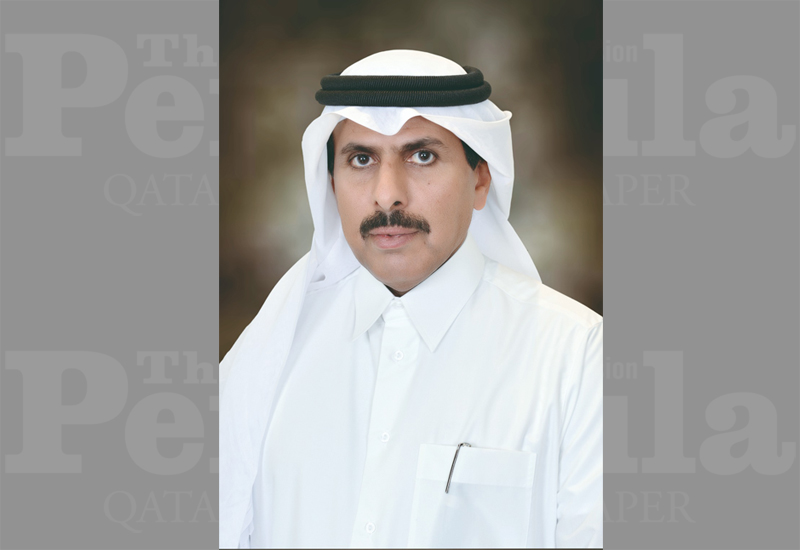
Doha: With the growing pace of financial innovation and use of cutting-edge technologies in the banking and financial sector, a closer coordination is required among different stakeholders from the industry for building sound strategies, noted the Governor of Qatar Central Bank (QCB) H E Sheikh Abdullah bin Saoud Al Thani in a report released yesterday.
“Digitalization, financial innovation and their rapid developments that we are witnessing nowadays may reshape the banking scene in the world and this requires keeping pace with these developments with more regulatory frameworks and continuous development of legislation, which is what Qatar Central Bank is keen on as part of its strategic plan,” said the QCB Governor in his foreword in the Islamic Finance in Qatar Report 2019.
H E Sheikh Abdullah added: “In this context, preparations are being made to launch the Financial Technology Strategy and “Sandbox”. In addition, financial and banking institutions shall direct their efforts towards developing the services and products they provide to customers and adopting the latest technologies.”
He highlighted that the future of technology and innovation-based financial and banking sector requires more coordination between financial, research and academic institutions to support specialized research studies and provide the financial and banking industry with the results of these studies, in order to ensure building sound strategies and expanding the circle of financial knowledge.
Commenting on the performance Shariah-compliant banking services in Qatar, the QCB Governor said that the presence of Islamic finance in the country has been boosted in 2019 with the completion of the first banking merger in Qatar between Barwa Bank and the International Bank of Qatar (IBQ) in light of successful measures that demonstrated the flexibility of the regulatory and supervisory system of the QCB.
Thanks to this merger, Islamic banks achieved high growth rates during the year. The past year also witnessed success for Islamic banks in Qatar at the international level, represented in the successful listing of their Sukuk on the global stock exchanges, which reflected the level of confidence in the Qatari economy and Islamic banking.
“The banking system in Qatar has maintained its stability and growth thanks to adoption of regulatory standards aimed at strengthening the banking sector and ensuring its ability to absorb shocks. Despite the events that occurred in the past year which affected global growth, the financial and banking sector in Qatar is still healthy, safe and robust, and its sectors have achieved positive growth rates,” said the QCB Governor.
Dr. Khalid bin Ibrahim Al Sulaiti, Vice-Chairman of the Board of Directors at Bait Al Mashura Finance Consultations, added: “We are pleased to present to all researchers and whomever interested in Qatar and abroad our third annual report, which discusses the performance of Islamic finance institutions and products in Qatar for (2019).
It includes seven sections representing the most important Islamic finance sectors in Qatar, namely: Islamic banks, Takaful insurance companies, Islamic finance companies, Islamic investment companies, Islamic investment funds, Sukuk, and the Islamic capital market.”
The executive summary of the report also noted that despite the economic slowdown witnessed in 2019, the Islamic finance sector in Qatar achieved positive results.
The assets of the Shariah-compliant banks achieved a higher growth rate of 18.8 percent compared to 6.2 percent for traditional commercial banks. Deposits also grew by 15.9 percent and finances increased by 22.2 percent tending more towards consumer and real estate sector.
During the year, these banks achieved approximate profits of QR7bn with a growth rate of 6 percent, driven by revenues growing by 15.4 percent compared to 2018.
In Takaful (Islamic insurance) sector, the assets of policyholders in Takaful insurance companies grew by 7.7 percent, and the contributions of Takaful insurance increased by 5.5 percent. Most of these companies achieved insurance surpluses amounting to QR29.7m.