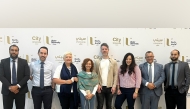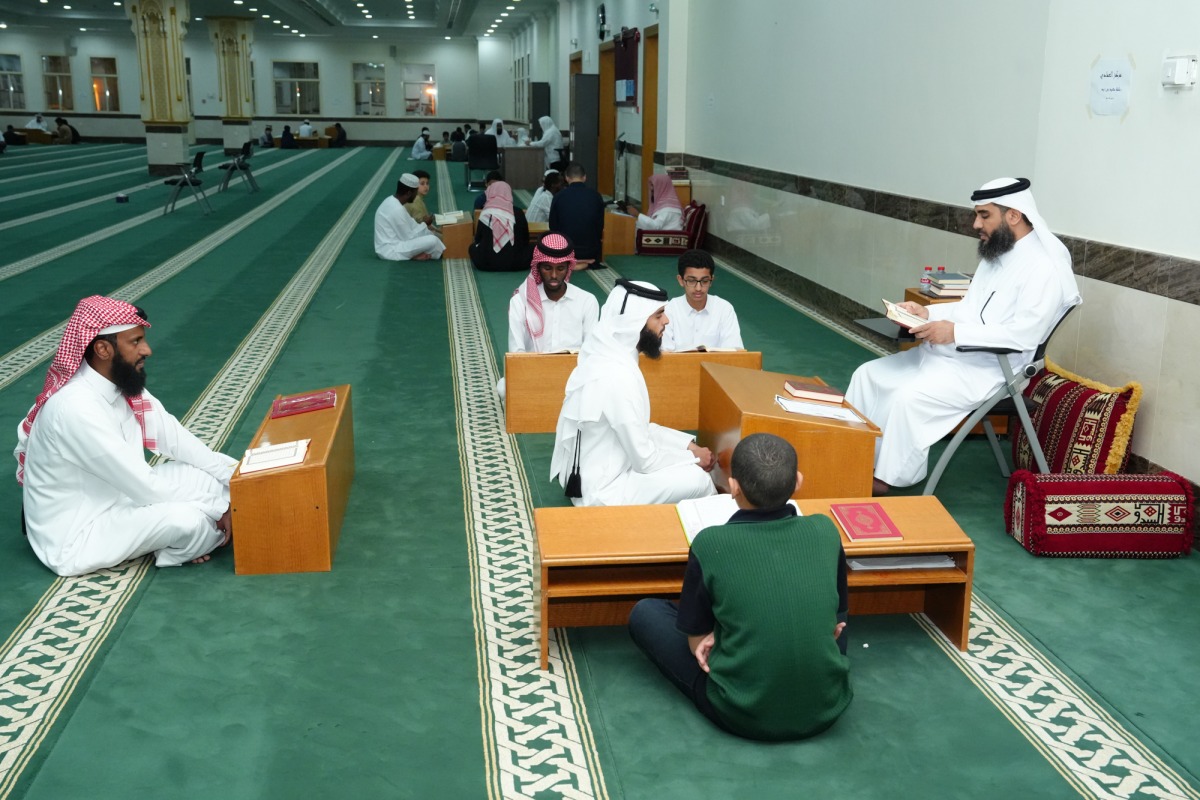
Participants attending a session of the Ramadan programme.
Doha, Qatar: In line with its mission to serve the Holy Quran and instill its values across society, Qatar’s Ministry of Awqaf and Islamic Affairs, represented by the Department of Da’wah and Religious Guidance, implemented a comprehensive package of Quranic programmes during the holy month of Ramadan 2026.
The initiative reflects the Ministry’s vision to enhance awareness of Quranic values and nurture generations grounded in ethics derived from the Holy Book.
The programmes were carefully designed to cater to various segments of society, combining Quran recitation correction, memorisation reinforcement, and reflection on meanings. Modern digital platforms were also utilised to ensure the message reached the widest possible audience.
Among the major initiatives was the Ramadan programme “Mudarasah” (Quranic Study Circles), which focused on structured Quran revision sessions divided according to memorisation levels, 5, 10, 15, 20, 25, and 30 parts (Juz). The programme aimed to revive the tradition of Quranic study, enhance precision in memorisation, and promote spiritual refinement through reflective lessons on Surah Al-Hujurat.
Initially conducted in five mosques across the country, including Ahmed bin Abdullah Al Musnad Mosque and Abdulrahman bin Hassan Al Thani Mosque, the programme later transitioned to remote learning from the 13th of Ramadan due to prevailing circumstances. A total of 300 students benefited from the programme, supervised by 38 instructors across 38 study circles, alongside 34 reflective lessons.
Another key initiative, “Liyaddabbaru Ayatihi” (That They May Reflect Upon Its Verses), sought to deepen public engagement with the Quran beyond recitation, encouraging understanding and application of its teachings in daily life.
The programme featured three lectures at Hamad bin Nasser Al Musnad Mosque, delivered by prominent scholars and broadcast live via the IslamWeb platform.
The “Tahbeer” (Beautification of Recitation) programme focused on improving Quranic recitation skills through both in-person sessions held in 22 mosques and online circles via Microsoft Teams.
Targeting participants aged five and above, the programme emphasised correct recitation of Surah Al-Fatiha and short surahs, including group instruction for children. It attracted 539 participants and was led by 25 qualified teachers. Meanwhile, the “Al-Sab’ Al-Mathani” (The Seven Oft-Repeated Verses) initiative offered a unique service for correcting Surah Al-Fatiha recitation via telephone, making it accessible to those without modern digital tools. A total of 95 individuals benefited from the service, guided by three specialised instructors.
The “Tamkeen” (Empowerment) programme provided elite-level Quran recitation sessions aimed at enabling memorisers to master the Quran through intensive review. Participants could choose between completing the full Quran in two sittings or reciting half in structured sessions, with precise evaluation criteria ensuring high standards of performance.
Concluding the Ramadan activities was the “Khatmah” (Complete Quran Recitation) programme, which organised Qur’anic circles in 44 mosques across the country. The initiative aimed to complete a full recitation of the Qur’an in each mosque throughout the month, with one Juz recited daily. The programme saw wide participation, benefiting 995 individuals.