DOHA: Qatar is role model in organising youth care programmes and those related to the identity preservation and maintenance of values, said Islamic scholars.
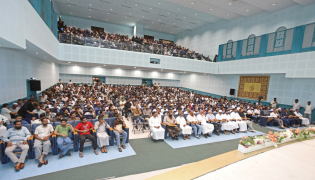
The remarks were made during the first session of an annual Ramadan programme organised by the Ministry of Awqaf and Islamic Affairs, in which a group of intellectuals and Islamic scholars discuss the pressing issues in open talk sessions. The first session of the programme discussed the responsibility of scientists to keep the nation’s youth following values. The speakers touched on the current reality of the nation, the abnormal situation of conflict and division, the undermining of values among young people, the abandonment of identity and the low rates of development. They also discussed the role of the nation’s scholars and thinkers in bridging the rift, confronting deadly extremist ideas, and activating the role of youth in construction and development.
Sheikh Dr Nawaf Hayel Al Takrouri, Head of Palestinian Scholars’ Association Abroad, said the State of Qatar has enough capacities and expertise to make it a leader in enhancing the role of moderate scholars, consolidating moderate religious discourse, and launching programs and initiatives that bridge the gap between the nation intellectuals and scientists on one hand and the young people on the other. Al Takrouri said that the identity crisis the nation suffers requires a precise diagnosis and proper treatment, in addition to restoring the role of religious scholars, not those who spread evil, violence and extremism, which exacerbates the crisis of values and threatens the trust of the young people in scientists and preachers.
For his part, Sheikh Dr Thaqil bin Sayer Al Shammari, Deputy Head of the Court of Cassation and Head of the Fatwa Committee at the Ministry of Awqaf and Islamic Affairs, said the nation is suffering a crisis in inherent and human values.
Dr Al Shammari pointed out that the poor political conditions the nation suffers have contributed to the destabilisation of values and principles that humanity has known and affirmed by Islam such as freedom, justice and honesty. He called on scientists, thinkers and intellectuals to work together to preserve these values and consolidate them in governance and public life.
Meanwhile, Slovenia’s Mufti Dr Nedzad Grabus, pointed to the State of Qatar’s interest in the nation’s issues, saying that the Ramadan program that brings together intellectuals and scholars from all over the Muslim world is an example of the State of Qatar’s keenness on what brings the nation together not what separates it.
In the same regard, Dr Adel Raffouche, the scientific director of Ibn Tachafin Foundation for contemporary studies and research in Morocco; and Muhammad Al Hasan Ould Al Dedew, board member of the International Union of Muslim Scholars, pointed out the role of the scholar institutions in interacting with youths, opening dialogue with them and touching on their intellectual and life problems, stressing the principle of moderation that Islam calls for.