DOHA: A seminar on the ‘Impact of VAT Compliance on Energy sector in Qatar” hosted by Qatar Chamber, has stressed the need for comprehensive and transparent tax solutions which ensure managing resources, facing regulatory burdens and meeting technological developments.
At the seminar, held at the Qatar Chamber’s headquarter, five speakers discussed the impact of the VAT on oil and gas sector, as well as lessons learned in the GCC experiment .The seminar was organised by the International Chamber of Commerce-Qatar in collaboration with Thomson Reuters and Ernst and Young and was supported by Qatar Chamber. It was attended by professionals from various fields of business and commerce in Qatar.
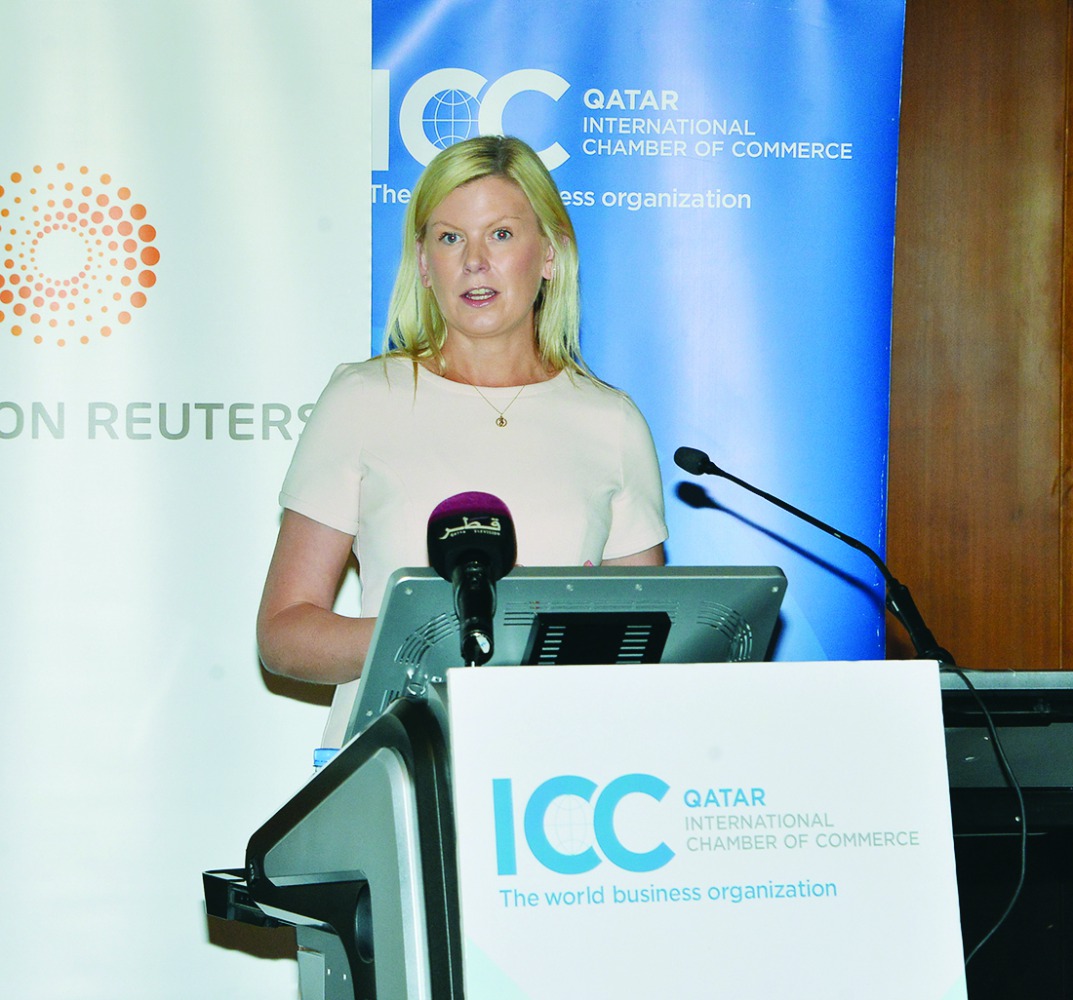
Jennifer O’ Sullivan (pictured), Partner and VAT implementation leader, Ernst & Young Qatar, said that in 2016 the GCC countries signed the VAT Agreement, paving the way for the introduction of VAT throughout the GCC in 2018. She noted that consumers or final customer are those who will pay the tax.
O’ Sullivan pointed out that there are three treatments for the VAT compliance, including 5 percent, ‘0’ percent and exempt, noting that any country in process of implementing the tax shall be ready 12 month before.
She expected that all GCC countries will apply the tax by 2019, assuring that all companies shall be ready before the tax enter into force.
The legislative framework in Qatar is ready for the VAT implementation, she added.
With regard to the long-term contracts, she said that if the company is committed to such contracts, the transitional rules say that regardless of these contracts the import operations are subject to VAT once it comes into force.
On his part, Finbarr Sexton, Partner and MENA Indirect tax leader, Ernst & Young Qatar, said that the VAT is not a financial matter, but it is a constitutional process which is related to all businesses. He affirmed that all contracts should be reviewed to include the VAT compliance to avoid any challenges in the future.
Pierre Arman, the Market Development Lead for the Tax & Accounting Division at Thomson Reuters MENA, said that companies are required to apply the VAT according to the country’s executive regulations, especially on preparing the tax data for regulating bodies.
He expected that oil and gas companies will unify their enterprise resources planning system( EPR).
Mehrdad Talaifar, Associate Partner, Tax Technology and Transformation, Ernst & Young, highlighted the impact of VAT on large and medium institutions and ways of preparing IT and financial departments of companies to deal with the VAT. Talaifar noted that the tax compliance in many GCC countries raised many issues which should be considered before implementing the tax in Qatar in order to avoid any challenges in the future.
Francois Malan, Senior Manager – Indirect Tax, Ernst & Young, said that six months is enough for Qatari companies to prepare for the tax, noting that some countries in the region applied the tax surprisingly without preparations period which caused confusion and interruption with companies.