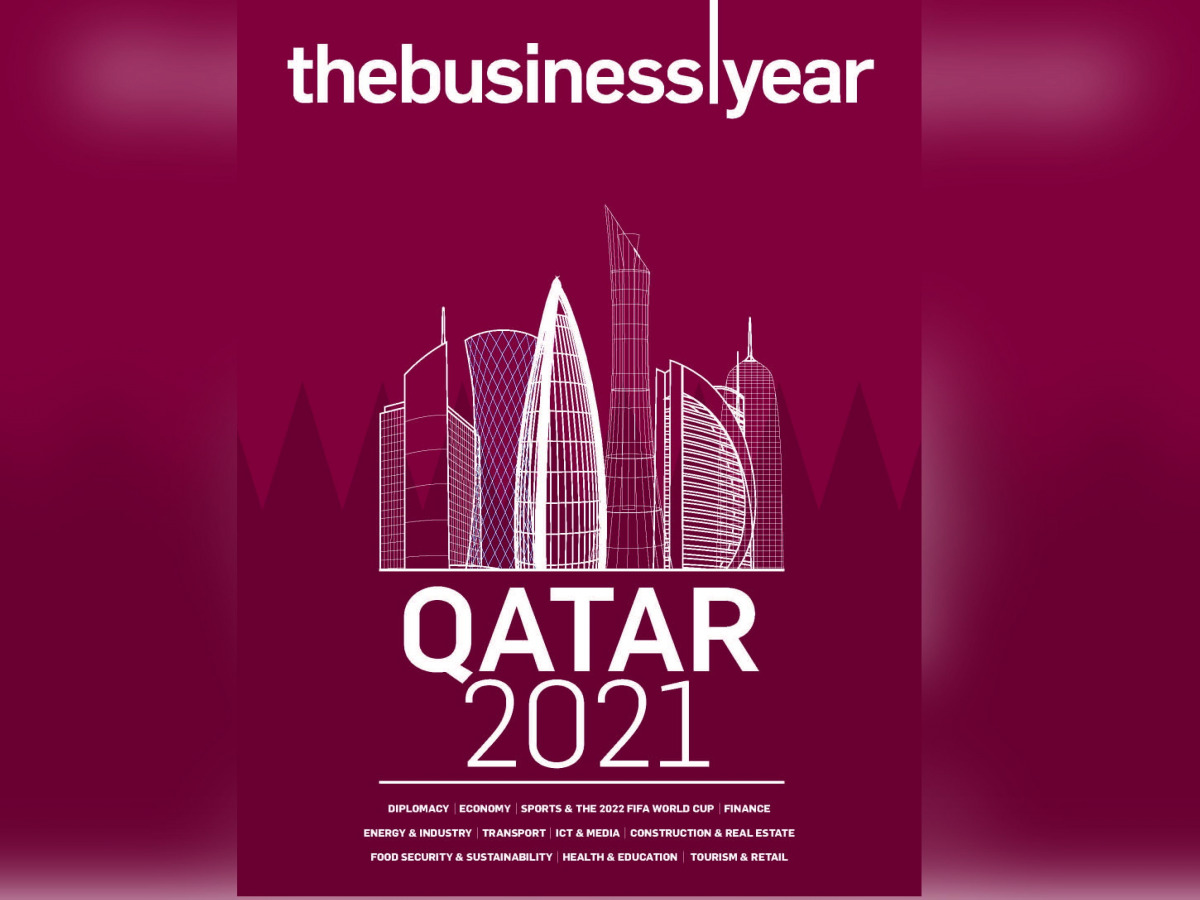
Doha: In partnership with the Ministry of Commerce and Industry (MoCI), The Business Year’s (TBY) most comprehensive edition to date on the Qatari economy includes over 100 interviewees who generously shared their insights amid these difficult times.
The Business Year Qatar 2021, which is now available on a wide variety of investment platforms, featured key individuals from across the Qatari business environment and society. Their stories of resilience during one of the most challenging years in recent history - navigating the end of the blockade, COVID-19, and preparing for the 2022 World Cup - make for remarkable reading. And every choice being made places Qatar’s National Vision 2030 front and centre.
“The last year and a half will forever be remembered as the time that the COVID-19 pandemic mercilessly hit the world, leaving a trail of loss both human and economic. Despite difficulties, Qatar managed to limit its economic decline in 2020 to a reasonable 2.5 percent, emerging as the top performer in the GCC. The IMF also expects the economy to expand 2.7 percent in 2021.
Resilience and diversification have been buzzwords in Qatar for some time, yet never have they taken on so much meaning,” TBY said in a statement. It added that Qatar has learnt some important lessons during its period of regional isolation, having implemented a successful self-sufficiency strategy that could form the basis of a future, hydrocarbon-free economy.
“The end of the blockade could also pave the way for one of Qatar’s more ambitious plans: to become a hub for a variety of sectors and industries in the region. This vision includes the attraction of industrial facilities to its free and economic zones in sectors as diverse as digital technologies, food processing, transport and logistics, downstream oil and gas, and pharmaceuticals. Qatar also boasts fiscal and financial incentives, solid digital and physical infrastructure, and smooth ease of establishment regulations,” TBY added.
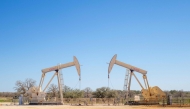
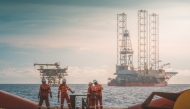
Qatar’s LNG sector also continues to grow, and several new North Field expansion project contracts have been awarded in spite of a six-month delay caused by COVID-19.
Indeed, while long-term plans outline a future beyond hydrocarbons, natural gas is very much being portrayed as a stepping-stone resource, paving the way for cleaner energy sources while affording Qatar the liquidity to grow in new directions.
“Infrastructure investment levels at Qatar’s ports, airport, national road system, and metro has also been outstanding in recent years, but will pale as the journey toward the 2022 FIFA World Cup enters its final stages. A central topic of this publication has been what will follow the World Cup as the next economic dynamo. Furthermore, this decade symbolises the beginning of the last decade of Qatar National Vision 2030. Special mention needs to be made to the new PPP Law and the future Property Investment Law as some of the drivers that will help materialise Qatar’s vision during its last 10-year phase,” TBY said.
TBY is present in over 35 countries. It conducts hundreds of interviews a week with top decision makers in the Middle East, Latin America, Central and Southeast Asia, Africa, and Europe.
The Business Year: Qatar 2021 is being distributed extensively, both domestically and globally, and will reach an even larger audience via TBY’s powerful network of digital platforms. All interviews and content will also be available on key business information platforms, including Bloomberg Terminal, Refinitiv Eikon, Dow Jones Factiva, and FactSet.
It will also be available on the PressReader and Google Books platforms. Grab a copy of this comprehensive overview of Qatar at www.thebusinessyear.com/shop