Oil prices rose on Friday, but pulled back sharply from early highs on concerns that continued spread of the novel coronavirus could stall the United States’ economic rebound.
Crude benchmarks followed other assets lower, pulling back from session highs after Boston Federal Reserve President Eric Rosengren said more fiscal and monetary support for the U.S. economy will likely be needed, according to a Weekly Energy Market Review by Al Attiyah Foundation.
Rosengren repeated his view that the US unemployment rate will likely be “at doubledigit levels” at the end of 2020 and cautioned against reopening the economy too quickly after the end of lockdowns aimed at containing the virus.
Heightening fears, Apple announced that it would reclose certain stores as the virus spread further. The highs early in Friday’s session came after Iraq and Kazakhstan, during a meeting of an Opec+ panel on Thursday, pledged to comply better with oil cuts.
This means curbs by the Organization of the Petroleum Exporting Countries and allies, known as Opec+, could deepen in July. No decisions were made on August cut levels, delegates said, with the market outlook still uncertain. In a further sign of market recovery, Brent on Thursday moved into backwardation, where oil for immediate delivery costs more than supply later, for the first time since March.
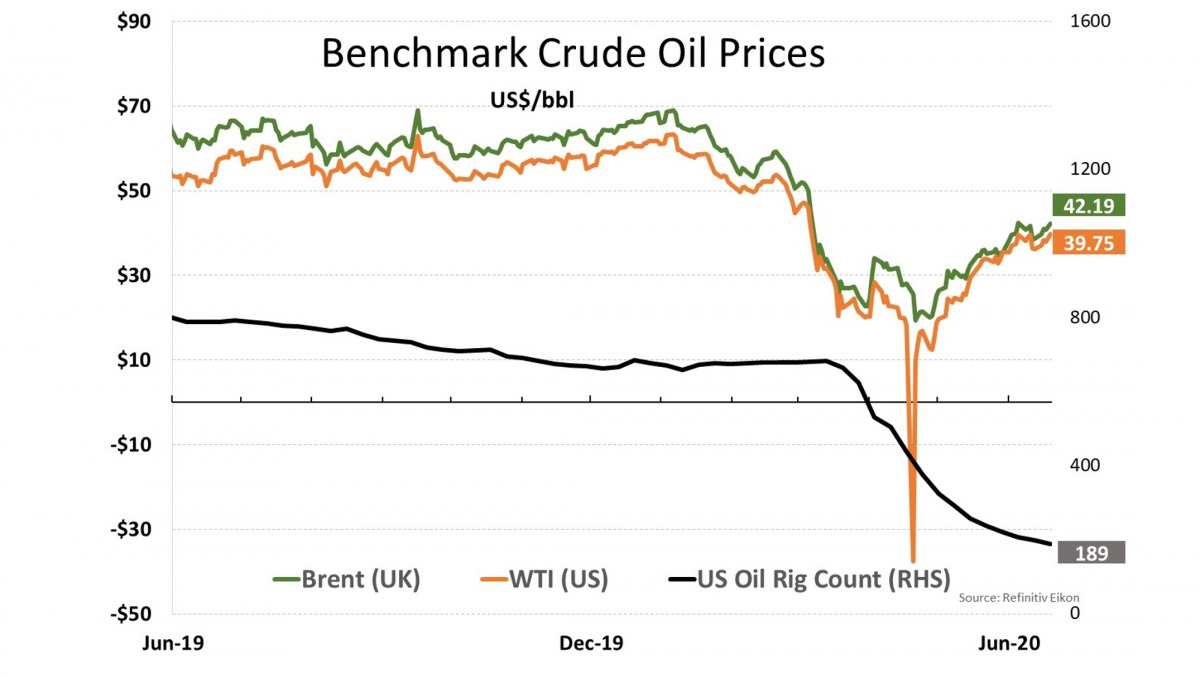
A premium for oil for immediate delivery usually indicates tightening supply and encourages storage to be drawn down. Brent crude settled up 68 cents a barrel at $42.19 on Friday, while US crude settled at $39.75, up 91 cents.
US crude rose over 8 percent last week, while Brent is up 9 percent. Asian spot LNG prices were little changed this week, as a demand recovery from some buyers in the region was not enough to absorb global oversupply.
The average LNG price for August delivery into northeast Asia was estimated at between $2.15-$2.30 per million British thermal units (mmBtu), compared to the July delivery assessment of $2.10 per mmBtu.
Asian spot demand is expected to be driven up by hot weather in the third quarter this year, fuel switching in some of the markets and lockdown easing, consultancy Energy Aspects said in a report this week.
But the glimmers of hope for Asian demand for spot cargoes are more than offset by the need for these firms to ramp-up their imports under long-term contracts and continued demand weakness.
Several Chinese buyers were looking for cargoes this week, however, some market sources said they were concerned about whether the new outbreak of the coronavirus in Beijing would reduce spot buying, but added it had no impact on prices yet. Unseasonably warm weather is expected in the far east in the third quarter, which should increase LNG demand for cooling.
UK gas prices rose last week amid higher oil prices even though the system is still oversupplied. Further curbed consumption is expected for the reminder of June due to warm weather. In the US, natural gas fell to a three-week low on weak cooling demand and declining LNG exports. Henry Hub prices were estimated at $1.67 per mmBtu, 30 percent down from this time last year.