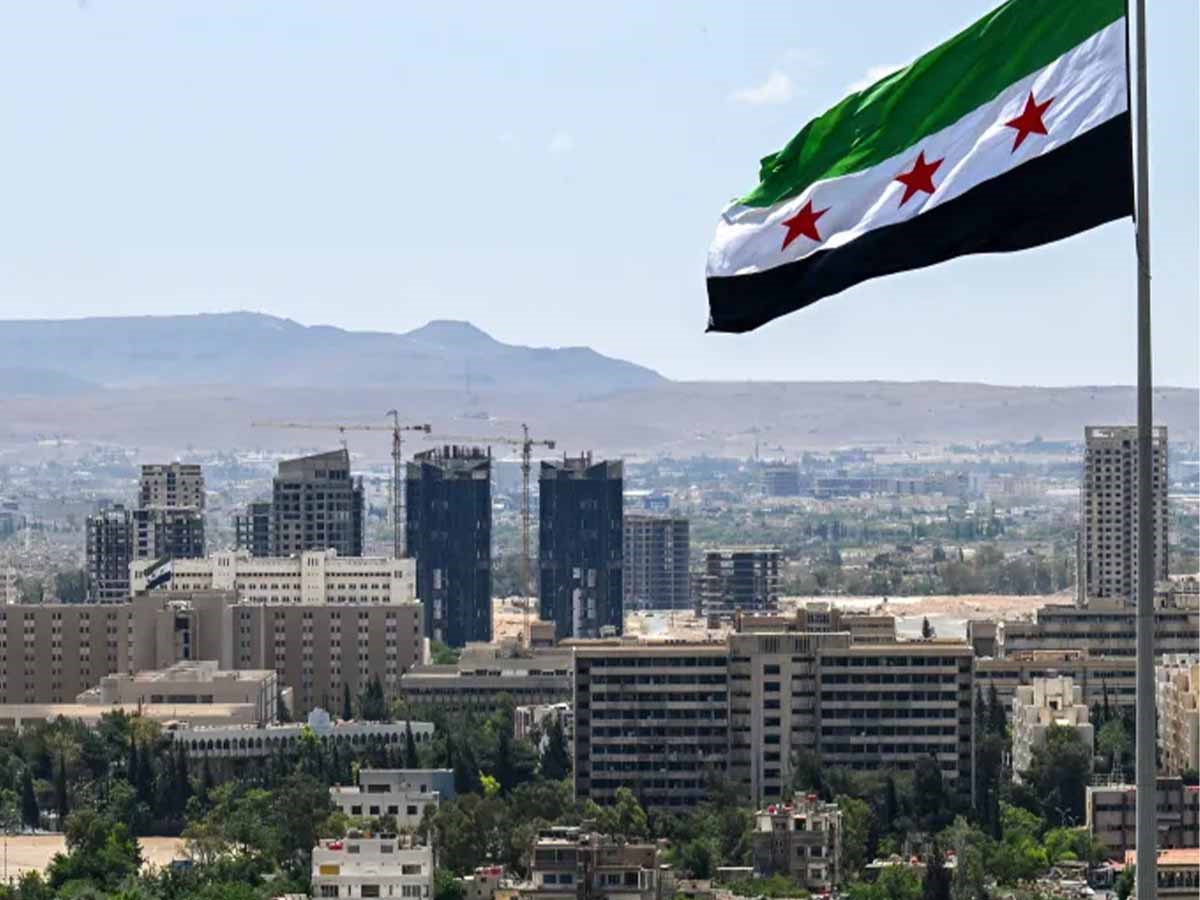
File Photo
Damascus: Several economic experts and energy researchers in Syria have emphasized that their country possesses the geographical advantages and infrastructure to play an increasingly significant role as a regional corridor for the transit of oil, gas, and trade.
They noted that transforming this potential into an economic reality would require substantial investment, security and legislative stability, and long-term agreements, alongside prioritizing the recovery of the energy sector and meeting the needs of the domestic market.
In exclusive statement, experts told Qatar News Agency (QNA) that activating energy corridors could provide Syria with revenue from transit fees, storage, handling, port operations, and logistics services. It would also create job opportunities and stimulate sectors such as engineering, construction materials, and petrochemicals, they added, stressing the importance of directing a portion of these revenues toward reconstruction, the development of the electricity sector, and sustainable development.
In this regard, academic researcher, financial advisor and faculty member at Yarmouk Private University, Dr. Mohammad Al Faqih, said that Syria is expected to play a vital role as a regional hub supporting oil and gas transportation, leveraging its location linking Iraqi and Gulf production fields to European markets through the ports of Baniyas, Tartus and Latakia, or via overland routes toward Turkiye.
Dr. Al Faqih explained that Syria's key competitive advantages include shorter overland routes compared with traditional maritime routes and the ability to provide alternatives when bottlenecks occur at international straits such as the Strait of Hormuz and Bab Al-Mandab, noting that upgrading infrastructure, ports and railway networks could transform the country into an integrated logistics hub for energy and goods.
He stressed that the success of this vision would remain contingent on offering competitive transit and insurance fees and ensuring a stable security and regulatory environment capable of attracting long-term foreign investment.
He pointed out that the rehabilitation of the Kirkuk-Baniyas pipeline represents one of the most prominent opportunities under consideration, indicating that the Syrian Petroleum Company and Iraq's Basra Oil Company signed memoranda of understanding with an international consortium on July 17 to prepare technical and financial studies for the pipeline's rehabilitation, with a target capacity of around two million barrels per day.
The project would diversify routes for exporting Iraqi oil to the Mediterranean and reduce reliance on southern ports and the Strait of Hormuz, while Syria could benefit from transit fees estimated at around USD 200 million annually, in addition to revenue from storage and port handling, he added.
Regarding the Four Seas Initiative and the 4+1 project, Al Faqih said the vision aims to connect the Arabian Gulf with the Caspian Sea, the Black Sea and the Mediterranean, strengthening Syria's position as an international hub for energy, logistics and trade. The plan includes upgrading the Tapline and Kirkuk-Baniyas pipelines, studying the construction of a gas pipeline through Saudi Arabia, Jordan and Syria to Turkiye, establishing a gas liquefaction facility in Baniyas, and building a high-speed railway linking the region to Turkiye, he added.
For his part, Syrian university professor and consultant in energy affairs, Dr. Ziad Ayoub Arbache, said that Syria offers a flexible route that could enhance the ability to transport oil from the Arabian Gulf, particularly from Iraq, providing it with a strategic advantage and an important outlet to the Mediterranean, pointing out that it cannot replace the Strait of Hormuz, through which more than two-thirds of the 20 million barrels of oil transported daily, along with the total volume of liquefied natural gas, passes.
In remarks to QNA, Dr. Arbache said that the recovery of the domestic energy sector must remain a priority, given that oil production stands at less than 80,000 barrels per day, against a growing supply deficit estimated at around 100,000 barrels per day, alongside the gap between gas production and domestic demand, noting that this calls for repairing existing facilities, improving refinery performance and securing the fuel needed for electricity generation.
He explained that the rehabilitation of the Kirkuk-Baniyas pipeline is one of the key projects being considered to strengthen Syria's position in the regional energy transportation network, noting that the project requires determining its final route, cost and operating capacity, as well as agreeing on supply commitments and security and operational arrangements.
He affirmed that turning Syria into a regional energy corridor requires distinguishing between memoranda of understanding, funded projects and binding agreements, while improving the investment climate, ensuring contract enforcement, and clarifying payment mechanisms and dispute resolution procedures.
Dr. Arbache also stressed the need for a gradual approach, beginning with improving domestic energy supplies and repairing existing networks and facilities, followed by completing independent studies of regional interconnection projects, and ultimately implementing major investments once commercial viability, financing and security guarantees are in place.
He pointed out that Syria's success in this area should not be measured by the number of announced corridors, but by its ability to implement safe, commercially viable projects that help meet domestic market needs and strengthen regional integration.
In turn, researcher in energy affairs and Dean of the Faculty of Information Engineering at Idlib University, Dr. Musab Shabib, said that Syria's potential to become a regional energy corridor depends not only on its geographical location, but also on its ability to provide a reliable and economically viable route compared with alternatives.
In similar remarks to QNA, Dr. Shabib pointed out that the gas network running through Syrian territory, with a connected section stretching approximately 566 kilometers between the Jordanian and Turkish borders and a transport capacity of up to 11 million cubic meters per day, offers a practical indication of this potential, stressing that design capacity does not necessarily translate into full-capacity operations or sustainable returns.
He noted that operating the Kirkuk-Baniyas pipeline at a capacity of two million barrels per day would mean transporting around 730 million barrels annually. At a price of USD 70 per barrel, the commercial value of the transported oil could theoretically reach around USD 51 billion annually, while Syria could generate revenue from transit fees, storage and handling, he added, stressing that these calculations remain contingent on actual flows and contracts.
The Four Seas Initiative and the 4+1 project could reposition Syria within regional supply chains by integrating energy pipelines, ports and railways, he added, noting that this would open the way for developing logistics and industrial zones near ports and generating revenue from storage, manufacturing and re-exports, rather than relying solely on transit fees.
Dr. Shabib affirmed that the main challenges include the substantial financing required, pipeline security, damaged infrastructure, the stability of the legislative and regulatory environment, and the need for reliable arbitration and dispute resolution mechanisms, emphasizing that Syria's success in this role requires building operational, legal and economic confidence so that the Syrian route becomes a competitive long-term option, rather than merely a geographically available corridor.