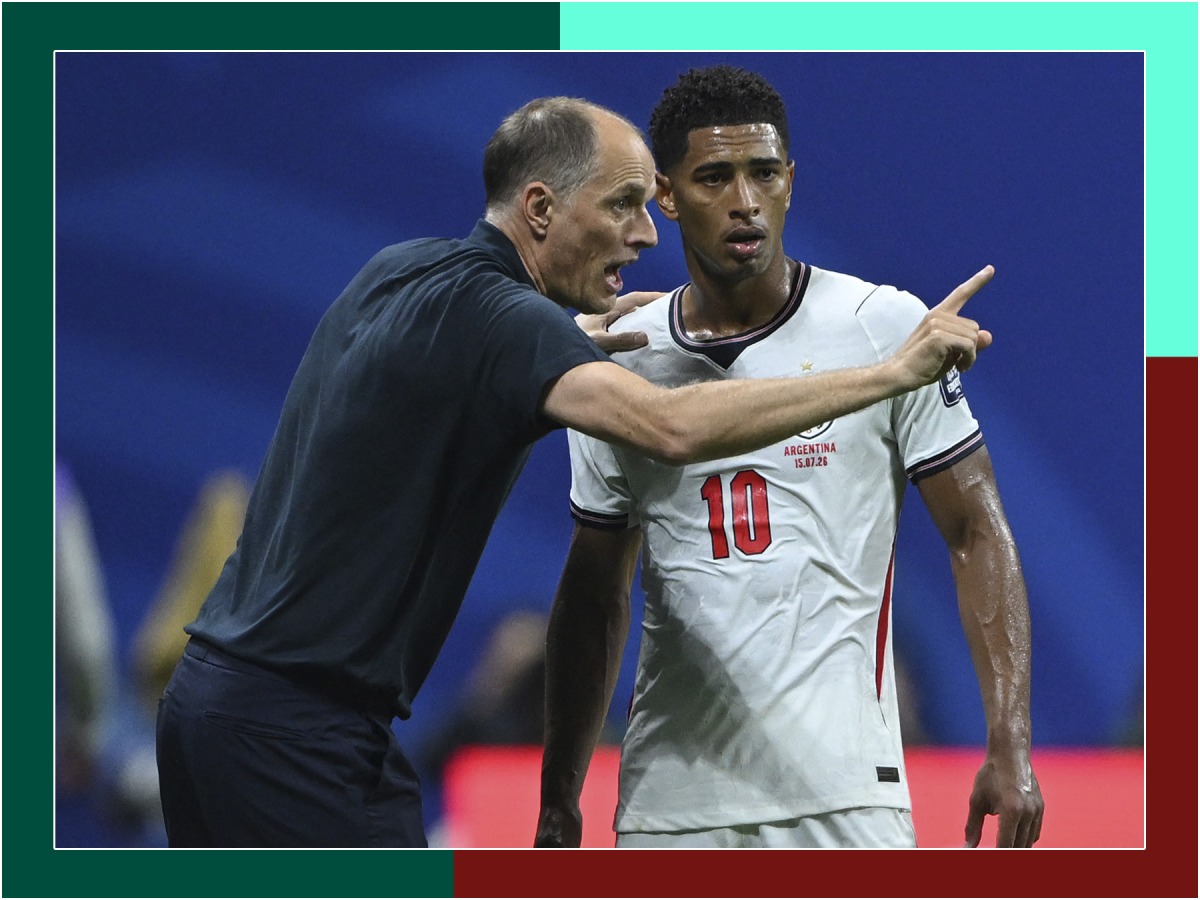
England coach Thomas Tuchel speaks with Jude Bellingham during the semi-final against Argentina.
Doha, Qatar: The FIFA World Cup is remembered for stunning goals, iconic celebrations and unforgettable players. But behind many defining moments is another battle, one fought from the touchline.
At World Cup 2026, several of the tournament’s biggest results were shaped not only by individual brilliance, but by managerial decisions. Some coaches trusted their instincts and changed matches with bold tactical moves, while others saw promising positions slip away after one crucial adjustment failed.
For several teams, the decision to protect a lead proved more costly than the desire to chase another goal.
England appeared on course for the final after Anthony Gordon put them ahead against Argentina in the semi-finals. But instead of maintaining their attacking approach, Thomas Tuchel switched to a defensive setup, with England managing only 12 percent possession after taking the lead and failing to register a touch inside Argentina’s box. Lionel Messi eventually took control, creating late goals for Enzo Fernández and Lautaro Martínez as Argentina completed another comeback.
Egypt suffered a similar fate against the same opponents. After taking a stunning 2-0 lead, the Pharaohs abandoned the counter-attacking approach that had troubled Argentina and retreated into their own half. Argentina responded with 17 shots before scoring three times in the final 14 minutes to end Egypt’s historic run.
The Netherlands also paid the price for becoming too cautious. Ronald Koeman switched to a five-man defensive line against Morocco, but after Cody Gakpo’s opener, the Dutch dropped deeper and lost the attacking identity that had produced 10 goals in the group stage. Morocco seized control, scored a stoppage-time equaliser and completed the comeback in the penalty shootout.
Senegal experienced a similar collapse against Belgium in the Round of 32. After building a 2-0 lead, the Lions of Teranga abandoned their aggressive approach and invited pressure. Belgium dominated the closing stages, scoring twice late in normal time before adding a penalty in extra time to complete the turnaround.
Switzerland’s quarter-final against Argentina showed the importance of adapting to changing circumstances. After levelling at 1-1, the Swiss continued with a high defensive line despite Breel Embolo’s red card four minutes later. Argentina exploited the space behind the tiring defence in extra time, scoring twice to win 3-1.
However, while some managers watched their plans unravel, others changed matches with decisive interventions.
England themselves benefited from Tuchel’s tactical adjustments earlier in the tournament against DR Congo. Trailing after conceding early, England struggled against a five-man defence until Tuchel introduced Gordon and Bukayo Saka, shifting the focus towards the flanks. The change transformed the game, with Gordon creating both goals for Harry Kane in a 2-1 comeback win. Norway’s shock victory over Brazil was shaped by Stale Solbakken’s changes at half-time. Introducing Oscar Bobb and Andreas Schjelderup added width and pace to Norway’s attack. As Brazil pushed forward, Schjelderup provided two assists for Erling Haaland’s late goals, sending Norway into the quarter-finals.
Argentina’s Round of 16 comeback against Egypt also reflected Lionel Scaloni’s attacking gamble. Instead of becoming desperate after falling 2-0 behind, the Argentina coach pushed more players forward and maintained pressure. The reward was a stunning three-goal turnaround.
Spain’s semi-final victory over France highlighted Luis de la Fuente’s tactical precision. Identifying France’s left side as a weakness, Spain repeatedly targeted that area through Lamine Yamal and Pedro Porro. The pressure disrupted France’s balance and helped Spain secure a 2-0 win.
Perhaps the boldest decision came from Portugal coach Roberto Martínez. With the knockout tie against Croatia heading towards penalties, Martínez made the difficult call to substitute Cristiano Ronaldo. Trusting Goncalo Ramos instead, he was rewarded when the striker scored the winner, turning a risky decision into one of the tournament’s defining moments.
A substitution, a formation change or the decision to attack rather than defend can alter the course of a nation’s football history. At the World Cup, glory and heartbreak are often decided not only by those on the pitch, but by those making the calls on the sidelines.