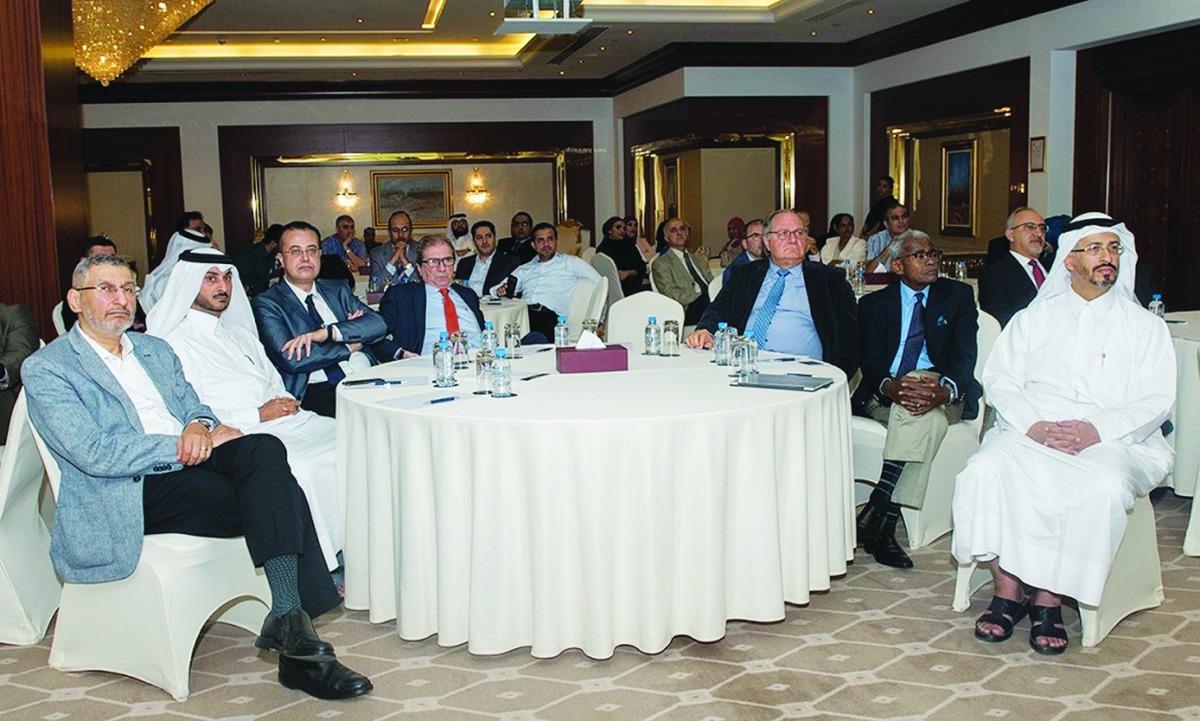
The experts at the second forum of the Uro-Oncology Club, organised by HMC recently.
Doha: With, prostate cancer account for 11.96 percent of cancers diagnosed in men in the country, Hamad Medical Corporation’s (HMC) Uro-oncology Department recently organised the second forum of the Uro-Oncology Club.
The event highlighted the latest developments in the diagnosis and treatment of prostate cancer and underscored the importance of multi-disciplinary teamwork across Qatar’s health sector.
Dr Khalid Al Rumaihi, Head of Urology at HMC and Chairman of the Uro-oncology Club, said the forum is an important platform for urology specialists to discuss significant advances in the diagnosis and treatment of prostate cancer and the latest developments in prostate cancer screening. He also emphasised the importance of the forum in providing a professional development opportunity for specialists working in the field.
Dr Al Hareth Al Khater, Deputy Medical Director at the National Center for Cancer Care and Research (NCCCR), attended the event and said prostate cancer is the most common cancer among men in Qatar. According to the Ministry of Public Health’s Qatar National Cancer Registry, prostate cancer accounts for 11.96 percent of cancers diagnosed in men in the country. He said the good news is that prostate cancer usually develops slowly and when found and treated early, it is often curable.
“While we still don’t know what causes prostate cancer, we do know that men who are overweight or obese are at greater risk of developing the disease. We also know that age and a family history of the disease increase one’s risk. Men with a family member who has had prostate cancer have twice as high a risk of being diagnosed as the general population,” said Dr. Al Khater.
The symptoms of prostate cancer can vary, with some men having no symptoms and others experiencing warning signs such as difficulty urinating, frequent urination, blood in the urine or semen, swollen feet, and discomfort in the pelvic area. Dr. Al Khater says it can be difficult to identify the early-onset signs and symptoms of the disease, emphasising the need for consistent and comprehensive screening.
“All men are at risk of prostate cancer, but the risk greatly increases with age. Prostate cancer is most common in men over the age of 60 but screening discussions should begin at the age of 50, or even earlier, for men with risk factors for the disease, such as a father or brother who has had prostate cancer,” said Dr Al Khater.